The clocks that markets cannot reset
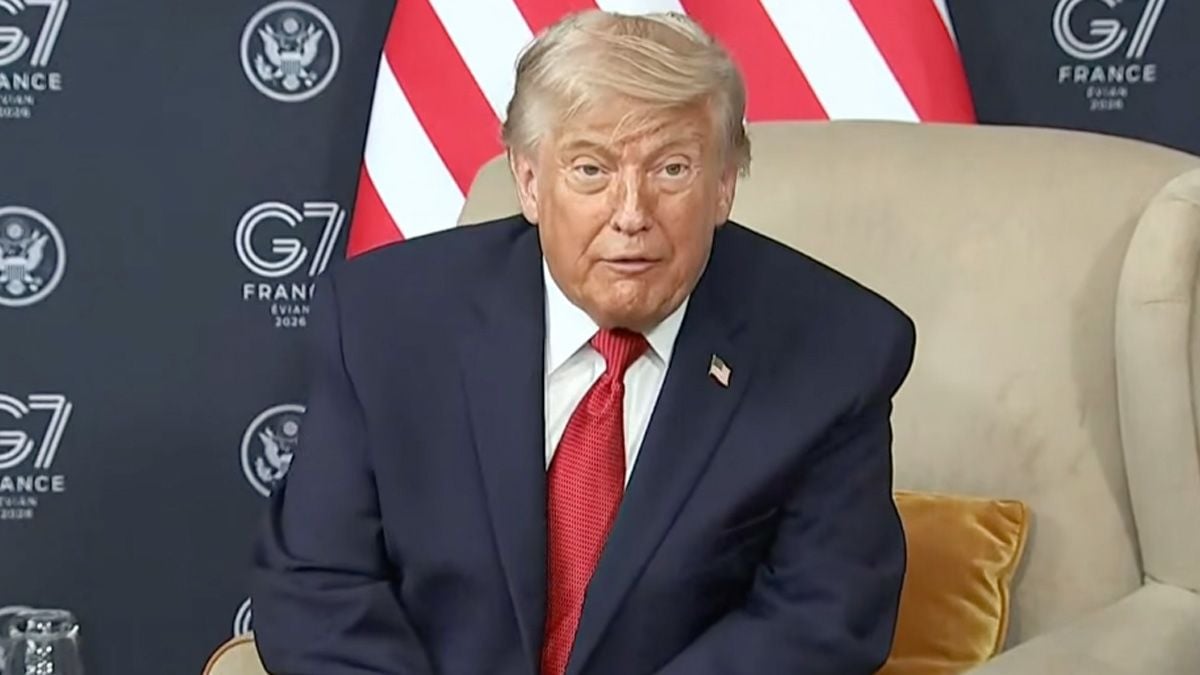
At a G7 press conference, Trump invoked Herbert Hoover twice. Unprompted. That language — depression, economic catastrophe — tells you more about the real stakes of the Iran deal than any diplomatic briefing. The ceasefire restored confidence. It did not restore capacity. Markets have priced the first. Not the second.
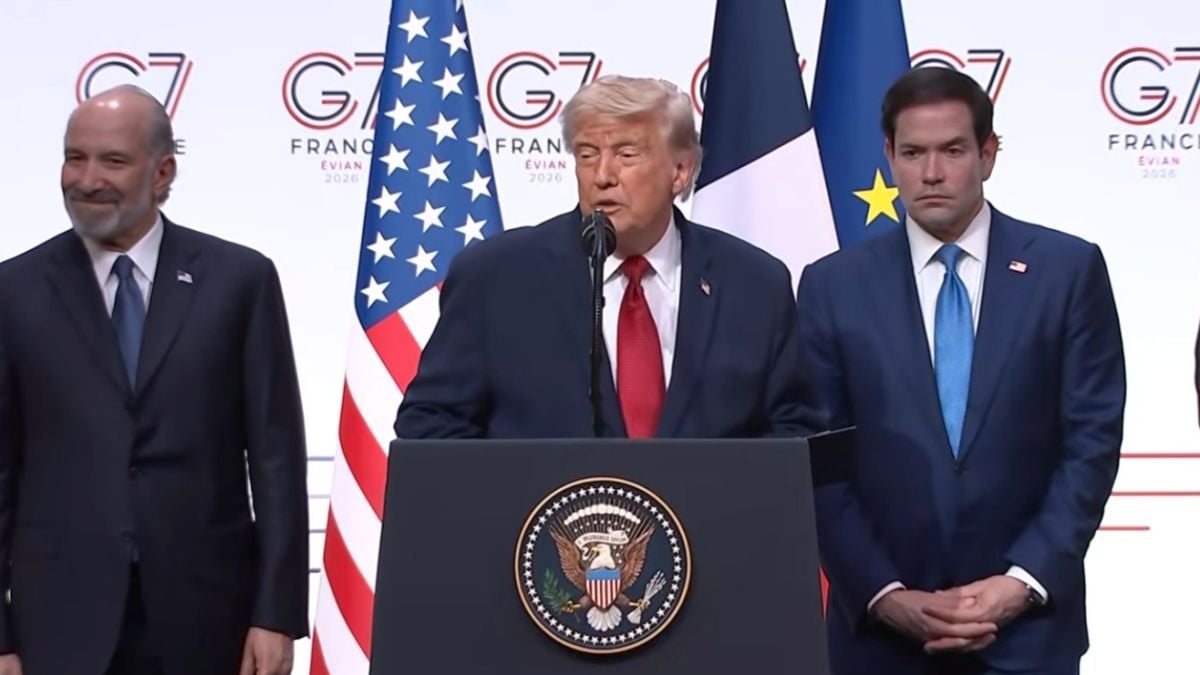

When defending the Iran agreement, US President Donald Trump repeatedly emphasised the economic consequences of prolonging the conflict.
On the sidelines of the G7 Summit in Évian-les-Bains, France, on June 17, 2026, he said this:
"So rather than possibly going into a depression, rather than having your favorite president be Herbert Hoover — he was always the one I didn't want to be. I didn't want to see economic catastrophe. If you kept this going, that could have happened."
He returned to the same theme twice. Unprompted. In a press conference ostensibly about a diplomatic achievement.
The language was striking. Rather than emphasising battlefield outcomes or diplomatic success, Trump repeatedly invoked economic catastrophe, the Great Depression and Herbert Hoover.
Whether those references reflected genuine alarm or were partly rhetorical is ultimately less important than what they reveal. By the time negotiations concluded, the administration was publicly framing the greatest risk of prolonging the conflict not as military failure, but as economic contagion. The shift in stated priorities — from military objectives to economic survival — is itself the signal.
This article examines why that framing was warranted, and why the agreement, even having been reached, has restored confidence without restoring capacity.
The Iran agreement is not primarily about ending a war. It is about preventing an already weakened global economy from tipping into a systemic crisis that conventional policy tools are no longer equipped to handle.
That distinction matters enormously — because markets have priced the first, while almost entirely ignoring the second.
Financial markets move in seconds. Supply chains move in months. Energy infrastructure moves in years. Labour markets move in quarters. Food systems move in seasons. Those clocks cannot be accelerated by optimism, and they cannot be reset by a signed agreement. The risk concealed within the current moment of relative calm is not that markets have become optimistic. It is that they have assumed optimism can compress time.
Act I: The Patient Was Already Sick
Before the first Iranian missile was fired, the global economy was exhibiting symptoms that warranted serious attention.
China's property collapse had been driving a sustained demand contraction across Asia for over a year. Total real estate investment in China fell 16.2% from January to May 2026.
The psychological effect was equally significant — even when Chinese consumers travelled, they spent cautiously. May Day holiday data showed high tourist volumes but restrained expenditure, reflecting a deflationary psychology that official visitor statistics do not capture.
Manufacturing was flashing a different warning. Factories across Asia that expanded aggressively during the 2021–2023 cycle found themselves with inventory they could not move. The tell was not the inventory data itself — it was the behaviour of manufacturers, pushing aggressive discounts and extended credit terms to stimulate demand that was not organically returning. When producers start selling rather than waiting, they are telling you something the headline numbers are not yet showing.
Consumer spending confirmed the trend. Private consumption in major economies expanded only 0.2% quarter-on-quarter in Q1 2026. Retail sales fell 0.4% month-on-month in April. Singapore, one of Asia's most reliable economic bellwethers, recorded a 9.7% drop in visitor arrivals in May alone — its weakest monthly performance of the year — with Chinese arrivals down 15.4% and Indonesian arrivals down 14%.
One of the earliest indicators, however, was not in any of these datasets.
Entertainment districts across Thailand — Pattaya, Bangkok, Phuket — had gone quiet in a way that people who work there described as unprecedented. This matters more than it might initially appear. The nightlife economy in these districts functions as an unusually sensitive qualitative barometer of discretionary confidence, for specific structural reasons.
It requires multiple compounding conditions to function: surplus income after essentials, the confidence to travel internationally, and the psychological willingness to spend on something entirely non-essential — the category that disappears first when anxiety enters a household's financial calculus. It operates in cash, with no statistical lag and no seasonal smoothing. Veterans of the industry report that similar patterns emerged ahead of the 1997 Asian Financial Crisis and the 2008 Global Financial Crisis, in both cases preceding the official data by several quarters.
Crucially, the current withdrawal is coming from multiple visitor streams simultaneously — reflecting stress across different regions and demographics rather than a single local factor. When that happens, the signal is not anecdotal. It is a convergence.
The bars were closing and workers were returning to home provinces before the war made international headlines as an economic threat. Consumer sentiment, it turns out, runs on a faster clock than the data that is supposed to measure it.
Act II: The Iran War Hit the Weakest Part of the System
The 20% Misunderstanding
When Iran closed the Strait of Hormuz in late February 2026, the framing that dominated initial coverage — "20% of global oil supply disrupted" — fundamentally misrepresents how oil markets actually work.
Oil is not priced by averaging supply across all available barrels. It is priced at the margin. The marginal barrel — the last barrel available to the last buyer who needs it — sets the price for every barrel in the market. Removing 20% of supply does not cause 20% price increases. It forces every buyer in the world to compete for the remaining 80%, and the price of that 80% is determined by whoever is most desperate to secure the final available cargo.
The physical evidence was unambiguous. Ship transits through the Strait fell from approximately 135 per day to just 6 — a 93% reduction in throughput on the world's most critical energy corridor. The gap between paper prices and physical prices told the real story: Dated Brent, the price that Asian importers actually pay for delivered crude, reached $132 per barrel while futures markets sat at $97. That $35 premium was not sentiment. It was the mathematical expression of a bidding war happening in real time.
The IEA classified it as the largest energy supply disruption in history — larger in scale than 1973, larger than 1990.
The Cascade the Headlines Missed
The disruption extended well beyond crude oil. Qatar's LNG exports — representing approximately 22% of global liquefied natural gas supply — were simultaneously blocked. Fertiliser shipments covering roughly 30% of global ammonia-based nitrogen supply were halted at precisely the moment planting season required them. Urea costs at the New Orleans import hub surged 32% in a single week.
The fertiliser disruption creates a food price shock with a specific and unavoidable lag. Farm input costs from March 2026 take three to six months to travel through the food system — through planting decisions, harvest yields, processing, distribution, and finally retail pricing.
This timeline creates significant upward pressure on food prices in Q3 and Q4 2026 that is likely to become increasingly visible regardless of what the ceasefire achieves. When grocery bills rise in August and September, they will erode whatever remains of the soft-landing psychology that monetary policy has been trying to engineer. The damage to this year's food supply chain was largely locked in before negotiations began.
The Infrastructure Problem Nobody Can Solve With a Paper Agreement
Gulf states faced a cascading problem that went beyond blocked shipping lanes. As storage facilities filled with crude that could not be exported, producers had no choice but to shut in their wells. Saudi Arabia cut production from 10.11 million to 6.87 million barrels per day. Kuwait reduced output from 2.58 million to just 560,000 barrels per day — a 78% cut, not because the oil was gone, but because there was physically nowhere to put it.
Then Iran struck the infrastructure itself. Ras Tanura, Ruwais, Mina al Ahmadi, the East-West pipeline bypass, Shell's Pearl GTL plant. Qatar's permanent LNG production capacity was structurally reduced from 77 to approximately 64.2 million tons per year. These are not operational shutdowns that restart when a ceasefire is announced. They are physical damage to irreplaceable assets.
The reconstruction challenge is compounded by a supply constraint that no amount of capital can immediately resolve. Large-frame gas turbines — the specific equipment required to rebuild LNG facilities — are supplied by only three manufacturers globally, all of which already carried production backlogs of two to four years before the war damage added new demand to the queue.
The Physics of Recovery
Markets assumed a simple sequence when the MOU was announced:
War ends → supply returns → inflation falls → central banks cut → growth resumes.
Physical systems do not behave that way. The actual sequence is considerably longer, and each step is constrained by its own clock.
Damaged infrastructure must first be assessed for the full extent of harm. Reconstruction contracts must be tendered and awarded — a process that takes months under normal conditions, longer under uncertainty. Equipment must be ordered and manufactured against backlogs that already run two to four years. Components must be shipped. Construction must begin, proceed through commissioning, and pass testing. Only then does supply begin to return.
Recovery follows a sequence that cannot be skipped. Without demonstrated security — sustained incident-free operation over months, not days — insurance markets will not move. War risk premiums that surged from 0.125% to as high as 5% of vessel value at the conflict's peak have not materially declined since the ceasefire announcement. Insurers do not price diplomatic documents. They price demonstrated reality.
Without normalised insurance markets, Gulf state boards will not approve the $58 billion in reconstruction spending the region faces. No rational investment committee authorises billion-dollar infrastructure projects in a risk environment that underwriters are still pricing as a war zone. Without committed investment, capacity cannot be rebuilt. Without rebuilt capacity, supply cannot recover.
A Very Large Crude Carrier requires 45 to 50 days for a complete transit loop under normal conditions. Vessels diverted around the Cape of Good Hope during the closure added 14 to 24 additional days per transit. The Strait was effectively closed for approximately 16 weeks.
Signing a ceasefire paper does not retroactively move those ships. Strategic petroleum reserves fell 18% from pre-war levels and sit at their lowest since 1983. The IEA projects a cumulative loss of 120 billion cubic metres of LNG supply through 2030 from infrastructure damage alone.
The market priced the announcement in hours. The physical world will be processing the consequences through the remainder of 2026 and well beyond.
Act III: Why Markets Have Almost No Margin for Disappointment
The Confidence Gap and Its Structural Flaw
The deal's most important immediate effect was psychological. Monetary policy cannot manufacture LNG. But without any ceasefire, businesses facing an unknowable energy cost floor could not complete a planning sentence, let alone a capital budget. Survival mode activates not when conditions are catastrophic, but when the horizon disappears.
The deal restored the planning horizon. That is why it matters — and why the structural condition of the agreement is not a peripheral concern.
The agreement's vulnerability is not about any specific leader. It is that the agreement contains no mechanism that permanently removes Iran's ability to threaten the Strait. The trigger remains available. Iran demonstrated this three days after the Versailles MOU was signed, closing the Strait again in response to Israeli strikes in Lebanon.
Governments change. Prime ministers change. The mechanism does not. Every escalation in Lebanon is a potential trigger for renewed Strait closure. That risk is not resolved by a signed agreement. It is suppressed until the next provocation — at which point the confidence the deal restored disappears as quickly as it arrived, and businesses that had tentatively resumed planning return immediately to survival mode. The planning horizon that took weeks of diplomacy to restore can be removed in an afternoon.
Markets Priced the Announcement. Not the Reality Underneath It.
Equity markets entering the ceasefire period were already carrying extraordinary valuation risk. The Shiller CAPE ratio reached 39.8 — the most expensive reading since the height of the dot-com bubble. The top ten stocks in the S&P 500 accounted for over 35% of total index weight, a concentration that has historically preceded significant corrections.
The last load-bearing narrative holding these valuations is AI. Hyperscalers are on course to spend over $600 billion in capital expenditure in 2026 alone, accounting for roughly half of US GDP growth. The market has priced it as if the productivity returns are already flowing.
They are not. Multiple enterprise surveys find that approximately 90 to 95% of corporate AI deployments have delivered no measurable productivity improvement. Annual AI capital expenditure runs to $600 billion. Annual consumer AI revenue runs to $12 billion. Readers can assess that gap themselves.
This connects directly to the energy story in a way that has received almost no mainstream attention. AI data centres are extraordinarily energy-intensive. Elevated LNG costs and structural damage to Gulf energy infrastructure mean power grid costs for hyperscalers will rise materially in precisely the period when questions about return on invested capital are already sharpening.
The physical energy shock and the technology valuation problem are not separate crises. Elevated energy costs are one of the physical mechanisms that may accelerate a reckoning in the technology sector that financial conditions alone have been deferring.
The institutional money has been moving accordingly. The divergence between institutional and retail positioning is historically extreme — large players are substantially more pessimistic than retail investors, who have been injecting capital at twice their five-year average rate.
This is the classic distribution pattern: institutions reduce exposure on retail-driven rallies; retail holds, trained by three years of successful dip-buying to treat every pullback as an opportunity. That conditioning was formed in a different macro environment. It has not yet been tested in this one.
The Fed Has No Good Options
The standard reassurance offered by mainstream economic commentary — that the Federal Reserve can cut rates if conditions deteriorate — rests on an assumption that does not hold in the current environment.
Monetary policy influences demand. It cannot manufacture LNG. And that distinction determines everything about what the Fed can and cannot do.
The Fed is facing a supply-side shock, not a demand-side shock. In a demand-side recession, cutting rates is appropriate — cheaper money stimulates borrowing, spending recovers, the cycle turns. In a supply-side shock, cutting rates risks adding demand pressure to an inflation problem that originates in physical scarcity rather than insufficient spending.
The 2026 inflation differs fundamentally from 2022. The 2022 inflation was driven by excess demand meeting constrained supply — a problem monetary policy addresses by suppressing demand. The 2026 inflation is driven by destruction of supply capacity: fertiliser infrastructure, Gulf production, shipping routes, refinery capacity. Demand suppression through higher rates does not rebuild a refinery. It simply makes the economy contract while prices remain elevated.
That is stagflation. Bank of America described the current environment as exactly that in April. PCE inflation has reached 3.8% and is rising. Wholesale inflation has surged to 6%. Real wages have turned negative.
Cutting rates risks validating inflation expectations and triggering a wage-price spiral — and the mechanism matters here. If households and businesses conclude that the Fed will tolerate higher inflation, those expectations become self-reinforcing, making inflation substantially harder to reverse later.
Raising rates risks collapsing the AI capex cycle that constitutes roughly half of US GDP growth, while making debt service on $38 trillion in government debt catastrophically more expensive. Holding rates risks entrenching stagflation as consumer expectations adjust to persistent price increases.
There is no fourth option. The standard rescue mechanism — the rate cut that resolved every significant market stress since 2008 — is not available in a stagflation environment. Even if the Fed eventually cuts, it will be reacting to a recession already underway, not preventing one.
Why a Permanent Agreement Is Not Optional
Q3 and Q4 2026 are when the lagged physical damage from 16 weeks of Strait closure arrives in the data simultaneously: food price increases becoming visible at retail, earnings reports revealing the full supply chain cost passthrough, strategic reserves competing with commercial demand as refilling begins, and AI productivity questions becoming harder to defer.
Every one of these pressures is manageable if the ceasefire holds and the planning horizon remains intact. Every one of them is amplified if the ceasefire breaks and the horizon disappears again. And the ceasefire can break at any time, from a trigger that neither Washington nor Riyadh controls.
A permanent agreement — one that addresses the structural mechanism rather than the current configuration of political leadership — is the difference between a painful but navigable adjustment and a systemic one. The Gulf states need security guarantees durable enough to justify reconstruction spending. Insurance markets need demonstrated stability over months, not documents. The global food system needs confidence that supply chains severed in March 2026 will not be severed again in October 2026.
The ceasefire restored confidence. It did not restore capacity.
Markets have priced the first. They have not priced the second.
Markets can reprice in a day. Supply chains cannot. Infrastructure cannot. Agriculture cannot. The clocks governing physical recovery — engineering timetables, shipping schedules, agricultural seasons, insurance assessments, construction programmes — continue running long after the ceasefire headlines have faded and the diplomatic photographs have been filed away. The risk is not that markets have become optimistic. It is that they have assumed optimism can compress time.
It cannot. Those clocks run at their own pace, on their own terms, indifferent to what markets have priced or politicians have promised.