Hong Myung-bo resigns as South Korea coach after World Cup group-stage exit
South Korea coach Hong Myung-bo has resigned following the national team's elimination from the FIFA World Cup, drawing sharp criticism from President Lee Jae Myung who blamed "incompetent" appointments for the failure.
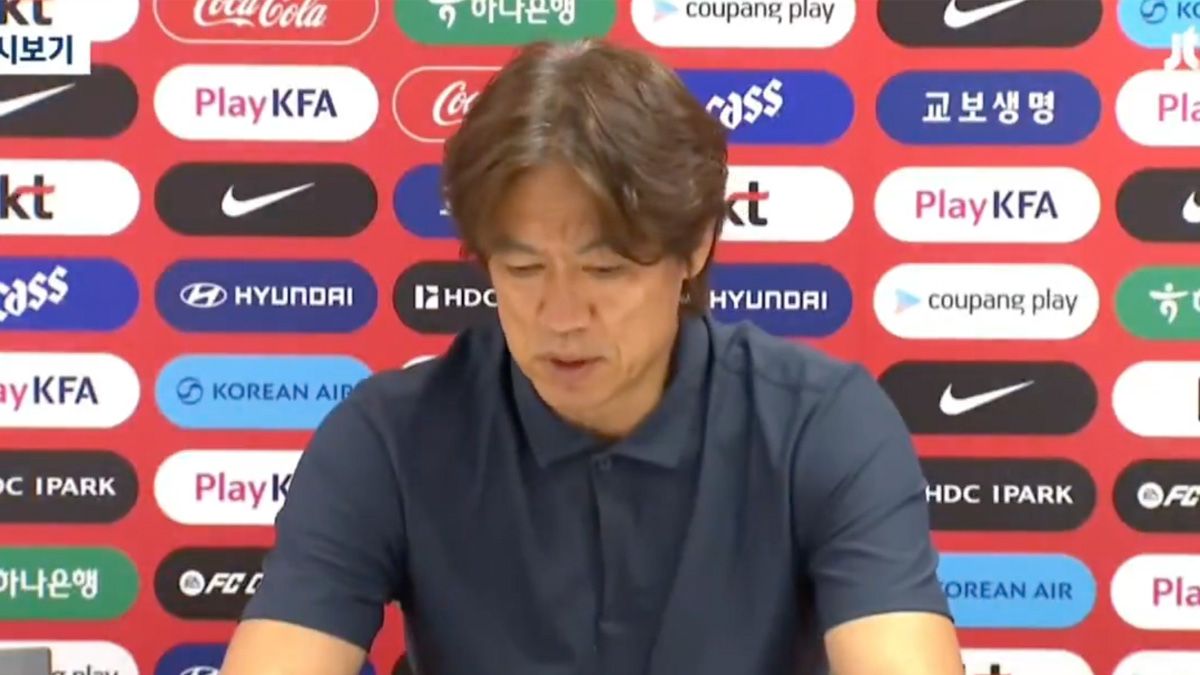
- Hong resigned on 28 June after South Korea finished third in Group A with three points from three matches.
- President Lee called for a government inquiry into the team's failings and pledged sports administration reform.
- South Korean broadcaster KBS blurred Hong's face in post-tournament coverage, a practice typically reserved for criminal suspects.

South Korea coach Hong Myung-bo resigned on 28 June 2026, one day after the national team was eliminated from the FIFA World Cup following a group-stage campaign that drew intense public backlash and a rebuke from the country's president.
Hong, 57, made the announcement at a press conference at the team's training base in Zapopan, western Mexico. His resignation came hours after President Lee Jae Myung criticised "incompetent people" in football leadership roles and called for sweeping reforms to the country's sports administration.
South Korea finished third in Group A with three points from three matches — a 2-1 win over the Czech Republic, a 1-0 loss to Mexico and a 1-0 defeat to South Africa. The team had hoped to advance as one of the eight best third-placed sides in the expanded 48-team tournament, but ultimately finished 10th in that ranking.
"Today, I am stepping down as head coach of the South Korean men's national football team," Hong told reporters. "I would like to apologise to our fans who love Korean football and support the national team. We didn't deliver the results that our fans expected, and the responsibility rests entirely with me as head coach."
Hong admitted that not every decision he made during his tenure was the right one. "Over the past two years, I asked myself the same question whenever I had to make important decisions, select players or prepare for training sessions and matches: Is this the right choice for Korean football?" he said.
The defeat to South Africa on 25 June proved the decisive blow. South Korea needed only a draw to secure second place in Group A and an automatic knockout berth. Hong controversially dropped veteran captain Son Heung-min for the match, a gamble that did not pay off. The loss sparked an immediate uproar in South Korea.
President Lee said on social media platform X that he was "utterly baffled" by the team's performance. "When loyalty and factionalism are valued over competence, and incompetent people are appointed to leadership positions, the outcome is all but inevitable," he wrote. Lee offered his "deepest apologies" to the public and called for the Ministry of Culture, Sports and Tourism to investigate the team's failings.
Lee also cited the use of public funds as grounds for accountability. "Given that significant national taxpayer funds and state support resources are invested even in World Cup participation, I ask that the Ministry of Culture, Sports and Tourism thoroughly investigate the precise circumstances of this incident, analyse its causes, and develop thorough measures for preventing recurrence and improvement," he said.
The sharp official response reflected deep-seated frustration that predated the tournament. Hong was widely unpopular with fans and the South Korean media from the moment of his appointment in July 2024.
The Korea Football Association (KFA) faced immediate scrutiny over the transparency of the selection process, with critics alleging that a senior executive awarded Hong the role after a brief personal meeting, bypassing a more rigorous vetting process that had considered foreign candidates.
The National Assembly summoned Hong and KFA officials to parliamentary hearings to question the appointment. The Ministry of Culture, Sports and Tourism also conducted an investigation and called for disciplinary action against KFA president Chung Mong-gyu and other senior executives in connection with Hong's hiring.
Despite the controversy, South Korea qualified for the World Cup without losing a match in the Asian qualifying rounds. Public sentiment towards Hong, however, never improved. He was booed during home matches from as early as September 2024.
Broadcaster KBS drew additional attention for its own response to the exit, blurring Hong's face in its post-tournament coverage — a treatment typically reserved in South Korean media for individuals accused of crimes.
This was Hong's second stint as South Korea's head coach and his second failure to advance past the group stage at a World Cup. He managed the team from 2013 to 2014 and resigned after South Korea went out of the 2014 World Cup in Brazil. He is the only man to have coached South Korea at two separate World Cup tournaments.
As a player, Hong was a decorated international who competed in four World Cups — in 1990, 1994, 1998 and 2002 — and captained the side to the semi-finals of the 2002 tournament, co-hosted by South Korea and Japan. He scored 10 goals in 136 international appearances.
Son Heung-min, who turns 34 next month, has suggested he may retire from international football, meaning the South Africa match may have been his final World Cup appearance.
Hong said he has no intention of turning his back on the sport. "Even though I am leaving the national team, I am not abandoning Korean football altogether. I will cheer for the national team from the bottom of my heart and hope that the team will be trusted and loved by the people once again."
Hong and eight players are scheduled to return to South Korea on 1 July, with the remaining squad to follow in smaller groups. His contract had originally been set to run through the 2027 Asian Football Confederation Asian Cup.