Central kitchens and caterers accounted for 76% of food poisoning outbreaks in 2025, says CDA
Central kitchens, food caterers and restaurants accounted for 76 per cent of foodborne gastroenteritis outbreaks in 2025, up from 64 per cent in 2024, according to the Communicable Diseases Agency. Authorities say large-scale food preparation increases contamination risks.
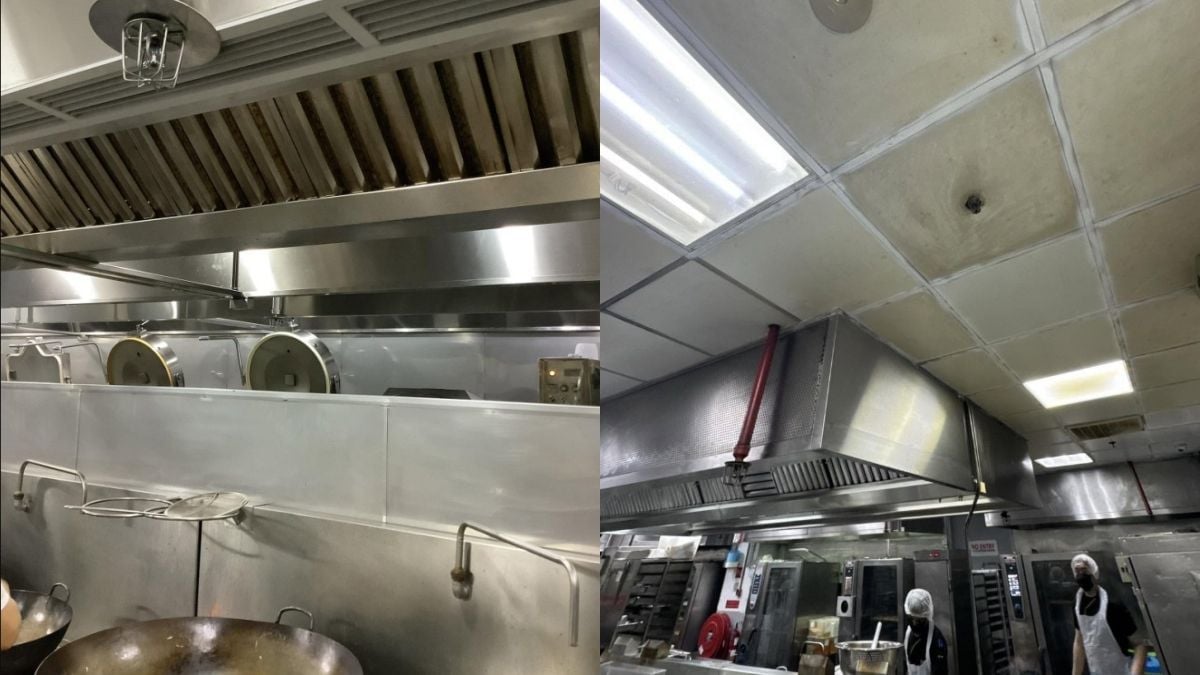
- Central kitchens, caterers and restaurants accounted for 76 per cent of foodborne outbreaks in 2025.
- CDA attributes the higher risk to large-scale food preparation and prolonged food holding times.
- Authorities have intensified inspections, improved testing capabilities and will issue advisories if outbreaks increase.

SINGAPORE: Central kitchens, food caterers and restaurants accounted for more than three-quarters of foodborne gastroenteritis outbreaks in 2025, highlighting the continued food safety risks associated with large-scale meal preparation, according to the Communicable Diseases Agency (CDA).
The agency said outbreaks caused by foodborne pathogens predominantly involved central kitchens, food caterers and restaurants, representing 27 food establishments, or 64 per cent, in 2024. The figure increased to 28 establishments, or 76 per cent, in 2025.
Across the two years, a total of 55 central kitchens, caterers and restaurants were linked to foodborne outbreaks, making them the most common settings for such incidents.
CDA investigated 113 gastroenteritis outbreaks across 2024 and 2025.
About two-thirds of the outbreaks were caused by bacteria or viruses transmitted through contaminated food or water. Around one-tenth resulted from person-to-person transmission rather than contaminated food, while the remaining cases involved mixed sources or remained inconclusive after investigations.
Why central kitchens face greater risks
CDA said operators such as central kitchens and food caterers typically prepare and handle large quantities of food before storing them for a period prior to serving.
This creates more opportunities for food contamination and increases the number of people exposed should contamination occur, resulting in larger gastroenteritis outbreaks.
The agency noted that more food establishments are moving towards central kitchen operations, including schools facing difficulties securing sufficient canteen stallholders.
As a result, authorities are preparing for the possibility of more outbreaks originating from such facilities.
Lalitha Kurupatham, director of CDA's Food and Vector Borne Division, said the agency is closely monitoring the trend.
"If it detects an increase in outbreaks in any particular setting, it will work with its partner agencies to publish joint advisories or to conduct joint training for the relevant sector," Lalitha said, as reported by Lianhe Zaobao.
Common pathogens and faster detection
CDA said the three most common foodborne pathogens responsible for food poisoning outbreaks were norovirus, Salmonella and Clostridium perfringens.
Gastroenteritis is an inflammation of the stomach and intestines commonly caused by bacteria, viruses or parasites. Some bacteria can also cause illness by producing toxins.
Most foodborne illnesses result in acute gastrointestinal symptoms, including nausea, vomiting, diarrhoea and abdominal pain. Fever may also occur, although illnesses caused by toxin-producing organisms may not present with fever.
To improve outbreak investigations, CDA's National Public Health Laboratory has introduced gastrointestinal polymerase chain reaction (PCR) panels in recent years.
The technology enables multiple pathogens to be detected from collected samples within hours, significantly reducing the time needed to identify infectious agents compared with conventional laboratory culture methods, which can take several days.
Enforcement and outbreak investigations
Whenever suspected outbreaks occur, CDA deploys a team of nine public health officers from its Food and Vector Borne Division to investigate.
Investigations include inspections of food preparation premises and reviews of food handling processes.
Food handlers whose stool samples test positive for foodborne pathogens are temporarily suspended from food handling duties.
They may only resume work after producing two consecutive negative stool test results taken at least one week apart.
Food operators found to have breached food safety requirements may also face financial penalties or suspension of business operations.
Recent enforcement cases
Several food businesses have already been penalised following major gastroenteritis outbreaks.
Chinese restaurant chain Yun Hai Yao was fined S$7,000 in July 2025 after food safety lapses linked to a July 2024 catering incident.
The outbreak affected 171 people who consumed its catered food, with 60 requiring hospital treatment.
Stamford Catering Services was fined S$8,000 in May 2026 following two gastroenteritis outbreaks in October 2024 and February 2025.
The incidents affected a combined total of 182 people who had consumed food supplied by the caterer.
Public urged to handle food safely
Lalitha advised consumers to eat cooked food as soon as possible after preparation.
If food cannot be consumed immediately, it should be stored at temperatures below 5 deg C or above 60 deg C to minimise bacterial growth.
She noted that reheating food may destroy harmful pathogens but cannot eliminate toxins already produced by bacteria.
"Try to eat your food fresh. You should not keep it out for long. So, store it in the fridge quickly and try to reheat your food before eating it," she said.
School meal model under scrutiny
Food safety in central kitchens also came under parliamentary scrutiny during a sitting in February 2026 following suspected gastroenteritis incidents at River Valley Primary School and North View Primary School in January.
Senior Parliamentary Secretary for Sustainability and the Environment Goh Hanyan said central kitchens are subject to more frequent inspections because they prepare food on a much larger scale.
She said the same inspection regime also applies to caterers serving vulnerable groups, including nursing home residents.
Since August 2025, the Singapore Food Agency (SFA) has stepped up inspections of central kitchens supplying meals under the Ministry of Education's school meal programme, she added.
Separately, Minister of State for Education Jasmin Lau said SFA, the Ministry of Education and CDA were jointly investigating both school incidents.
Meals at River Valley Primary School are supplied by central kitchen operator Gourmetz, while North View Primary School continues to use traditional canteen stallholders.
During the parliamentary sitting, Workers' Party MP Kenneth Tiong referred to media reports highlighting concerns from parents and students over the taste and smell of chicken served at River Valley Primary School.
He asked for an update on the investigation and how the food had passed hygiene inspections.
Lau cautioned against speculation and urged Members of Parliament to wait for the outcome of investigations before drawing conclusions.