Taiwan expands Super Micro raids as probe into alleged Nvidia AI chip smuggling to China widens
Taiwanese prosecutors have widened their investigation into the alleged illegal export of Super Micro AI servers containing Nvidia chips, raiding company offices, affiliated firms and suspects' homes as Taipei intensifies efforts to curb technology diversion to China.
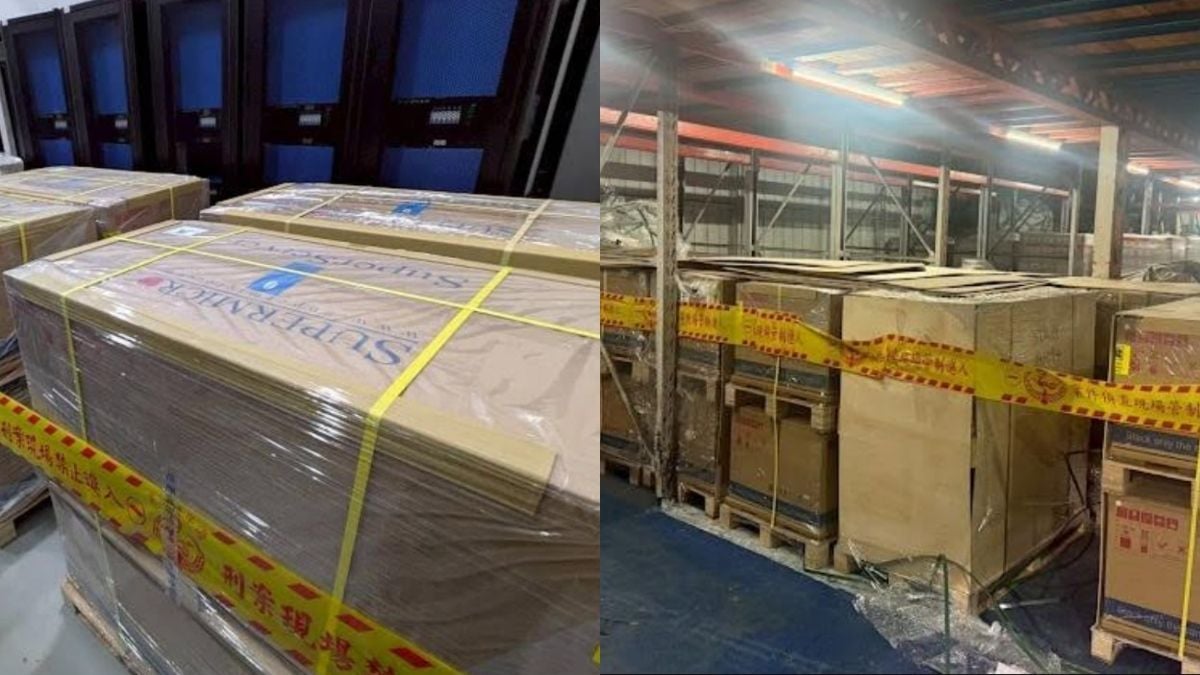
- Taiwan widened its Super Micro investigation with fresh raids targeting six suspects and three affiliated companies.
- Prosecutors are investigating alleged document forgery and breach of trust linked to exports of Nvidia-powered AI servers to China.
- The case highlights Taiwan's tougher stance on AI technology diversion as it considers stricter export control laws.

Taiwanese prosecutors have launched a second wave of searches in an expanding investigation into the alleged illegal export of Super Micro Computer servers containing advanced Nvidia artificial intelligence (AI) chips to China, marking the island's most significant public crackdown yet on suspected AI hardware diversion.
The Keelung District Prosecutors Office (基隆地方檢察署) said investigators searched 12 locations on 29 June 2026, including the residences of six suspects and the offices of three companies, as authorities widened a probe first launched in May into alleged exports involving high-end AI servers manufactured by Super Micro Computer.
The latest operation reflects Taiwan's increasingly aggressive efforts to prevent advanced semiconductor technology from reaching China amid mounting pressure from the United States to strengthen enforcement of export controls on AI-related technologies.
Second round of searches
According to prosecutors, investigators had previously raided related companies on 20 May and obtained court approval to detain three suspects, identified by the surname You, without visitation rights.
Following further examination of evidence gathered during the initial investigation, prosecutors said they believed another six suspects, identified by the surname Wang and others, were involved in offences including document forgery and breach of trust under Taiwan's Criminal Code.
The latest operation involved officers from the Ministry of Justice Investigation Bureau's Taipei Field Office, the Coast Guard Administration's Keelung investigation unit and Keelung police.
Investigators searched 12 locations, including the suspects' homes and three companies, while all six suspects were summoned for questioning.
The Keelung District Prosecutors Office said the latest searches formed part of its continuing investigation into the alleged illegal export of Super Micro AI servers.
Super Micro and affiliated firms searched
Although prosecutors did not publicly identify the companies involved, a person familiar with the matter said Super Micro's Taiwan office was among the premises searched.
Prosecutors also searched the offices of data centre operator Chief Telecom and Super Micro distributor Albatron Technology.
Super Micro confirmed it was cooperating with Taiwanese authorities.
"Super Micro is committed to protecting our advanced technologies and intellectual property," the company said in a statement.
"Super Micro products continue to be targeted in these matters, and we continue to cooperate with law enforcement and government officials in Taiwan and other jurisdictions in which we operate to ensure our technology is distributed as lawfully intended."
Chief Telecom also confirmed it was assisting investigators and said its business operations remained unaffected despite the investigation.
Albatron disclosed in a stock exchange filing that investigators had searched its offices earlier on 29 June, although it did not elaborate on the reasons behind the operation.
Earlier arrests
The latest raids build on arrests announced in May, when Taiwanese authorities carried out their first publicly known detentions linked to alleged AI chip smuggling.
Three individuals were detained on suspicion of falsifying export documents involving Super Micro servers equipped with high-value Nvidia AI chips.
According to earlier reports, investigators suspected the group had successfully shipped at least one batch of Nvidia AI chips to China through Japan while attempting to export around 50 additional servers that Taiwanese authorities intercepted before they left the island.
Those allegations remain under investigation.
Legal limitations
Taiwan currently does not classify exports of AI chips to China as a criminal offence.
Instead, authorities have relied on existing provisions covering offences such as document forgery and breach of trust to prosecute individuals suspected of facilitating illicit exports.
Officials have warned exporters that such transactions could breach United States export control regulations, even where Taiwanese law does not explicitly prohibit the shipments.
Taipei is now considering legislation that would criminalise unauthorised exports of restricted AI technology, providing prosecutors with stronger legal tools to combat technology diversion.
The proposed changes would also bring Taiwan's export control regime more closely into line with restrictions imposed by Washington.
Growing international concern
The investigation comes against the backdrop of increasingly stringent United States export controls designed to prevent advanced AI technology from reaching China over concerns the hardware could support Beijing's military modernisation.
Both Nvidia and Advanced Micro Devices rely on Taiwan Semiconductor Manufacturing Co. to manufacture many of their most advanced processors, placing Taiwan at the centre of global semiconductor supply chains.
Taiwan has adopted a noticeably tougher position during 2026 as concerns grow over the leakage of advanced chip technology from the island's globally dominant semiconductor industry.
Any move to impose stricter restrictions on AI hardware exports is expected to draw objections from Beijing, which claims Taiwan as part of its territory, a position rejected by the self-governing island.
Parallel United States case
The Taiwanese investigation also follows criminal proceedings launched in the United States.
In March 2026, the US Department of Justice unsealed criminal charges against three individuals linked to Super Micro Computer over allegations they smuggled at least US$2.5 billion worth of United States-origin AI technology, including restricted Nvidia chips, to China.
Federal prosecutors accused Super Micro co-founder and former Senior Vice President Yih-Shyan "Wally" Liaw, Taiwan office General Manager Ruei-Tsang "Steven" Chang and intermediary Ting-Wei "Willy" Sun of using shell companies and forged documentation to disguise shipments of Nvidia-powered servers destined for Chinese customers.
According to the indictment, the diverted servers allegedly contained restricted Hopper and Blackwell AI chips that were subject to United States export controls.
The charges remain before the courts, and the allegations have not been proven.
Long-standing concerns over chip diversion
Concerns about the effectiveness of export controls have persisted since late 2024, when social media posts from China appeared to show businesses openly acquiring restricted Nvidia AI chips despite sanctions.
One Beijing-based entrepreneur, Su Di, publicly displayed shipments of Nvidia H100 and H200 processors on Chinese social media and described the chips as critical to China's expanding AI industry.
According to the publicly available posts, Su acknowledged that acquiring the chips breached United States export restrictions but claimed large shipments had continued to arrive regularly.
Su also alleged that contacts involved in the trade had operated on a large scale for approximately two years and had consistently found ways to bypass sanctions.