Singapore electricity tariff to rise 17% and gas tariff 7.1% from July to September
Singapore households will face a 17% electricity tariff hike and a 7.1% gas tariff increase from July to September, driven by elevated natural gas prices linked to the Middle East conflict.

- Singapore's electricity tariff rises 17% from July to September, adding S$17.14 to the average four-room HDB monthly bill.
- Town gas tariff increases 7.1%, rising 1.56 cents per kWh to 23.48 cents per kWh before GST.
- EMA cites elevated natural gas prices from the Middle East conflict as the primary cause.

Singapore households will face a 17 per cent increase in electricity tariff and a 7.1 per cent rise in town gas tariff from July to September, the Energy Market Authority (EMA) announced on 30 June 2026.
As a small city-state with limited energy resources, Singapore relies on imports for nearly all its energy needs. Imported natural gas accounts for 95 per cent of the country's electricity production, making Singapore's energy costs highly sensitive to movements in global gas prices.
The higher tariffs are attributed to elevated natural gas prices stemming from the Middle East conflict. Following attacks by Israel and the United States on Iran on 28 February 2026, Iran closed the Strait of Hormuz on 4 March, disrupting a critical shipping route for global LNG supplies. Qatar, one of the world's largest LNG exporters and a key supplier to Asian markets including Singapore, ships its gas through the strait.
The closure sent the LNG Japan Korea Marker (JKM) — the benchmark price for LNG deliveries to Asia — sharply higher. From around US$10 to US$12 per MMBtu before the conflict, JKM surged above US$22 per MMBtu in April, before easing to US$15.82 per MMBtu as of 29 June. Asian LNG contract prices are also commonly indexed to crude oil, meaning the parallel spike in Brent crude — which peaked above US$110 per barrel — compounded the impact on gas costs for buyers in the region.
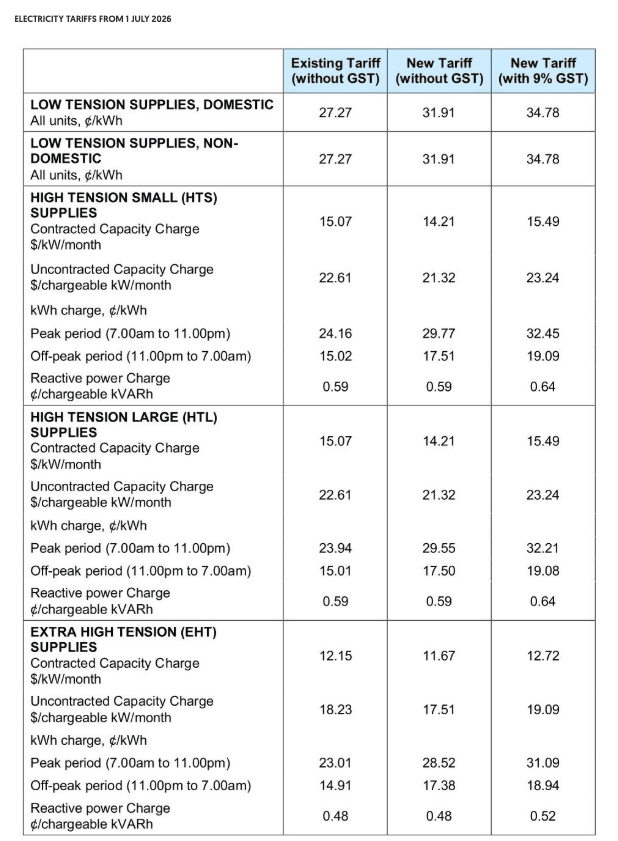
Grid operator SP Group said electricity prices for households will increase by 4.64 cents per kilowatt-hour (kWh) from the previous quarter, reaching 31.91 cents per kWh before goods and services tax (GST). A four-room Housing and Development Board (HDB) household can expect its average monthly electricity bill to rise by S$17.14 before GST.
The overall electricity tariff, covering both household and non-household consumers, will increase by an average of 17.5 per cent, or 4.66 cents per kWh, compared with the April to June quarter.
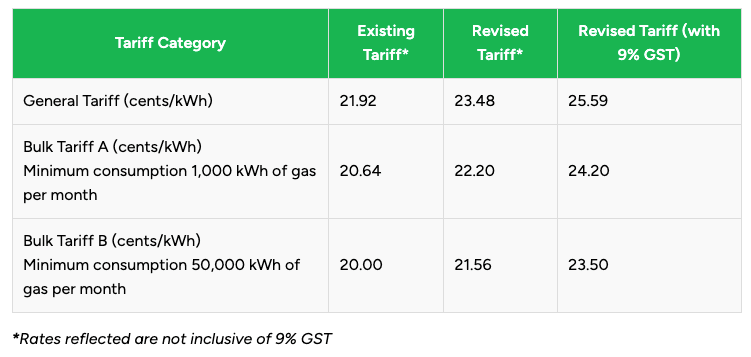
For piped town gas, provider City Energy announced the household gas tariff will rise by 1.56 cents per kWh from the previous quarter to 23.48 cents per kWh before GST.
SP Group and City Energy review electricity and gas tariffs quarterly based on guidelines set by EMA. The tariffs are calculated using gas prices recorded in the first two and a half months of the preceding quarter, meaning price changes in one quarter typically only appear in tariffs the following quarter.
This lag explains the relatively modest increase seen in the April to June quarter, which only captured the initial price surge from 28 February to 15 March — the early weeks of the Middle East conflict. The July to September figures now reflect the sustained elevated prices recorded across April to June.
Households have two options for purchasing electricity: buying from SP Group at the regulated tariff, which is reviewed each quarter, or contracting with an electricity retailer on fixed-price, discount-off-regulated-tariff, or time-of-use plans. During this period of elevated fuel prices, consumers on retail contracts may see higher prices at the point of contract renewal. EMA encourages consumers to compare available plans at its Price Comparison website at compare.openelectricitymarket.sg.
EMA noted the situation in the Middle East remains uncertain but added that fuel prices could fall if conditions improve, potentially resulting in lower electricity and town gas tariffs in the fourth quarter of 2026.
While ongoing peace negotiations and an interim agreement on Hormuz passage have helped ease LNG JKM prices — down more than 15 per cent over the past month — Singapore households will not see any relief until at least October. EMA's Q3 tariffs were locked in using gas prices from April to mid-June, when JKM was trading above US$20 per MMBtu. Even if the situation stabilises, a sustained drop in global LNG prices would need to be maintained through July and into August before it can translate into lower tariffs for the October to December quarter.
"EMA continues to monitor the fuel supply situation closely and work with the industry to ensure supply security," the authority said.