Venezuela earthquake death toll reaches 1,719 as rescue efforts continue
At least 1,719 people have been confirmed dead after twin earthquakes struck Venezuela on 24 June, with rescue teams continuing to search collapsed buildings as international assistance expands.
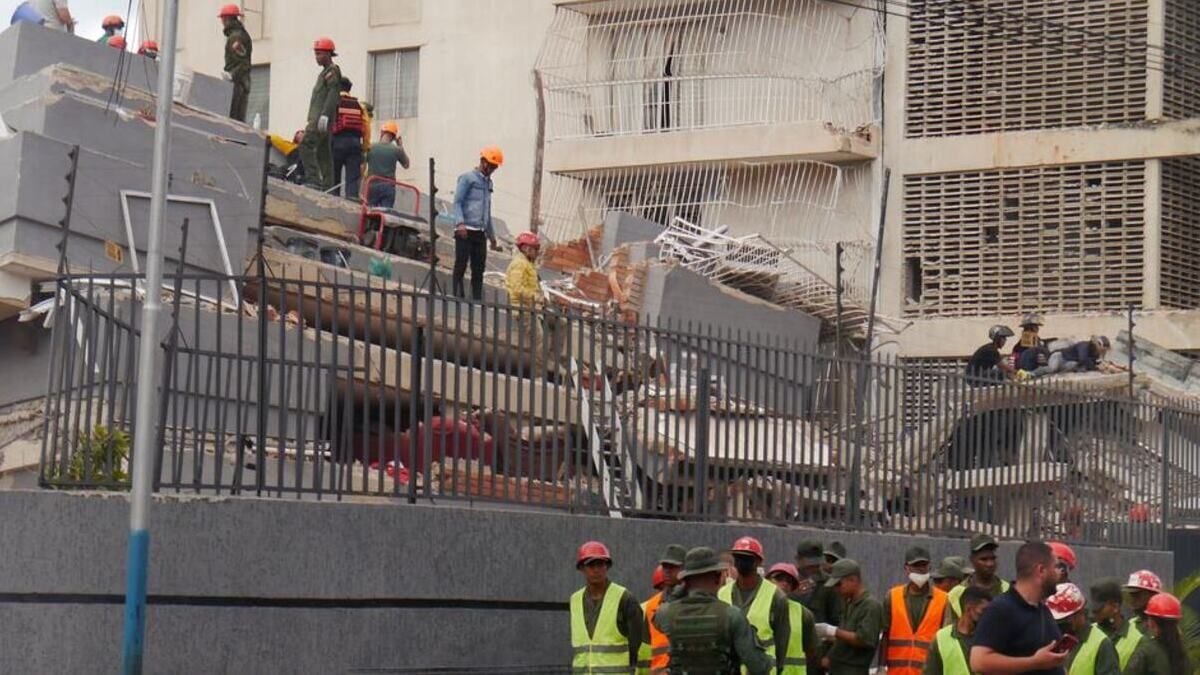
- At least 1,719 people have been confirmed dead following Venezuela's twin earthquakes on 24 June.
- International rescue teams from 27 countries continue searching despite hundreds of aftershocks.
- Thousands remain displaced as humanitarian agencies prepare for a prolonged recovery.

At least 1,719 people have been confirmed dead, around 5,000 injured and approximately 12,000 displaced following the powerful earthquakes that struck Venezuela on 24 June, according to Venezuelan authorities cited by the United Nations.
Search and rescue operations remain underway as teams continue to recover survivors from beneath collapsed buildings across the country.
The twin earthquakes, measuring magnitude 7.1 and 7.5, have left widespread devastation in several regions, with the heaviest losses reported in the coastal state of La Guaira and the capital, Caracas.
Around 2,500 structures have been damaged, many of them collapsing entirely, while hundreds of aftershocks have continued to shake affected areas.
According to the United Nations, seven people were pulled alive from the rubble on Sunday, days after the initial disaster, prompting rescue teams to extend operations beyond the standard 72-hour search window.
Authorities and humanitarian agencies have also agreed to procure 10,000 body bags amid expectations that the death toll may continue to rise.
Communities lead early rescue efforts
Reports from El País described widespread frustration over the limited initial presence of national emergency resources in many affected areas. In numerous neighbourhoods, residents, volunteers and relatives of missing people were seen conducting searches through debris while waiting for organised rescue assistance.
Videos circulating on social media showed families desperately searching for loved ones trapped beneath collapsed buildings. In some locations, local authorities and volunteers were among the first responders on the scene, while residents used basic tools to clear rubble and search for survivors.
In Caracas, neighbourhoods that would normally have been hosting community celebrations instead became centres of rescue activity. Residents emerged carrying shovels, pickaxes, gloves and helmets, joining efforts to locate people trapped in damaged buildings.
One volunteer told El País that the greatest challenge had been coordinating large numbers of ordinary citizens who had no previous disaster-response training but felt compelled to help.
International rescue teams arrive
As the scale of the disaster became clearer, rescue personnel from around the world began arriving in Venezuela. According to Venezuelan officials cited by El País, approximately 1,600 international rescue workers had landed in the country during the first days following the earthquake.
The United Nations later reported that more than 2,000 rescue workers from 27 countries were operating across Venezuela, supported by more than 160 search dogs and over 40 specialist rescue teams.
Countries contributing personnel and equipment include Turkey, Mexico, Colombia, Brazil, Ecuador, Portugal, Italy, Germany, Netherlands, Switzerland and the United Kingdom. Humanitarian organisations, including the International Committee of the Red Cross and Caritas Internationalis, have also deployed teams and resources.
Specialist rescue groups from cities such as Los Angeles, Miami, Madrid and São Paulo joined the response, while United Nations agencies coordinated humanitarian assistance on the ground.
Among the international teams operating in Caracas was Los Topos. Cristian Kuperbank, an Argentine rescuer working with the group, told El País that conditions inside collapsed buildings remained extremely dangerous.
“A single decision can mean debris falling and putting someone at risk,” he said, while noting that survivors can sometimes be found even a week after a building collapse.
US military assists emergency response
The United States has also become heavily involved in the relief operation. According to information reported by El País, the United States Southern Command has deployed personnel and equipment to assist Venezuelan authorities with restoring airport operations and coordinating incoming aid.
The command announced the deployment of a Contingency Response Element to support airport assessments, airfield management and aviation operations after damage to key infrastructure, including limitations at Maiquetía International Airport.
US Air Force C-17 transport aircraft have delivered personnel and equipment, while military helicopters and other aviation assets have been used to support relief operations. The United States Space Force has also provided satellite imagery to help emergency planners identify priority areas for rescue and aid distribution.
Search continues amid difficult conditions
Rescue operations have been complicated by worsening conditions on the ground. The United Nations reported that approximately 500 aftershocks have occurred since the main earthquakes, including a magnitude 5.2 tremor recorded early on Monday.
Humanitarian officials have also warned that a tropical weather system could bring heavy rainfall to affected areas, increasing the risk for rescue workers and survivors alike.
Teams searching through debris have repeatedly appealed for silence from crowds gathered near collapse sites so that they can detect voices or sounds from people trapped beneath the rubble.
In La Guaira, where some of the worst destruction has been recorded, rescuers face additional challenges from extensive structural collapse, high temperatures and the passage of time, all of which reduce the chances of survival.
Thousands left homeless
Across Caracas and other affected areas, public spaces have been transformed into temporary shelters. Parks, car parks and open squares are housing residents whose homes were damaged or deemed unsafe.
Some apartment blocks remain standing but have been declared uninhabitable due to severe structural damage. Residents have been allowed only brief visits to recover essential belongings before returning to temporary accommodation.
Many displaced families have chosen to sleep outdoors due to fears of further aftershocks. Others have relocated to emergency shelters established by local authorities and humanitarian organisations.
The United Nations is preparing assistance centres in La Guaira to provide healthcare, food, drinking water, sanitation services, protection support and psychosocial assistance for people who have lost their homes.
Long recovery expected
UN officials have warned that Venezuela faces a lengthy recovery process once search and rescue efforts conclude.
Rapid assessments will be conducted to determine humanitarian needs, including support for older people and people with disabilities. Authorities and aid organisations will then move to debris removal, reconstruction planning and repairs to damaged schools, hospitals and public infrastructure.
Humanitarian officials have stressed that emotional and psychological support will be as important as physical assistance. Many families are still waiting for news of missing relatives, while others already know that loved ones remain buried beneath the rubble.
“This is going to take time,” Vanessa May, head of the UN Office for the Coordination of Humanitarian Affairs in Venezuela, said as relief agencies prepared for the next phase of the response.
For now, rescue teams continue their search through the ruins, while communities across Venezuela confront the aftermath of one of the deadliest natural disasters in the country's modern history.