Ontario wildfires force evacuations as smoke blankets southern Canada amid extreme heat
More than 100 wildfires continued burning across northern Ontario as extreme heat fuelled dangerous conditions, prompting evacuations, suspending CN Rail operations and sending dense smoke across southern Ontario.
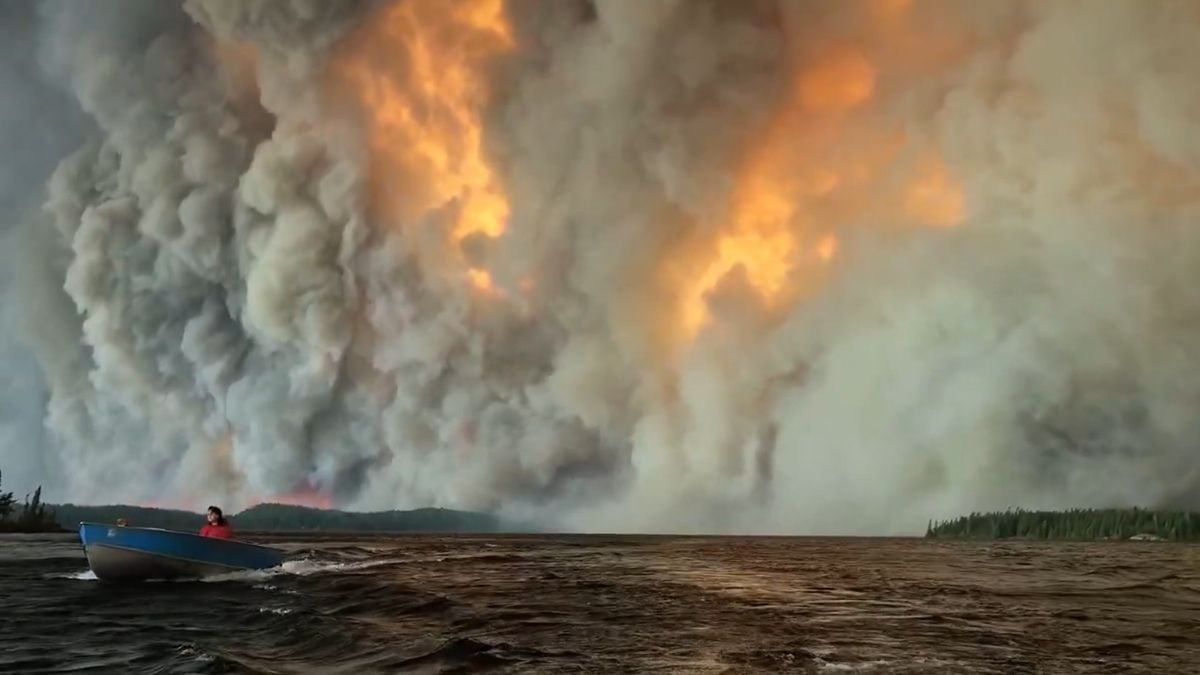
- More than 100 active wildfires continued burning across northern Ontario, with dozens remaining out of control.
- Evacuation orders affected several northwestern communities as fires threatened homes, infrastructure and transportation.
- Wildfire smoke spread across southern Ontario, creating hazardous air quality under extreme heat conditions.

Extreme heat continued to fuel Ontario's wildfire season on Wednesday, with more than 100 active fires burning across the province's northern region, forcing evacuations in several northwestern communities, disrupting rail operations and sending dense smoke hundreds of kilometres south, where orange skies and hazardous air quality spread across much of southern Ontario.
The wildfire situation remained critical on Wednesday evening, with more than half of the active fires still out of control as emergency crews battled rapidly changing conditions.
Wildfires force evacuations across northwestern Ontario
According to Ontario's provincial wildfire dashboard, 148 wildfires were active across the northern region of the province on Wednesday evening. Of those, 69 remained out of control, while the remaining fires had either been contained or were being monitored by firefighting crews.
The Ontario Provincial Police (OPP) said evacuation efforts remained under way in several northwestern Ontario communities as wildfires continued to threaten homes and infrastructure.
The force said it was working alongside the Ministry of Natural Resources and partner agencies to support emergency response efforts, while urging residents in other communities to remain informed and prepared should further evacuation orders or advisories be issued.
Residents in several northwestern communities have already been ordered to leave their homes as fires continued to spread. Some escaped by boat, while dramatic footage circulating on social media showed flames engulfing the landscape around a CN Rail train assisting evacuation efforts.
Communities under evacuation orders included Armstrong, Lac La Croix First Nation, Collins First Nation, Whitesand First Nation and Lac des Mille Lacs First Nation, according to the OPP.
The fires were also threatening other communities, including the Rainy River District and Kiashke Zaaging Anishinaabek, also known as Gull Bay First Nation.
Ontario forest fire officials had earlier reported 160 active wildland fires across the province on Monday, including 128 in the northwest region.
Ontario New Democratic Party MPP Sol Mamakwa said in a statement that Collins First Nation had been destroyed.
CN Rail suspends operations
A video widely shared on social media showed a wildfire surrounding a CN Rail train near Armstrong, north of Thunder Bay. The footage, filmed from inside the train, showed towering flames on both sides of the railway tracks while a crew member recorded the scene on a mobile phone.
CN Rail told Global News that all employees in the area were evacuated overnight on Monday and rail operations near Armstrong had been temporarily suspended as a precaution.
"CN has temporarily suspended rail operations near Armstrong, ON as a precaution due to wildfire activity in the area. As a safety measure, CN employees in the area and residents of the Town of Armstrong were evacuated overnight," a CN spokesperson said in an emailed statement to Global News.
"CN remains in close contact with the Ministry of Natural Resources and local authorities as the situation continues to evolve. The safety of our employees, the community, and emergency responders remains our top priority."
Orange skies blanket Ontario
Smoke from the wildfires travelled hundreds of kilometres south, reducing visibility and pushing air quality readings in parts of southern Ontario to among the worst in the world.
Across much of the province, residents witnessed eerie orange skies beneath a thick blanket of wildfire smoke.
Environment Canada climatologist David Phillips told Yahoo Canada that the unusual conditions were caused by a rare combination of weather patterns.
A heat dome that moved north from the United States into the Great Lakes region created conditions that allowed smoke from wildfires in northwestern Ontario, Manitoba and other parts of Canada to spread across Ontario.
Phillips said the high-pressure system acted almost like a "vacuum cleaner", pulling smoke from higher in the atmosphere closer to the ground and creating the dark, hazy conditions seen across the province.
"It was almost like a movie set from the Twilight Saga," Phillips said, describing the scene as "dark, dank and morose."
Unlike typical wildfire smoke that remains higher in the atmosphere and can produce colourful sunrises and sunsets, Phillips said this event was different because the combination of northwesterly winds and the heat dome trapped smoke closer to the surface, reducing visibility and pushing air quality into dangerous territory.
Heat and dry conditions keep wildfire threat high
Phillips said Ontario's wildfire season had arrived later than usual, but warned residents not to expect the danger to ease soon.
"The fire season has been late," he said. "The key thing is wind directions."
He added that continuing dry conditions, extreme heat and the potential for lightning activity meant wildfire risks remained a concern.
Environment Canada had placed much of northern Ontario under a severe heat warning on Tuesday, with humidex values making temperatures feel as high as 40C.