Sengkang overhead bridge debate resurfaces as residents question its purpose
An overhead bridge in Sengkang has drawn renewed scrutiny over its utility, despite explanations offered in 2021 highlighting its multi-functional design. Residents remain divided over its necessity, with some questioning its cost and purpose.
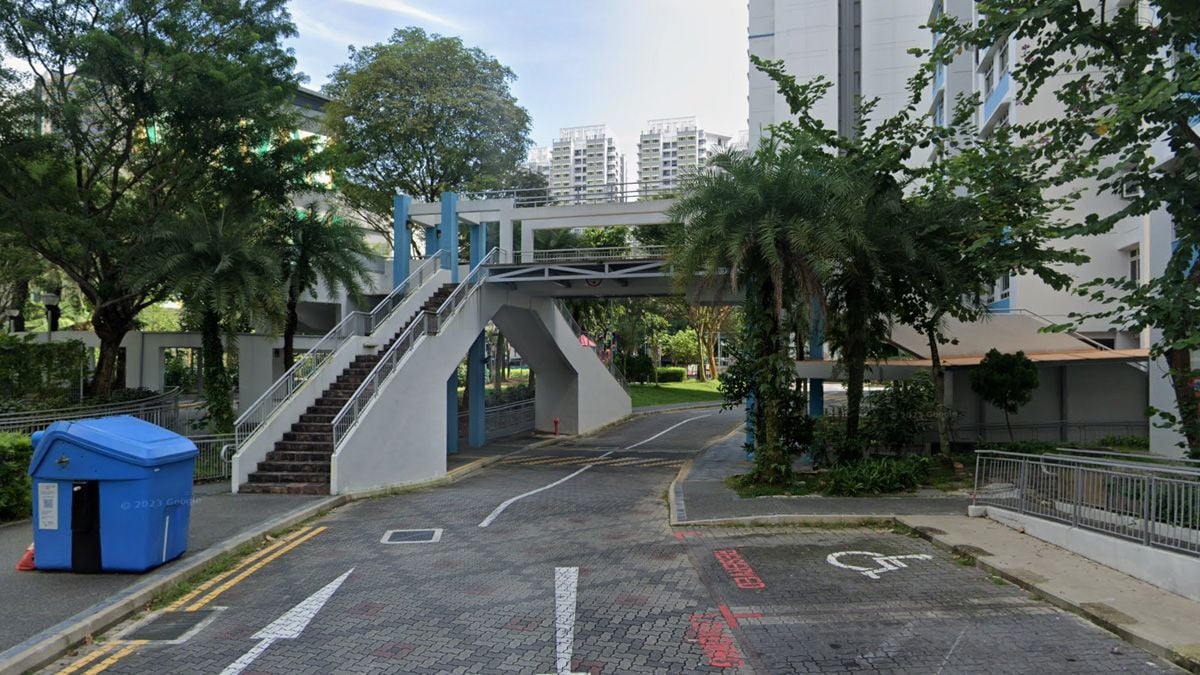

Debate over a pedestrian overhead bridge in Sengkang has re-emerged following renewed online criticism, illustrating how longstanding concerns about public infrastructure in Singapore can reappear years after initial discussion.
On 18 January, Facebook user Isaiah Tan shared an image of the bridge located near Block 406B Fernvale Lane, describing it as the “most redundant overhead bridge in the world” and a “waste of taxpayer money.” The post quickly gained attention online.
Shortly after, local politician Lim Tean echoed these sentiments in a separate post, labelling the bridge “useless” and calling for answers from Members of Parliament representing the area.
MP explains bridge's multi-purpose role
However, an explanation had already been offered in 2021 by then-Ang Mo Kio GRC MP Gan Thiam Poh, who stated that the bridge was designed with several functions in mind.
In a 2021 report by Zaobao, Gan described the bridge not only as a pedestrian crossing, but also as a multi-functional facility meant to benefit local residents.
According to Gan, the 4.5-metre-high structure serves three primary purposes: as a sheltered walkway to protect pedestrians from the elements, a drop-off point for vehicles, and an observation deck allowing residents to enjoy nearby greenery and take photos.
Gan explained, “If it’s only an overhead bridge, few people might actually use it. But since it’s designed for multiple purposes, one can maximise its use.”
The bridge connects an HDB block to a small garden across two narrow lanes. Its design was intended to enrich the local environment and lifestyle experience, rather than serve as a pure transportation link.
Mixed reactions from the community
Despite the original explanation, resident sentiment remains divided. Some nearby residents continue to question the bridge’s utility and value, while others acknowledge its purpose under specific conditions.
A Zaobao journalist who visited the site reported that within 20 minutes of observation, no one used the bridge to cross the road. Instead, most residents were seen walking across the street below, suggesting the bridge is rarely the first choice for daily pedestrian use.
Retired resident Chua, aged 83, commented that the bridge has existed for over a decade without being connected to any car park and is used only for basic crossing. Another resident, a 41-year-old technician named Tan, noted that he has seen children play on the bridge, but most adults prefer the more direct route below, rather than climbing nearly 30 steps.
Some residents have speculated about alternative reasons for its construction.
One belief is that the bridge may have been designed with feng shui considerations, serving as a symbolic “镇宅” (calming structure) to balance the energy of the area.
Others suggested the bridge may have been included by developers who had budget flexibility and wanted to enhance the area’s aesthetics.