SPCA handles 608 animal cruelty and welfare cases in 2025, down from last year but still alarming
Animal cruelty and welfare cases in Singapore fell to 608 in 2025 from a 12-year high in 2024, but SPCA warned the figure remains alarming, citing continued abuse, neglect, abandonment and rising concerns over pet ownership and regulation.

- Animal cruelty and welfare cases fell to 608 in 2025, down from 961 in 2024, but SPCA said the numbers remain worrying and likely underreported.
- Cats were the most affected, with abandonment and abuse prevalent, while poor living conditions and high-rise falls drove welfare cases.
- SPCA urged stronger laws and enforcement, citing rising issues with errant pet businesses and the need for tougher penalties.

SINGAPORE: Cases involving animal cruelty and welfare in Singapore fell in 2025 from a 12-year high recorded the previous year, a development the Society for the Prevention of Cruelty to Animals (SPCA) described as “encouraging”.
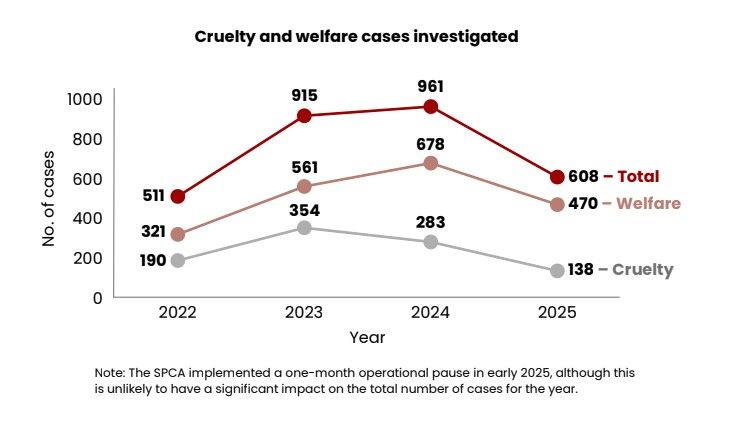
In its annual report released on Monday (2 Feb), SPCA said it handled 608 confirmed cases last year, down from 961 cases in 2024. However, it cautioned that the figure remains “alarming”, as it reflects only cases known to the organisation, with nationwide numbers likely to be higher.
Of the 608 cases, 138 (22.7 per cent) involved animal cruelty or abuse, while the remaining 470 (77.3 per cent) were linked to poor welfare or neglect.
SPCA defines cruelty or abuse as the intentional infliction of pain, suffering or death on an animal, while welfare or neglect cases involve a failure to meet an animal’s basic needs, resulting in prolonged suffering or poor living conditions.
Cats Most Affected in 2025
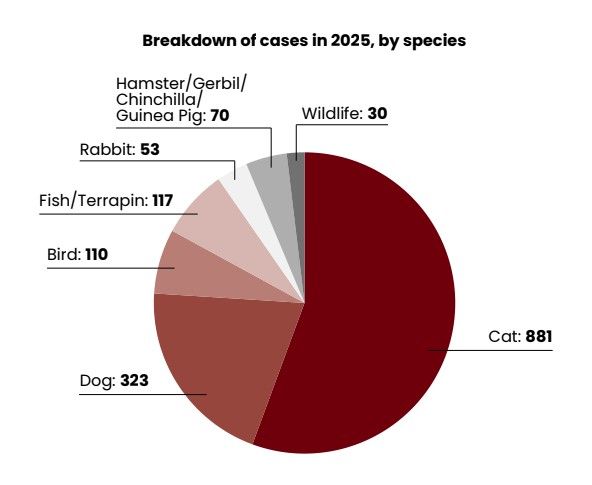
A total of 1,584 animals were involved in cruelty or welfare cases in 2025.
Cats made up the majority, accounting for 881 animals, followed by dogs (323), fish or terrapins (117), birds (110), and small rodents such as hamsters, gerbils, chinchillas and guinea pigs (70). There were also 53 rabbits and 30 animals classified as wildlife.
Animal Cruelty: Abandonment and Physical Abuse
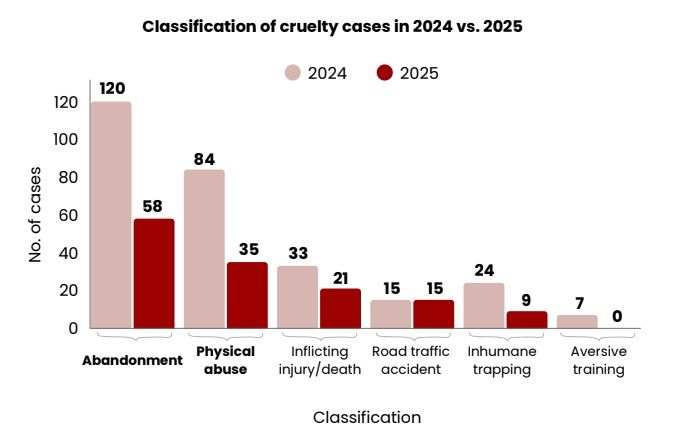
SPCA said the 138 cruelty cases involved 215 animals. Abandonment was the most common form of cruelty, with 58 cases, followed by physical abuse, which accounted for 35 cases.
As in 2024, cats again formed the majority of animals abandoned. In one case cited by SPCA, 13 cats were found in Boon Lay in January 2025. The organisation said the animals were likely abandoned by the same source due to their similar physical appearance and the timing of their discovery.
SPCA also highlighted concerns over the abandonment of pedigree dogs. While such dogs are often sought after as “cute” puppies, they may later be abandoned due to chronic health issues linked to breeding practices.
In August 2025, SPCA was alerted to an abandoned 15-year-old silky terrier suffering from severely matted fur and a knee condition directly related to breeding.
When people buy pedigree pets based on appearance without considering their long-term health needs, this increases the likelihood of abandonment as the animal ages and veterinary costs rise, SPCA said.
Small animals such as hamsters were also highlighted as particularly vulnerable, as they can be easily purchased and just as easily discarded due to the absence of microchipping and licensing requirements.
In October 2025, SPCA was alerted to two hamsters roaming freely on Coney Island.
Small animals are extremely fragile and cannot survive on their own for long.
Unlike community cats and dogs that reside in neighbourhoods, rabbits and hamsters do not naturally exist in the community or in the wild, SPCA said.
Abuse Disguised as Discipline
SPCA noted that physical abuse frequently occurs under the guise of discipline or training.
One such case drew public attention after a man was seen hitting his dog with a walking stick, pulling it by the leash and lifting it forcefully by the collar. An eyewitness said the abuse had taken place several times a week for at least three years.
The man later told SPCA inspectors that his physical ailments made walking his two dogs uncomfortable, leading him to resort to hitting and pulling to control them. Both dogs were eventually rehomed.
“Unfortunately, punitive methods are still a tempting (though false) ‘quick fix’, as they seem to eliminate the undesired behaviour on the surface. But the lingering undercurrents are still there and will find other ways to emerge, perhaps in behaviours that are less safe,” SPCA said.
It added that children are at risk of learning such behaviour when their parents physically abuse animals.
The organisation also warned that abuse may be carried out for social media content. It cited an incident involving local influencer Eunice Ng, known online as “Mermaid Girl”, after videos she uploaded allegedly showed her abusing her dog.
The case was escalated to the National Parks Board (NParks) and remains under investigation.
Poor Welfare and Neglect Remain Widespread
SPCA investigated 470 cases of poor welfare in 2025, involving 1,369 animals. These included unsatisfactory living conditions, high-rise syndrome, animal hoarding, neglected medical conditions, as well as pets left unattended or allowed to roam freely outdoors.
Dissatisfactory living conditions were the most common issue, accounting for 233 cases, followed by high-rise syndrome with 88 cases. Pets left unattended ranked third, with 41 cases.
In one case, SPCA was alerted to a malamute confined in a filthy enclosure at what appeared to be a former pet boarding facility. The enclosure was filled with urine and faeces, placing the dog at high risk of illness. The animal was seized, and investigations by NParks are ongoing.
On high-rise syndrome, SPCA said most cases involved owners who had failed to install window meshing. While cats were the most frequent victims, other animals were also affected.
“Such cases are increasingly worrying, especially as we approach two years since the legalisation of keeping pet cats in HDB flats. If cat-proofing awareness and behaviour do not keep pace with the number of households having cats, this can lead to dire consequences,” SPCA said.
Many lives can be saved simply by securing all entryways to the home, the organisation added.
High-rise syndrome also affects community cats, often because residents feed them on upper floors. SPCA advised that feeding should be carried out at ground level and away from areas with heavy human footfall.
Errant Pet Businesses and Calls for Tighter Regulation
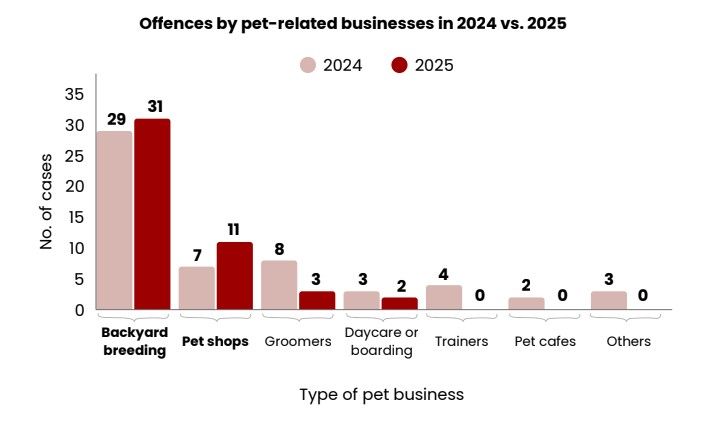
SPCA also investigated 47 cases involving errant pet businesses in 2025, including backyard breeders, pet shops, groomers, and boarding or daycare facilities.
Cases involving backyard breeders and pet shops increased compared with 2024, signalling the need for stronger legislation and enforcement.
Of the 47 cases, 31 involved backyard breeding, while 11 were linked to pet shops, up from 29 and seven cases respectively the year before.
SPCA said breeding and selling animals inevitably involves some degree of suffering, either through poor welfare conditions or by contributing to an overpopulation of homeless animals. It added that unlicensed breeders and sellers pose particular challenges, as they are not subject to regulatory conditions.
Last month, Minister of State for National Development Alvin Tan said the ministry is considering requiring pet grooming businesses to install closed-circuit television cameras as part of an ongoing review of the Animals and Birds Act.
The review also includes reassessing penalties to ensure they remain effective in deterring animal cruelty and abuse.
Strengthening Animal Welfare Protections
SPCA said sustained public education is needed to reduce demand-driven pet purchases, alongside greater accountability for licensed businesses and swift action against unlicensed operators.
The organisation added that it has worked with the Animal Concerns Research and Education Society (ACRES) to propose recommendations in the White Paper on Strengthening Protections for Animal Welfare. These include raising welfare standards for licensed breeders, regulating online platforms to curb unlicensed sales, and introducing a minimum age of 16 for purchasing animals.
SPCA pointed to a November 2025 case in which a couple were each fined S$52,500 and jailed for a week for illegally breeding 30 ragdoll kittens within a year. The pair had used a website and social media accounts to advertise the cats.
Such sentences could pave the way for stronger deterrence and better protection for animals, SPCA said, adding that future penalties could be revised to reflect the degree of harm inflicted and the burden of care placed on organisations that take custody of abused or neglected animals.