Nine dogs saved as Yulin slaughterhouse in China closes ahead of infamous annual dog meat festival
A dog slaughterhouse supplying China’s controversial Yulin dog meat trade has shut down under a livelihood transition programme, rescuing nine dogs and renewing debate over animal welfare after the theft and slaughter of a celebrity pet dog sparked nationwide outrage.
- A Yulin dog slaughterhouse has permanently closed through a programme helping traders transition to other businesses.
- Nine dogs were rescued from the facility as debate over China’s dog meat trade intensified.
- Public outrage over a stolen celebrity pet has renewed calls for stronger animal protection laws.

GUANGXI, CHINA: A dog slaughterhouse near Yulin in southern China has permanently ceased operations days before the annual Yulin dog meat festival, with animal welfare groups describing the closure as the city’s first livelihood conversion programme for a business involved in the trade.
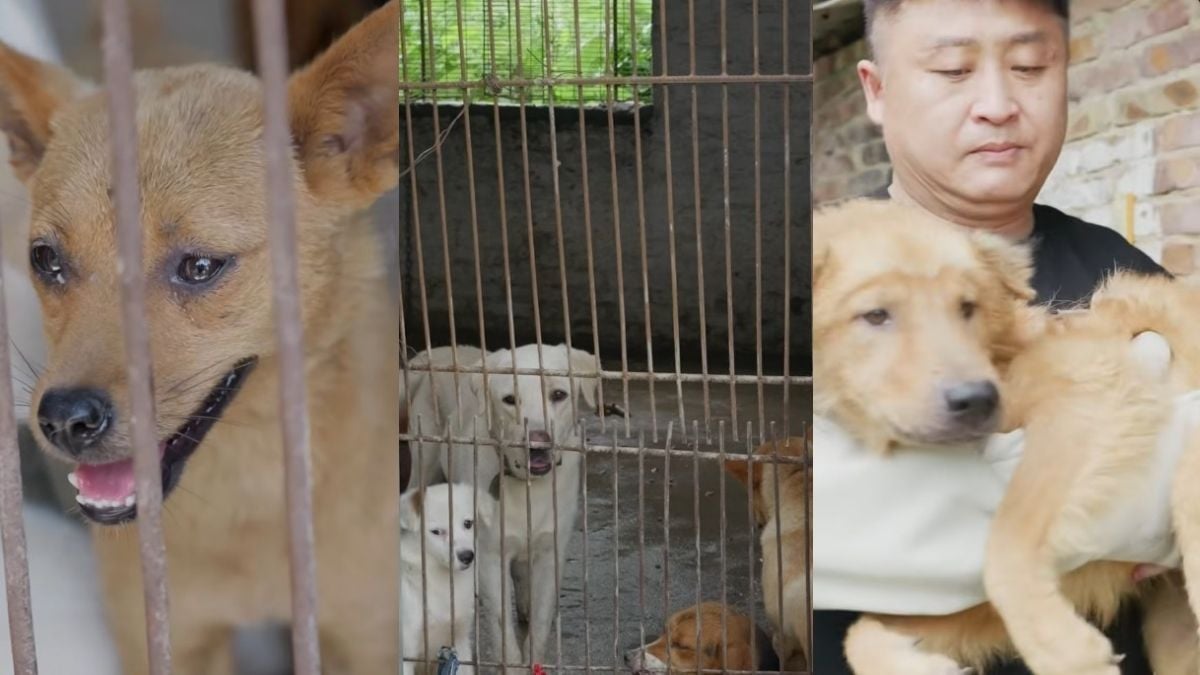
The closure resulted in the rescue of nine dogs that campaigners say were awaiting slaughter.
Among them were three animals still wearing collars and believed to have been stolen pets, including a Labrador named An An, a Beagle named Moli and a Poodle named Lian.
Animal welfare organisation Vshine Animal Protection Association, with funding and technical guidance from Humane World for Animals, announced that it had secured a legally binding agreement with the slaughterhouse owner to shut the facility permanently and support a transition into another line of work.
According to the organisations, the slaughterhouse had operated since 2007 and supplied dog carcasses to restaurants and markets associated with Yulin’s annual dog meat festival.
They estimate that more than 15,000 dogs were killed there during its years of operation.
“This is the first ever livelihood conversion to take place in Yulin,” Humane World for Animals campaign director Julie Sanders said. “Support for the dog meat trade is low and traders are keen to get out of the business due to family and financial pressure.”
The owner, identified under the pseudonym Huang, said he hoped to leave the trade behind permanently and was considering opening a breakfast catering business selling rice porridge, fried dough and steamed buns.
“I’m looking forward to a peaceful life,” Huang said in a statement translated by Humane World for Animals.
“I have been killing dogs for almost 20 years. It’s a dirty business and I don’t feel good about it. As fewer people are eating dog meat these days it’s hard for me to provide for my family.”
He added: “Without the support from this programme, I would not have been able to make this life change.”
Rescue operation saves nine dogs
The slaughterhouse is located about 30 kilometres south of central Yulin and reportedly slaughtered around 15 dogs each week, with June accounting for about 70 per cent of its annual income because of increased demand surrounding the festival.
Campaigners said the rescued animals are receiving veterinary treatment before being quarantined, vaccinated and sterilised ahead of adoption into local homes.
Some of the dogs have displayed signs of fear and trauma after their experiences.
Capital Animal Welfare Association secretary-general Cao Jinwei said many rescued animals struggle to trust humans after leaving the meat trade.
“Many of these dogs are afraid of people,” Cao said. “Getting them out of their cages is difficult, and we hope rehabilitation can help change their behaviour before they are adopted into loving homes.”
After a journey lasting around 30 hours, dogs rescued from Yulin have previously been transported to shelters in Beijing where welfare groups seek permanent adopters.
Celebrity dog case fuels public anger
The closure comes amid renewed nationwide debate over China’s dog meat trade following the theft and killing of Chutou, an eight-year-old Border Collie with more than 1.5 million social media followers.
The dog belonged to a travel influencer and was reportedly stolen from the family’s farmland in Henan before being sold for the equivalent of about US$25 to a dog meat restaurant, where it was later slaughtered and eaten.
The owner has reported the incident to police and is pursuing legal action.
The case generated widespread discussion online, prompting calls for stronger legal protections for companion animals and renewed scrutiny of pet theft linked to the dog meat trade.
Calls for legislative reform
Animal welfare advocates argue that the Yulin closure demonstrates how economic incentives can encourage businesses to abandon the industry.
Chen Xiaolei of Vshine said visiting the slaughterhouse had been deeply disturbing.
“This cruel and dirty trade has no place in modern China,” Chen said. “By supporting policies that enable traders to transition to alternative livelihoods, the Yulin authorities could help close this cruel trade for good.”
Dr Peter Li, a consultant with Humane World for Animals and an associate professor specialising in East Asian politics and animal policy, urged the Chinese government to outlaw the dog and cat meat trade nationwide.
Earlier in 2026, Vshine submitted a legislative proposal to the National People’s Congress seeking stronger protections for companion animals, including a nationwide ban on the dog and cat meat trade.
Changing attitudes towards dogs
China removed dogs from its official livestock catalogue in 2020, instead classifying them as companion animals.
The cities of Shenzhen and Zhuhai have also prohibited the consumption of dog and cat meat.
According to Humane World for Animals, Yulin’s so-called Lychee and Dog Meat Festival is not an ancient tradition but was launched in 2010 by traders seeking to promote dog meat consumption and increase sales.
At its height in 2012, campaigners estimate that more than 10,000 dogs were slaughtered during the event.
The organisation also estimates that around 10 million dogs and four million cats are killed annually in China for meat, although it says most people in the country do not consume dogs or cats.
Across Asia, it estimates that approximately 20 million dogs and six million cats are killed each year in countries including China, Viet Nam, Cambodia, Indonesia and parts of north-eastern India.
Animal welfare groups hope the Yulin closure can serve as a model for similar transitions elsewhere, arguing that supporting traders in moving to legal and sustainable businesses could reduce animal suffering while providing more stable livelihoods for families formerly dependent on the trade.