Singapore’s gilded cage: High pay, low risk, and a leadership gap
Singapore’s political system offers high salaries to attract top talent, but critics argue it has created a risk-averse leadership pipeline dominated by obedient administrators rather than bold visionaries. The result may be a system that rewards caution over courage, and loyalty over leadership.


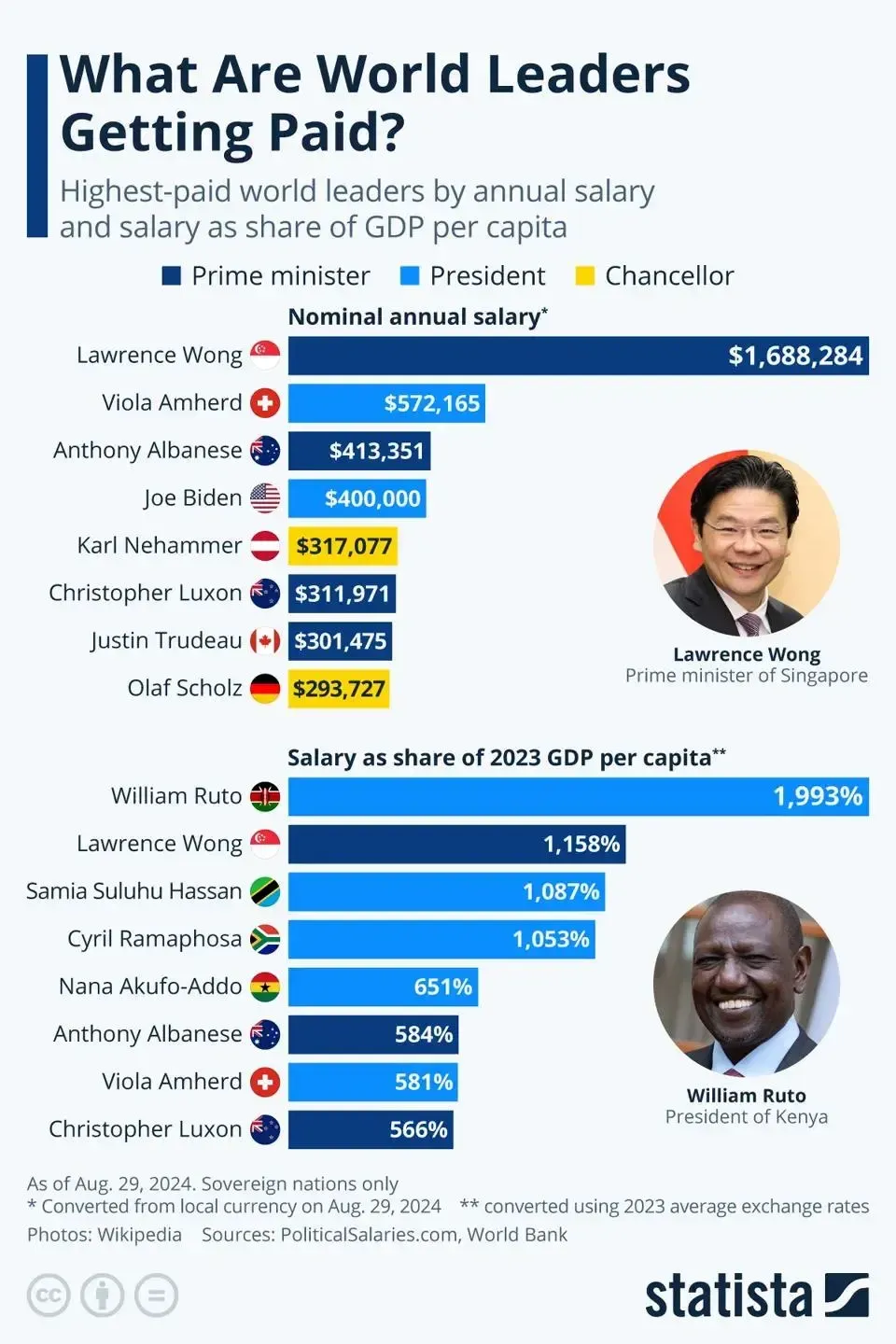
In April 2007, former Prime Minister Lee Hsien Loong stood before Parliament to defend a watershed moment in Singapore’s political history: a salary revision that saw ministerial pay leap by roughly 60%.
At its height, the Prime Minister’s salary soared to $3.76 million, while entry-level (MR4) ministers reached $1.9 million.
The logic was purely market-driven. "It is about our future," he argued. "How can Singapore produce the best government to secure a bright future?"
He rejected the "routine" government models of the West, advocating instead for a "paranoid" government—one so elite and proactive that it could navigate a tiny "red dot" through global turbulence.
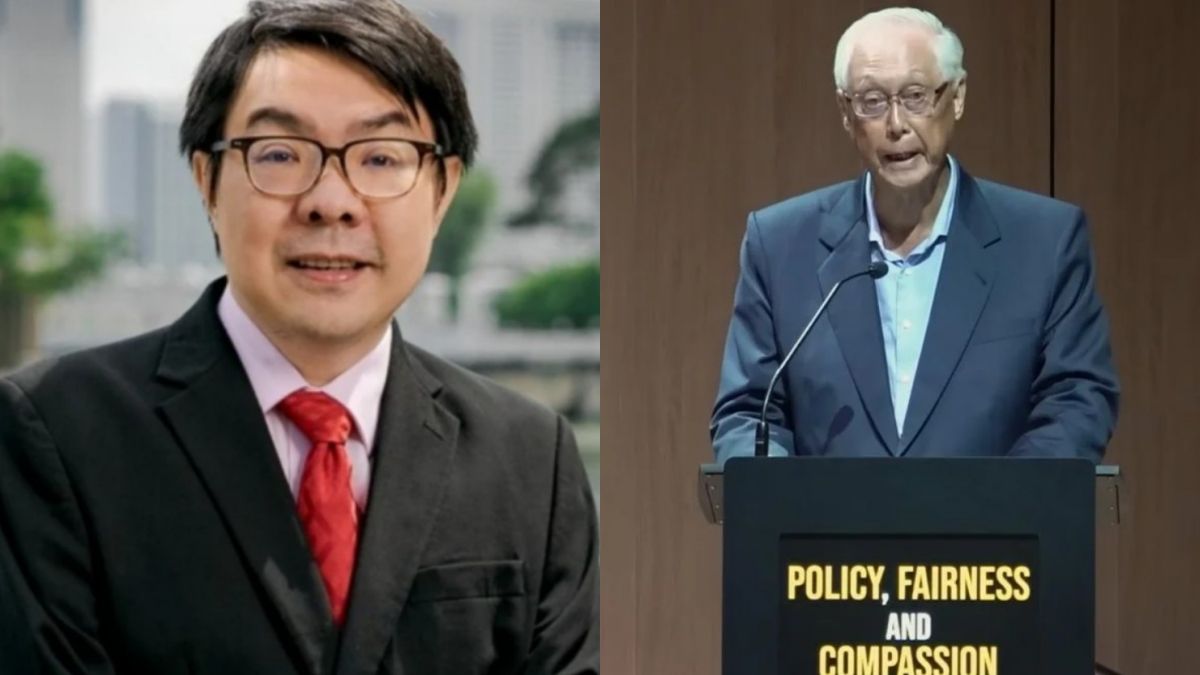
Nearly two decades later, Emeritus Senior Minister Goh Chok Tong reignited this debate during the launch of Minister for Home Affairs K. Shanmugam’s book, Policy, Fairness, and Compassion.
Warning against "mediocrity," ESM Goh cited Minister Shanmugam—who joined the People’s Action Party (PAP) in 1988 and has served as a politician for 37 years—as a rare paragon of sacrifice: a man who walked away from "tens of millions" in private legal fees to serve.
But as we look at the People's Action Party (PAP)'s Cabinet in 2026, a glaring paradox has emerged. The million-dollar salary was designed to "poach" diverse titans from the private sector to prevent intellectual stagnation. Instead, it has largely funded a "royal priesthood" of establishment insiders, military generals, and career civil servants.
The "Same Circle" Syndrome
The primary justification for high pay has always been the "opportunity cost" for private-sector talent.
Yet, recruitment patterns for 4G and 5G leadership reveal a consistent, predictable, and insular script. Instead of entrepreneurs who have risked their own capital or scientists who have broken new ground, the system has produced a revolving door for those already within the state’s orbit.
Consider the "new faces" of PAP's 2025/2026 intake. They are not outsiders lured by a competitive wage; they are insiders who have simply changed their badges.
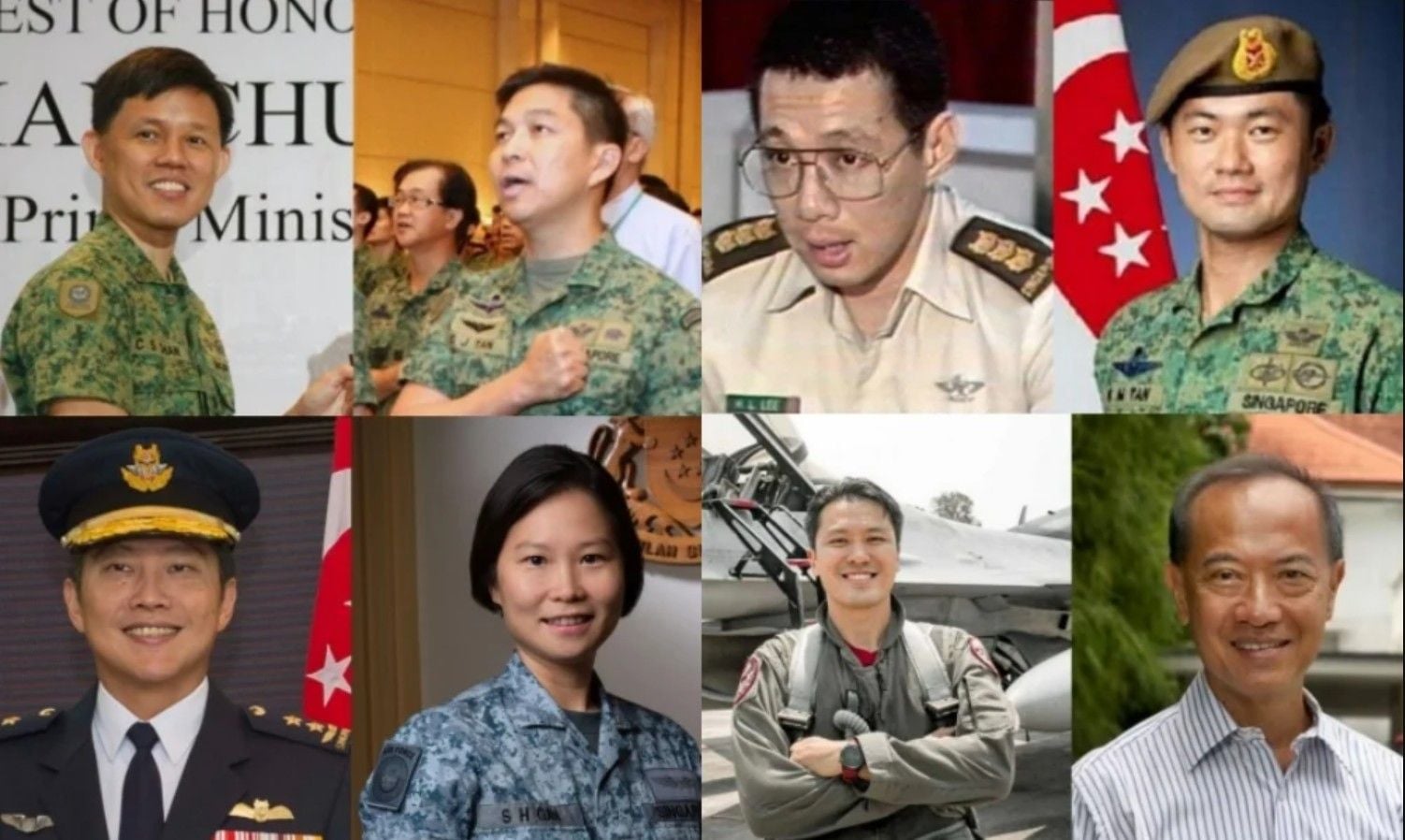
Goh Pei Ming entered politics directly after serving as the SAF’s Chief of Staff (Joint Staff). Jasmin Lau was the Deputy Secretary of Policy at the Ministry of Health. Goh Hanyan was a director at the Ministry of Digital Development and Information. Even Foo Cexiang, while currently at PSA, spent his formative decade as a director within the Ministry of Transport.
This is not a new trend. It is the continuation of a pipeline that includes former Chief of Defence Force Ng Chee Meng, and Brigadier-Generals like Desmond Tan and Shawn Huang.
By the time these individuals enter Parliament, they have spent twenty years steeped in the same "Instruction Manual" culture.
They are competent, yes. But are they the "missionaries" Singapore needs, or are they "mandarins" rewarded for staying within the lines?
The Gilded Cage and "Eunuch Disease"
The late Ngiam Tong Dow, former head of the civil service, famously warned that the PAP’s tactic of monopolising talent by concentrating scholars in the public sector was a short-term win but a long-term risk.
He argued that it creates an elite that eventually begins to "live a gilded life in a gilded cage." For a General or a Permanent Secretary, a S$1.1 million ministerial salary (the norm since the 2012 post-GE2011 recalibration) is not a sacrifice—it is a promotion.
When you pay private-sector prices for public-sector products, you create what Philip Yeo called "Eunuch Disease." Yeo, the maverick former EDB chairman, argued that pyramidal organisations tend to surround the leader with "staffers" or paper-shufflers whose primary objective is to keep the "emperor" happy.
He contrasted this with the "Old Guard"—politicians who built a nation from scratch and focused on long-term goals, not administrative minutiae.
Today, however, many ministers appear more focused on performative visibility than substantive leadership—turning up at events, posing for photographs, filming content for social media, and inserting themselves into a wide range of issues.
Yet when things go wrong, few are held accountable. Despite their hyperactivity, they often resemble "temporary secretaries" rather than visionaries, with limited strategic boldness.
High pay, intended to attract the best and the boldest, may instead incentivise caution. As Yeo observed, the "obedient kids" who follow every rule in school grow up to be "good eunuchs."
The real mavericks—the ones with an "itchy backside" who want to build new engines of growth—are often deterred by the very bureaucracy this high-pay system seeks to preserve.
The myth of the market-driven miracle
ESM Goh’s defence of million-dollar salaries—what might be called the “Shanmugam Fallacy”—relies on using one Senior Counsel’s private-sector earnings to justify a systemic framework of political pay. But Singapore’s political excellence was never forged by market logic. It was built by leaders on a mission.
The pioneer generation did not check the "top 1,000 earners" index before choosing to serve. They were motivated by a deep fear of failure and an urgent passion for building a nation from scratch.
Figures like Lee Kuan Yew, Goh Keng Swee, and S. Rajaratnam were not drawn to politics by formula or compensation. They stepped forward amid crisis, driven by the sheer, terrifying uncertainty of whether Singapore would survive.
They lived modestly, in conditions comparable to those they governed. That proximity created a social compact of shared fate—one rooted in sacrifice, not privilege.
Today, that compact is fraying. We are no longer selecting leaders with conviction; we are selecting for comfort. A system intended to attract top-tier talent has instead normalised the career politician: highly paid, risk-averse, and reluctant to exit.
In most First World democracies, political leadership is a high-stakes sprint. Politicians enter with a mission—whether to reform, transform, or guide through crisis—and step down when the job is done.
In Singapore, political office has become a lifelong tenure. Ministers stay for 15 to 25 years, protected by salaries far beyond what most generalists could earn in the open market.
High pay was meant to bring in the bold. But as Philip Yeo once warned, paying private-sector prices for public-sector roles risks cultivating “Eunuch Disease”—a culture of caution, compliance, and protectionism, where initiative fades and systems orbit around preserving hierarchy.
As Ngiam Tong Dow cautioned, without serious political competition or renewal, the incumbent class may simply coast along—managing instead of leading, maintaining rather than transforming.
In a 2007 speech, Prime Minister Lee Hsien Loong asked: “What kind of government do we want?” He dismissed the “routine” models of countries like Australia or New Zealand, where leaders cycle out every decade.
Yet routine has value. It brings renewal. It resets expectations. It prevents the stagnation Ngiam feared.
When political office becomes too comfortable, it stops being a sacrifice and starts looking like an entitlement.
You cannot buy conviction. You cannot benchmark purpose. And you cannot spreadsheet the hunger to build a nation.
Sparta vs. Athens
Ngiam Tong Dow’s most profound critique was his comparison of Singapore to Sparta—a martial society where the best are taken from their parents as children and educated in a closed loop.
Sparta was efficient, but it was brittle. It crumbled because it lacked diversity of thought.
He preferred the model of Athens—an "untidy" city of philosophers that survived because it allowed talent to grow spontaneously outside the reach of the state.
The current salary framework is designed for a Sparta. It assumes that talent only exists within the "priesthood" of the SAF and the Administrative Service.
It ignores the entrepreneur, the social worker, and the scientist who might be willing to serve for a fraction of the pay if they believed in the mission.
By continuing to believe our own propaganda, we risk becoming a nation where the "monkeys have become gorillas," and the government is forced to dance to their tune of asset enhancement and utility rebates just to stay popular.
Leaders, not highly paid executives
Singapore is larger than the PAP, and its leadership should be more diverse than a closed circle of former Principal Private Secretaries and Generals.
We do not need “another Shanmugam” who must be handsomely compensated for a supposed sacrifice—as many netizens have pointedly questioned. What Singapore needs is a new generation of leaders who see public service as a calling, not a concession.
We are paying for managers, but we are praying for leaders. If we want to avoid atrophy, we must break the gilded cage.
We must return to a model where politicians fulfill a mission and then move on with their lives—returning to the very society they helped build, rather than retiring into the safe embrace of a GLC directorship.
Only then will we know if our leaders are serving Singapore, or simply serving a contract.
After all, when the PAP lost its first GRC in 2011, salaries were swiftly reduced the following year.
Now that Lawrence Wong has secured a sweeping victory in 2025, will the ongoing salary review signal a return to the old rewards? If electoral defeat demanded humility, does political success now demand a pay rise?