MARUAH Budget 2026 dialogue raises concerns over surplus, AI and policy gaps
A MARUAH dialogue on 15 February 2026 examined whether Budget 2026 addresses public anxieties, with speakers and attendees raising concerns over fiscal surpluses, AI disruption, cost-of-living pressures and innovation policy gaps.

- A MARUAH-organised dialogue examined whether Budget 2026 sufficiently addresses public anxieties.
- Participants debated fiscal surpluses, AI-driven job disruption, SME pressures and fertility challenges.
- Audience members also highlighted perceived gaps on cost reductions and administrative spending.

A public dialogue on Singapore’s Budget 2026 saw speakers and attendees question whether the Government’s fiscal strategy and policy measures are adequately addressing anxieties among citizens and small businesses.
The forum, titled “Singapore Budget 2026: Is It Good Enough?”, was held on 15 February 2026, three days after Prime Minister and Minister for Finance Lawrence Wong delivered the Budget statement on 12 February 2026.
Organised by MARUAH, a human rights organisation and working group for an ASEAN human rights mechanism in Singapore, the event featured presentations, a panel discussion and an interactive session with participants.
The panel comprised Mr Leong Sze Hian, Ms Wendy Low Wei Ling, Dr Jeremy Lim and Mr Tay Kheng Soon, each drawing on their professional backgrounds to address different aspects of the Budget.
Mr Leong, a veteran advocate with extensive experience in fiscal analysis and public policy commentary, provided a critical assessment of the Government’s revenue position and expenditure priorities. He examined the sustainability and implications of recurring budget surpluses within Singapore’s broader fiscal framework.
Ms Low, an intellectual property lawyer and partner at Eldan Law LLP with expertise in digital rights and e-commerce, spoke on employment, employability and artificial intelligence (AI). Drawing on her background in technology law and policy, she addressed the structural shifts facing professional services.
Dr Lim, Chief Executive Officer and Co-Founder of AMILI, and a public health expert with experience in both public and private healthcare systems, focused on healthcare financing and community care. He situated the Budget’s measures within longer-term demographic and cost pressures.
Mr Tay, a veteran architect and urban thinker known for his work on housing and urban sustainability, examined land use and housing policy. He linked fiscal decisions to spatial planning and long-term national development.
Mr Leong titled his presentation “Singapore’s Fiscal Policy Model: Miracle or Nightmare?” and focused on the scale and implications of the projected surplus.
He noted that this year’s Budget surplus stands at S$15.1 billion, or 1.9 per cent of GDP. He questioned whether a portion of the surplus should be channelled towards lowering the cost of public goods and essential services in what he described as “the most expensive city in the world”.
Framing his argument from a cashflow perspective, Mr Leong said that if government inflows consistently exceed outflows by a significant margin — particularly in areas such as pensions, public housing and healthcare — the outcome could be viewed as problematic for citizens.
“If the inflows exceed the outflows by a lot, in pensions, public housing and healthcare, it is a nightmare,” he said.
He added that if inflows and outflows are roughly balanced, the model is neither exceptional nor alarming. However, he argued that if outflows modestly exceed inflows — while still maintaining very low budget deficits and low external public debt — such a situation could be regarded as a “miracle”.
Mr Leong also raised what he termed the “price” of Singapore’s economic success”, pointing to several international rankings.
He cited data indicating that Singapore was described as the most fatigued country in the world (Seasia Stats 2025), the most depressed nation in Asia (World Population Review 2024), and the most expensive city in the world (Economist Intelligence Unit 2025).
He further referenced the Oxfam Inequality Report 2018, which ranked Singapore 149th out of 157 countries on measures related to reducing inequality.
In addition, he noted that Singapore has one of the lowest total fertility rates globally, describing it as the second lowest in the world, and suggested that such demographic indicators should be considered alongside fiscal outcomes.
These indicators, he argued, raise questions about whether strong fiscal balances alone are sufficient measures of national well-being.
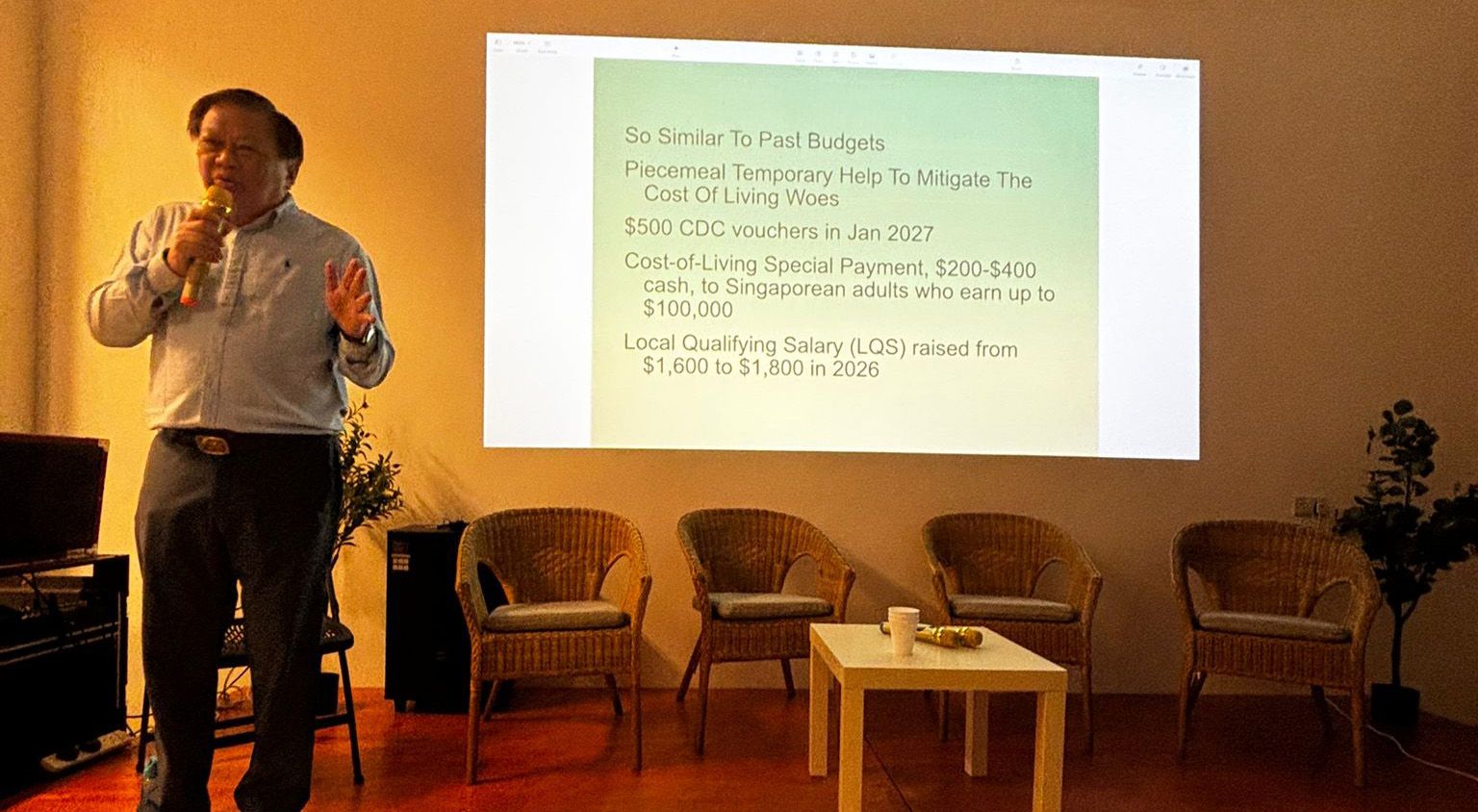
Ms Low, who is also an Executive Committee member of the Progress Singapore Party, highlighted the potential disruption to legal and business services. According to an on-the-ground correspondent, she warned that junior lawyers and current law students could face shrinking job prospects as AI tools increasingly automate research, drafting and due diligence functions.
She suggested that law graduates may need to view their degrees as enablers for adjacent and specialised roles, such as IT forensic work and adopting digital solutions for asset tracing in anti-money laundering cases, rather than relying solely on traditional legal practice.
Former Workers’ Party Member of Parliament Leon Perera, who attended the session, later shared an account of the discussion. He noted that one issue raised was the projected 2025 Budget surplus, reportedly likely to exceed S$15 billion, or close to 2 per cent of GDP.
Mr Perera questioned whether recurring multi-billion surpluses should be viewed as an unqualified positive, arguing that such funds ultimately originate from households and businesses. He asked whether sufficient public debate exists on the trade-offs involved.
According to Mr Perera, the panel debated whether Budget 2026 would nurture confidence and sufficiently address anxieties felt by citizens and small and medium-sized enterprises (SMEs).
Several segments were identified as particularly anxious. These included young people concerned about AI’s impact on entry-level jobs, SMEs in retail and food and beverage facing pressures from rents and labour constraints, and individuals in their 30s and 40s hesitant about starting families due to job insecurity and high living costs.
Participants also discussed Singapore’s persistently low total fertility rate, describing it as an “existential issue” that has remained unresolved for decades despite successive policy adjustments.
Audience members also raised what they viewed as gaps in Budget 2026. While mainstream media reports highlighted a calendar of vouchers and handouts, one participant observed that no specific allocations were announced for structural cost reductions.
Examples cited included municipal charges, utilities, public transport fares, healthcare expenses and administrative costs. The participant expressed concern that upcoming civil service and ministerial salary reviews could further increase administrative expenditure.
Entrepreneurship and support for start-ups also featured in the discussion. Questions were raised about whether existing schemes are sufficiently accessible, particularly those operating on reimbursement models or requiring significant co-payment from founders who may already be drawing minimal salaries.
The inclusion of investment income in household income data was another topic of debate. Participants asked whether such methodology could affect the interpretation of income distribution figures across different deciles.
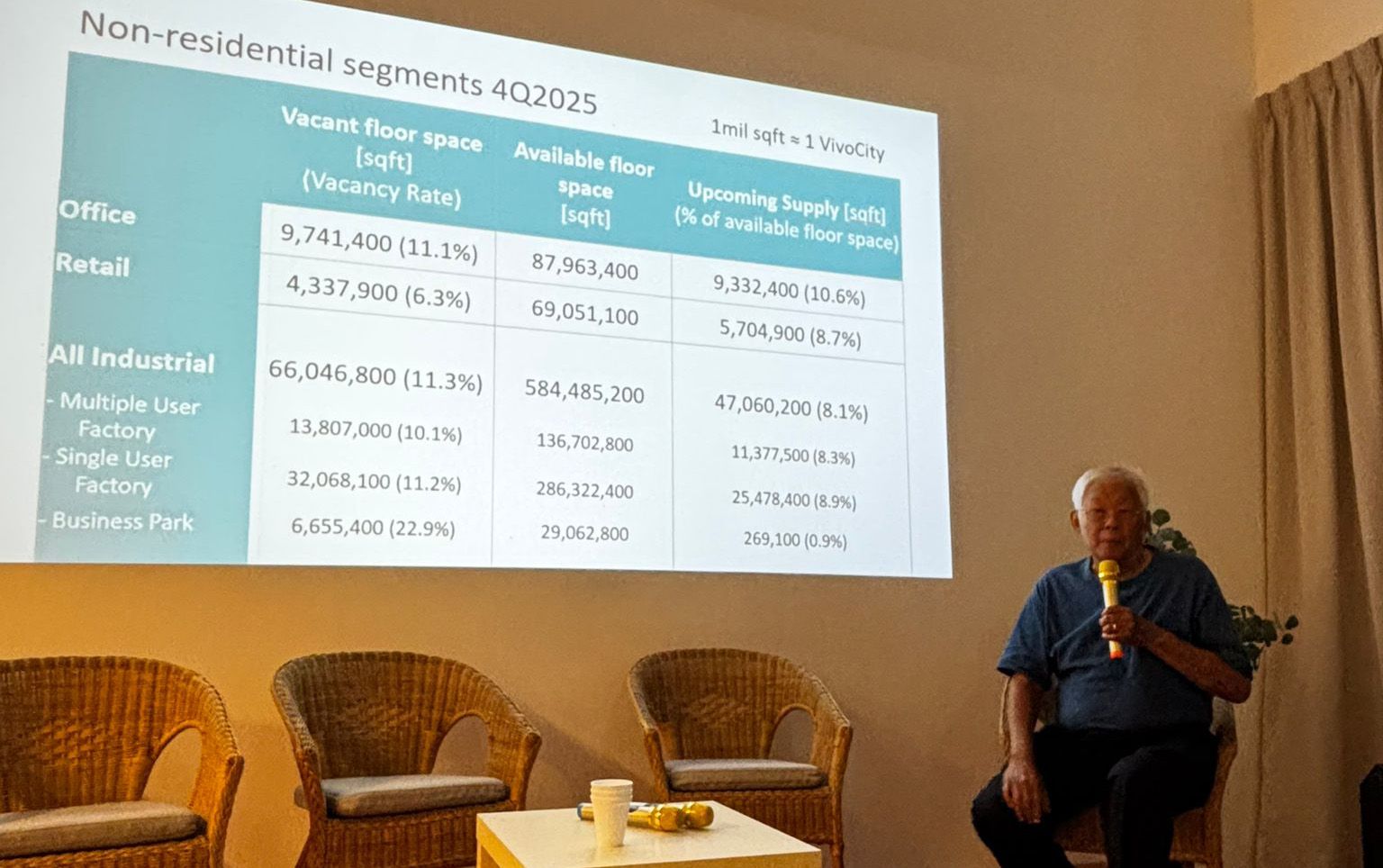
Separately, Mr Tay used the platform to reiterate his “Campus City” proposal aimed at strengthening innovation. He suggested integrating tertiary education campuses with residential and light industrial spaces to enable closer interaction among academia, industry and entrepreneurs.
He argued that such spatial integration could foster experimentation, enterprise formation and knowledge transfer, positioning Singapore for its next phase of economic development.
The dialogue concluded with calls for continued public engagement on fiscal trade-offs, workforce transition, cost-of-living pressures and long-term social sustainability as Parliament prepares to debate the Budget.