Josephine Teo touts state-funded media as bulwark against misinformation
MDDI Minister Josephine Teo has defended Singapore's heavily state-funded public service media as indispensable in countering misinformation, announcing new fact-checking measures even as parliamentary scrutiny of the funding arrangements was cut short by the Committee of Supply guillotine.

- Minister Teo described state-funded public service media as indispensable in countering AI-driven misinformation.
- CNA is establishing a digital verification team; The Straits Times has partnered with agencies on its AskST series.
- MPs from both sides were left unable to raise clarifications as guillotine time cut the debate short.

Singapore's government has pledged continued and deepened investment in its public service media entities, describing them as the nation's frontline defence against the spread of AI-driven misinformation.
The commitment came during the Committee of Supply debate for the Ministry of Digital Development and Information (MDDI) in Parliament on 2 March 2026, where Minister Josephine Teo responded to cuts filed by Members of Parliament (MPs) and outlined a series of measures to bolster the fact-checking and content capabilities of outlets that collectively receive hundreds of millions of dollars in annual state funding.
Yet the debate ended with a number of MPs from both sides of the House unable to air their clarifications.
Of approximately 25 minutes allocated for the clarification session, roughly 19 minutes were consumed by remarks from Teo and her Minister of State, leaving limited time for questions from the floor.
A number of MPs had been seen with hands raised during the session, but by the time the Deputy Speaker indicated that only one further question would be permitted, those remaining requests to speak could no longer be accommodated.
The guillotine rule in the Committee of Supply is strictly applied to ensure Parliament completes its debate on the estimates of expenditure within a fixed number of sitting days.
Its enforcement on this occasion meant that those unaired clarifications — on a ministry whose portfolio includes oversight of outlets that receive substantial sums of taxpayers' money — were not entered into the record.
AI and the misinformation threat
In her cuts, Teo framed misinformation as a growing and urgent national vulnerability. "Another risk we face is the spread of disinformation and misinformation, fuelled by technologies like AI," she said. "As a diverse society, we are particularly vulnerable to online falsehoods that erode trust in our society and institutions."
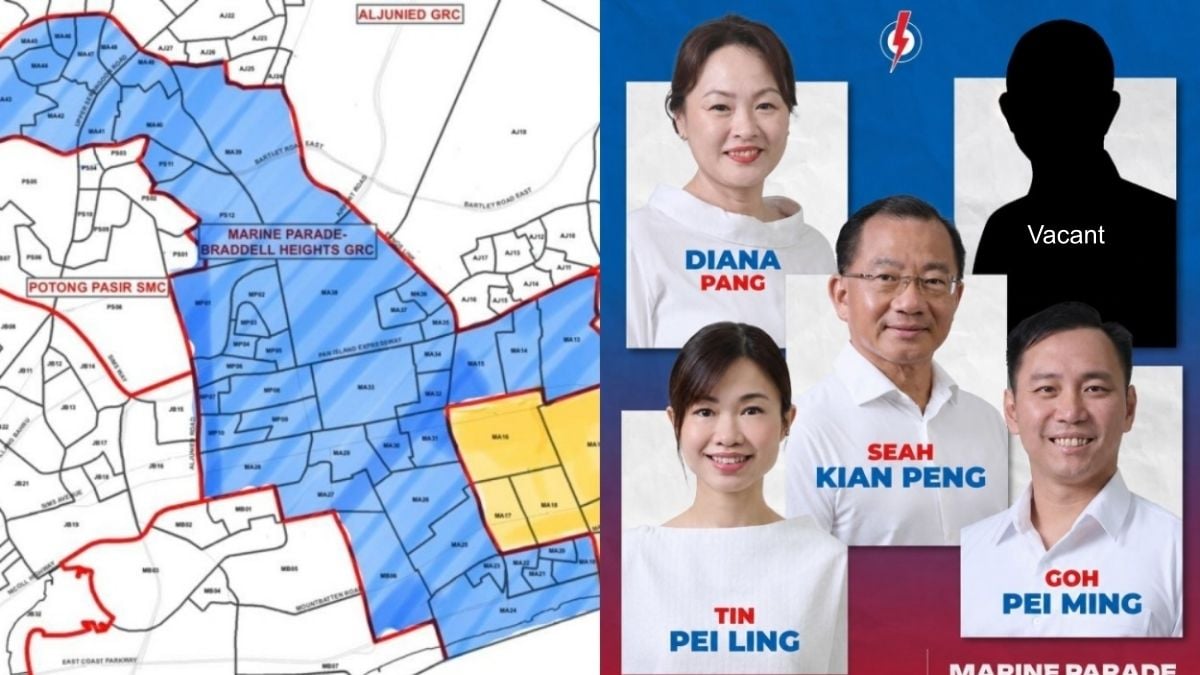
During the budget cut debate, Tin Pei Ling, representing the Marine Parade-Braddell Heights Group Representation Constituency (GRC), illustrated the scale of the problem with a concrete example.
She cited AI-generated videos that falsely claimed Prime Minister Lawrence Wong's leadership role was under threat, and described encountering a constituent who had believed the story so firmly that she found it difficult to dissuade him.
Tin asked how the government planned to strengthen public service media so that it could more effectively counter such content.
Henry Kwek, representing Kebun Baru, also raised the issue during the budget cut debate, describing Singapore's public service media as standing between the people and an AI-manipulated information environment.
He raised concerns that these outlets have been facing declining circulations as audience attention and advertising revenues shift towards digital platforms, and asked what the MDDI intended to do to keep them compelling, relevant, and financially viable.
Teo's response to the role of public service media
Responding to the cuts, Teo pointed to the reach and trust enjoyed by Singapore's public service media entities — which include The Straits Times, Lianhe Zaobao, and Channel NewsAsia (CNA) — as central to the government's information strategy.
"Our PSM entities reach over 90 per cent of Singaporeans. They remain highly trusted by the public, more so than reputable international and online media outlets," she said. "Consequently, our PSM entities have become indispensable to countering misinformation."
This assessment was supported, in part, by the Reuters Institute's Digital News Report, released in June 2025.
The report found that among 15 news brands surveyed in Singapore, The Straits Times was trusted by 75 per cent of local audiences, followed by CNA at 74 per cent and Channel 5 News at 73 per cent. CNN and BBC News were trusted by 65 per cent of respondents, while Yahoo! News registered 52 per cent. The report identified mainstream media as the most trusted news brands in the market.
Teo also argued that public service media serve a function beyond news delivery.
"Besides delivering timely and credible news, our PSM entities produce content that strengthens our sense of identity as one people," she said, adding that they also cultivate news literacy among the young through student publications and school competitions.
Measures announced
Responding to the cuts on operational capabilities, Teo announced that CNA has set up a digital verification team to investigate disinformation campaigns. Government agencies have also collaborated with The Straits Times on its AskST series, which addresses misinformation in circulation.
"MDDI will therefore continue working closely with our PSM entities to maintain their reach and strengthen their fact-checking capabilities," she said.
The extent of the government's financial commitment to these outlets is considerable. Approximately S$380 million has been allocated annually over the past five financial years to Mediacorp, which operates CNA and several broadcast channels serving audiences across four languages.
In 2022, the government committed up to S$900 million over five years to SPH Media Trust, publisher of The Straits Times and Lianhe Zaobao, with up to S$180 million disbursed annually subject to the trust meeting key performance targets.
"The Government will continue investing in our PSM entities, helping them develop new capabilities as the media landscape evolves," Teo said.
Financial viability and discoverability
In his cut, Kwek had pointed to the Washington Post — owned by billionaire Jeff Bezos — as a cautionary example of what can befall even established media institutions. The publication reportedly laid off more than 300 journalists, roughly a third of its editorial staff, in February 2026.
He had also asked whether Singapore intended to follow the lead of Australia and Britain, both of which have enacted legislation requiring smart television manufacturers to pre-install local public service media applications, ensuring their content remains easily discoverable on digital devices.
Teo confirmed the government was studying such approaches. "We are studying approaches in other countries and will consult the industry to ensure that initiatives are implemented reasonably and effectively," she said, without indicating a timeline.
"Given the critical role of our PSM, MDDI will support efforts to keep public service media content visible and easily discoverable," she added.
Unaired questions
It is not known which MPs had been waiting to raise clarifications during the session, nor what specific points they had intended to put to Teo following her response to the cuts.
What is clear is that the questions left on the floor arose directly in the context of her remarks on public service media and the substantial sums of taxpayers' money directed to these outlets — a matter on which further parliamentary scrutiny was cut short before it could be heard.