Indonesia warns of rising laughing gas and drug-laced vape misuse among youth
Indonesia’s National Narcotics Agency warns of rising misuse of nitrous oxide and narcotics-laced vape liquids among youth, citing health risks and regulatory gaps as authorities investigate a Jakarta drug laboratory case.

- National Narcotics Agency warns of rising recreational misuse of nitrous oxide and narcotics-laced vape liquids among youth.
- Officials say regulatory gaps complicate enforcement, particularly as nitrous oxide remains legal for culinary and medical use.
- A recent Jakarta apartment laboratory bust highlights cross-border networks exploiting vape trends.

Indonesia’s National Narcotics Agency (BNN) has sounded the alarm over emerging patterns of substance abuse involving products that remain widely available and socially accepted, warning that recreational misuse of nitrous oxide—commonly known as laughing gas—and the modification of electronic cigarettes to consume narcotics are becoming increasingly popular, particularly among young people.
Authorities say the developments represent a shift in how illicit substances are consumed and distributed, complicating law enforcement efforts while posing serious public health risks.
BNN chief Commissioner General Suyudi Ario Seto said recent monitoring indicates a sharp rise in the misuse of nitrous oxide (N₂O), a gas legally used in culinary and medical settings but now increasingly inhaled for its intoxicating effects.
At the same time, drug dealers are adapting to changing consumer behaviour by using vape devices as a discreet method for delivering narcotics, making detection more difficult and broadening the potential user base.
Laughing Gas Misuse Spreads Among Youth
Nitrous oxide, often marketed commercially in small metal canisters used to whip cream in cafés and bakeries, produces a short-lived euphoric sensation when inhaled. The resulting laughter and sense of relaxation have earned it the nickname “laughing gas.”
According to Suyudi, suppliers are increasingly selling small cylinders or refilled balloons for recreational inhalation, often targeting teenagers and young adults seeking quick intoxication at parties or social gatherings.
“The market consists mainly of teenagers and people looking for an instant high,” Suyudi said in late January.
Authorities note that the substance’s legal status contributes to its growing popularity. Because nitrous oxide is not classified as a narcotic under Indonesian law, BNN currently lacks direct authority to prosecute sellers or users unless other violations occur.
This regulatory gap has allowed misuse to flourish, particularly in urban nightlife scenes and youth social circles, officials say. Some suppliers now provide larger cylinders, making group consumption easier and cheaper, effectively turning nitrous oxide use into a social activity rather than an isolated practice.
Serious Health Risks
Health experts warn that while the euphoric effects may appear harmless, repeated or excessive inhalation of nitrous oxide can produce severe medical consequences.
One of the most serious risks involves vitamin B12 deficiency. Nitrous oxide interferes with the vitamin’s function in the body, potentially leading to nerve damage, numbness, coordination problems, and in severe cases, permanent neurological impairment.
Another danger arises from oxygen displacement. When inhaled in large quantities or in confined environments, the gas can deprive the body of oxygen, leading to unconsciousness, cardiac arrest, or sudden death.
“Excessive consumption within a short time can trigger cardiac arrest or fatal oxygen deprivation,” Suyudi warned.
Medical studies in several countries have documented cases of paralysis and long-term nerve injury linked to prolonged nitrous oxide misuse. Despite these dangers, awareness among young users remains low, partly because the gas is widely perceived as harmless entertainment.
Vape Devices Turned into Drug Delivery Tools
Parallel to the rise in nitrous oxide misuse, BNN is also observing a growing trend of vape devices being modified to consume narcotics.
Speaking at a Focus Group Discussion in East Jakarta this week, Suyudi said electronic cigarettes are increasingly replacing traditional drug consumption equipment such as bongs or improvised pipes.
Drug dealers are reportedly modifying vape cartridges or mixing narcotics and New Psychoactive Substances (NPS) into refill liquids, allowing users to inhale drugs in a way that resembles ordinary vaping.
“In the past, people associated drug consumption with bongs. Now that method looks outdated. Vape devices are used instead, and that is the challenge,” Suyudi said.
Because vape vapour often carries pleasant flavours and smells, drug use becomes harder for authorities, parents, and educators to detect.
Substances found mixed into vape liquids include liquid methamphetamine and anaesthetic compounds such as etomidate, officials say. These substances can produce strong psychoactive effects while remaining visually indistinguishable from ordinary vape liquids.
Authorities fear this method lowers psychological barriers for experimentation, especially among young users who might otherwise avoid overt drug use.
Jakarta Apartment Lab Bust Reveals Cross-Border Operation
BNN’s warnings come amid a recent enforcement operation that highlights how vape products are being used as a vehicle for narcotics distribution.
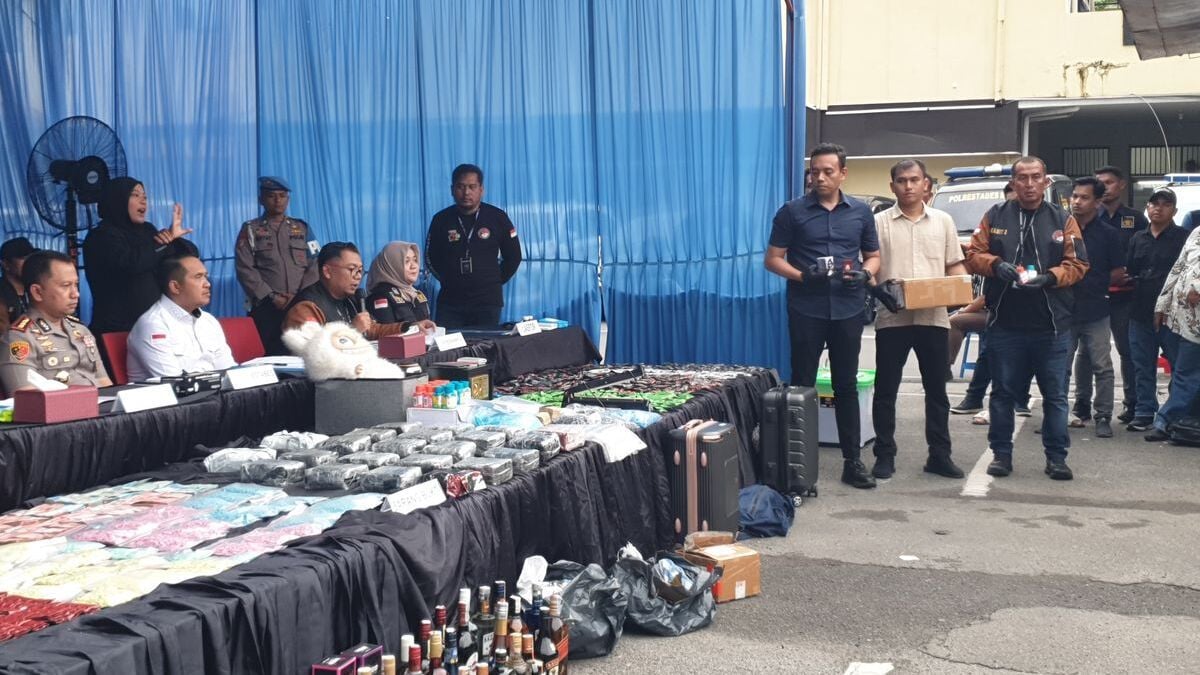
Earlier this month, BNN uncovered an illegal laboratory producing electronic cigarette liquid containing etomidate in an apartment unit in Jakarta’s Sudirman business district, one of the capital’s busiest commercial areas.
BNN Director for Psychotropics and Precursors, Brigadier General Aldrin M. P. Hutabarat, said two Malaysian nationals, identified by their initials MK and TKG, were arrested in connection with the operation.
According to investigators, MK had arrived in Indonesia on 13 January 2026, while TKG entered the country two days later. Customs and Excise officers working with BNN monitored TKG upon arrival at Soekarno–Hatta International Airport and followed him to the apartment, where MK was already present.
Laboratory tests later confirmed that vape liquid found at the location contained etomidate, a substance classified under Indonesia’s Health Ministry Regulation No. 15 of 2025 as a Category II narcotic, meaning it carries a high risk of dependence and is permitted only for limited medical and research purposes.
Authorities seized 3,000 cartridge caps, 3,000 vape cartridges, nearly five litres of etomidate liquid, cash, mobile phones and the suspects’ passports. Investigators said the suspects claimed the products had not yet entered distribution and that the operation marked their first attempt to produce such materials in Indonesia.
Nevertheless, prosecutors have charged the suspects under Indonesia’s Narcotics Law, with potential penalties ranging from lengthy imprisonment to life sentences or even capital punishment if convicted.
Officials say the case demonstrates how Indonesia is increasingly targeted by international networks seeking to exploit the popularity of vape products to mask narcotics distribution.
Youth Market and Lifestyle Appeal
Officials warn that the blending of drug use with mainstream lifestyle products is creating a dangerous overlap between recreational habits and narcotics consumption.
Vaping has become popular among young Indonesians, often marketed as a fashionable or safer alternative to smoking. However, BNN disputes claims that vaping helps smokers quit.
“Such claims lack strong scientific proof and risk creating new forms of addiction,” Suyudi said.
Standard vape liquids themselves contain mixtures of nicotine, propylene glycol, vegetable glycerine, and chemical flavourings such as diacetyl and benzaldehyde, substances linked in some studies to respiratory problems. When narcotics are added, authorities say, health risks multiply.
The discreet nature of vaping also makes it easier for dealers to distribute drugs in public spaces, including cafés, campuses, and entertainment venues, without attracting attention.
Regulatory Challenges
BNN officials argue that Indonesia urgently needs stronger regulation to prevent misuse of both vape products and nitrous oxide.
Suyudi warned that Indonesia risks becoming a destination market for products already restricted or banned elsewhere if regulation remains weak.
A growing number of countries have already adopted strict policies toward vaping.
In Southeast Asia, Singapore bans possession, purchase and use of vape devices, while Thailand has enforced a total prohibition since 2014, with foreign visitors sometimes facing fines or deportation for violations.
Vietnam introduced a nationwide ban on production and use in January 2025, and Brunei, Cambodia and Laos also prohibit sales and use.
Elsewhere in Asia and the Middle East, India banned production and import in 2019, Qatar prohibits possession and use, Turkey effectively bans import and sales, and the Maldives introduced a full ban in December 2024.
In the US and Europe, Brazil and Argentina prohibit sale and import, Australia permits vape products only through medical prescription, and France is moving to ban disposable vape products. Indonesian regulators are now studying these international precedents as pressure grows for tighter domestic controls.
“Lifestyle trends must not hide the fact that this is a strategy used by drug dealers,” Suyudi said.
Nitrous oxide and vape devices present regulatory dilemmas because both have legitimate uses, yet loopholes allow misuse to spread rapidly. BNN is therefore calling for cross-sector cooperation involving lawmakers, health authorities, educators, and industry stakeholders to close regulatory gaps without harming legitimate business activities.