S'porean and Indonesian girlfriend busted in Medan home-based drug vape operation packaged as Labubu merchandise
Indonesian police have dismantled an alleged narcotics vape manufacturing operation in Medan, arresting a Singaporean man and his Indonesian girlfriend while pursuing a third suspect linked to the network.
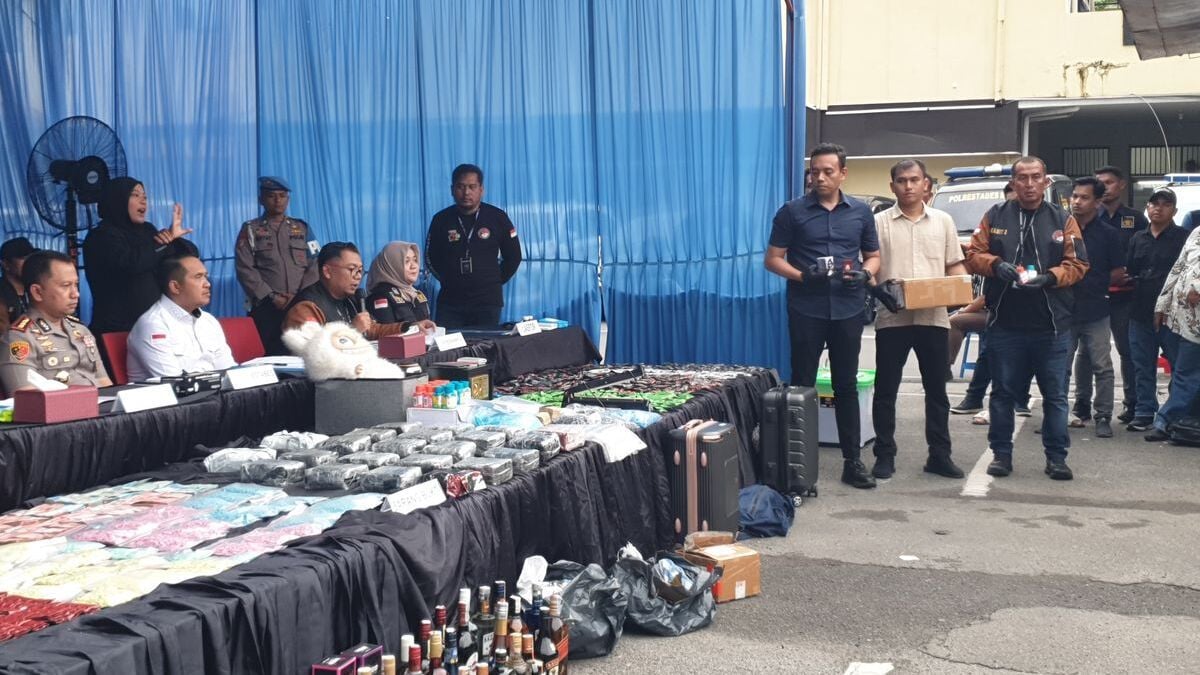
- Police arrested a Singaporean man and an Indonesian woman over an alleged narcotics vape operation.
- Investigators say the products were manufactured inside a luxury boarding house in Medan.
- Authorities estimate the network generated approximately Rp10 billion in profits since 2025.

The Medan Metropolitan Police have dismantled an alleged home-based narcotics vape manufacturing operation that was being run from a luxury boarding house in the city of Medan, arresting a Singaporean national and his Indonesian girlfriend while continuing to search for a third suspect.
Police said the operation produced narcotics-laced vape liquid packaged in containers bearing images of the popular Labubu doll character and distributed the products across Medan and surrounding areas.
Commissioner Rafli Yusuf Nugraha, head of the Narcotics Investigation Unit at the Medan Metropolitan Police, identified the suspects as TM, a Singaporean citizen, and MWQ, an Indonesian woman. Both were arrested on 17 May 2026. A third suspect, identified only as R, remains at large.
Speaking during a press conference at Medan Metropolitan Police headquarters, Rafli said MWQ was responsible for producing and packaging the vape products, while marketing and distribution were handled by TM and R.
“MWQ’s role was to mix and process the ingredients. She would place the vape products at the boarding house reception desk. Marketing and distribution were controlled by TM and R, who is still being pursued,” Rafli said.
Dating application connection
According to investigators, TM and MWQ met through a dating application in 2025 and later entered into a romantic relationship.
Police allege that TM initially introduced narcotics-containing vape products to MWQ. Investigators said the pair subsequently became involved in the distribution and production of the products in Indonesia.
Rafli said TM had brought the illicit vape products into Indonesia during 2025 before the couple allegedly decided to expand the operation.
“At first, his girlfriend was given narcotics vape products to try. In 2025, TM brought the illicit products, eventually became addicted, developed a dependency, and then they began thinking about distributing them in Indonesia,” he said.
Factory operated from luxury boarding house
Police said the production facility was established inside a luxury boarding house on Jalan Flores in Medan Perjuangan District.
Investigators described the property as highly secure, with multiple layers of access control including facial recognition technology, fingerprint verification and password authentication.
Rafli said the building was selected partly because of its security features.
“To enter the boarding house, there were three levels of access, starting with facial recognition. Once inside, all networks were down. Access to the room required fingerprint verification and passwords. There was no signal, and it was a luxury boarding house,” he said.
Monthly rental costs for rooms at the property ranged between Rp5 million and Rp7 million, equivalent to approximately US$305 to US$427 at current exchange rates.
Police said communication signals inside the premises were also limited, further complicating access and surveillance.
Raw materials imported from overseas
According to investigators, raw materials used to manufacture the narcotics vape liquid were imported from overseas through international courier services.
The substances were allegedly delivered to Indonesia before being processed and packaged at the boarding house.
“They used well-known international courier services. These green and orange substances were raw materials or ready-to-process ingredients. Once the product was finished, it was distributed in Medan,” Rafli said.
Police believe the finished products were distributed throughout Medan and nearby areas.
Arrests and seizure of evidence
The investigation began with the arrest of MWQ at the boarding house. Officers then tracked TM to a luxury hotel in Medan, where he was arrested while allegedly preparing to deliver additional raw materials for production.
“After securing MWQ, we pursued TM to a luxury hotel in Medan, where he was preparing to supply additional raw materials to MWQ. Fortunately, we managed to arrest him before the materials were delivered,” Rafli said.
During searches of the boarding house, police seized production equipment, raw materials and packaging supplies.
Among the items confiscated were:
- Eight bottles of vape liquid
- 862 empty cartridge tubes
- 18 empty bottles
- 914 cartridge caps
- 10,611 Labubu-branded vape packages
Police said additional raw materials were discovered inside safes and suitcases at the premises.
“We found all of the raw materials in the boarding house, stored in safes and suitcases, along with the equipment used for the home industry,” Rafli said.
Labubu branding under investigation
Investigators said the use of Labubu-themed packaging appeared to be a marketing strategy developed by the suspects.
However, police are still examining the precise reasons behind the decision to use the branding and whether it was intended to attract specific consumer groups.
“During the raid, officers found various raw materials, production equipment, Labubu-branded packaging and a number of other items used to support production activities,” Rafli said.
Cryptocurrency transactions
Police said the suspects relied on cryptocurrency transactions, including Bitcoin, rather than conventional banking channels.
According to investigators, the method was intended to conceal financial transactions and hinder law enforcement efforts to trace the proceeds of the operation.
“They used cryptocurrency or Bitcoin transactions to deceive law enforcement officers. However, we were still able to uncover the network,” Rafli said.
He added that investigators believe the group deliberately avoided bank transfers and other conventional payment methods.
“They did not use ordinary bank transfers. They conducted transactions using cryptocurrency or Bitcoin to mislead investigators,” he said.
Estimated profits
Based on preliminary findings, police estimate that the network generated around Rp10 billion (approximately US$610,000) in profits since 2025.
Investigators are continuing to search for suspect R and are examining whether additional individuals were involved in the manufacture, distribution or financing of the operation.
“There is one more suspect being pursued, identified as R,” Rafli said.
Police said the investigation remains ongoing as authorities seek to identify the full extent of the network and its distribution channels.