South Korea jails former President Yoon Suk Yeol for life over failed 2024 martial law attempt
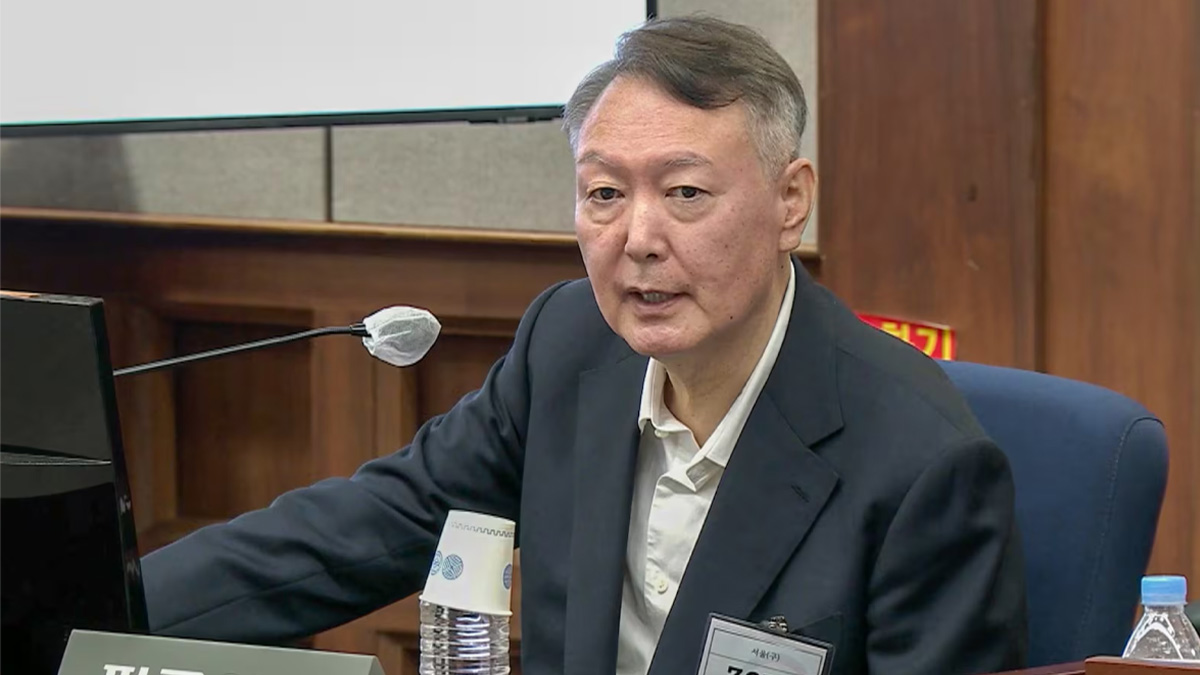
Former President Yoon Suk Yeol has been sentenced to life imprisonment over his December, 2024 martial law declaration. Prosecutors had sought the death penalty, citing threats to South Korea’s constitutional order.

- A court sentenced former President Yoon Suk Yeol to life imprisonment for abuse of authority and masterminding an insurrection.
- The charges stem from his 3 December, 2024 declaration of martial law, which lasted about six hours.
- Prosecutors had sought the death penalty, citing threats to South Korea’s constitutional order.

A South Korean court on 19 February 2026 sentenced former President Yoon Suk Yeol to life imprisonment after finding him guilty of abuse of authority and masterminding an insurrection linked to his December, 2024 attempt to impose martial law.
The ruling marks one of the most consequential legal decisions in South Korea’s modern political history.
Prosecutors had sought the death penalty, arguing that Yoon’s actions gravely undermined the country’s constitutional framework.
The Seoul Central District Court found that Yoon’s declaration of emergency martial law on 3 December 2024 was unconstitutional and illegal.
The measure lasted approximately six hours before being voted down by parliament following large-scale street protests.
According to prosecutors, Yoon’s actions “undermined the function of the National Assembly and the Election Commission … actually destroying the liberal democratic constitutional order”. Under South Korean law, masterminding an insurrection carries a maximum penalty of death or life imprisonment.
South Korea last imposed a death sentence in 2016, but has not carried out an execution since 1997.
A strong police presence surrounded the court during the ruling, with buses forming a security cordon around the building.
The court also considered charges that Yoon abused his authority by ordering troops to storm parliament to remove and detain political opponents. Prosecutors alleged that he dispatched soldiers and police to block and control access to facilities, including an opposition party building.
Yoon, 65, denied all charges, arguing that he had constitutional authority as president to declare martial law.
He maintained that the move was intended to alert the public to what he described as obstruction by opposition parties.
He is currently detained at the Seoul Detention Centre and is expected to remain there pending appeal.
If convicted at first instance, he may challenge the ruling at an appellate court and subsequently at the Supreme Court.
Judicial guidelines recommend that a first trial conclude within six months, with the entire appeals process completed within two years. However, complex political cases in South Korea have historically exceeded those timeframes.
Yoon faces eight separate trial proceedings.
In January 2026, he was sentenced to five years’ imprisonment in a separate case on charges including obstructing attempts by authorities to arrest him following his martial law declaration. He has appealed that conviction.
The brief imposition of martial law triggered a profound political crisis in Asia’s fourth-largest economy.
South Korea is a key United States security ally and has long been regarded as one of the region’s most resilient democracies.
Following Yoon’s removal from office, a snap election was held in June 2025.
Liberal leader Lee Jae Myung won the presidency.
In a post on X, Lee praised citizens for resisting the martial law order. “It was possible because it was the Republic of Korea,” he wrote, referring to the country’s official name.
He added that the Korean people’s actions would serve as an example in human history.
Yoon’s conviction represents a dramatic reversal for a figure once celebrated for prosecuting high-profile corruption cases.
As prosecutor-general in 2019, he led investigations that resulted in the convictions of two former presidents and a former Supreme Court chief justice.
After resigning in 2021, Yoon entered politics and narrowly won the presidency in 2022.
His term was marked by controversy, including criticism over his administration’s handling of a deadly crowd crush in October, 2022 and allegations involving his wife’s acceptance of a luxury handbag.
Despite domestic turbulence, Yoon pursued closer security cooperation with Japan and the United States, culminating in a trilateral framework aimed at enhancing regional stability.
His Dec 2024 declaration of martial law, however, became the defining event of his presidency.
The episode has prompted renewed debate over executive authority, democratic safeguards, and the resilience of South Korea’s constitutional system.