Former South Korean president Yoon Suk Yeol jailed for 30 years over North Korea drone operation
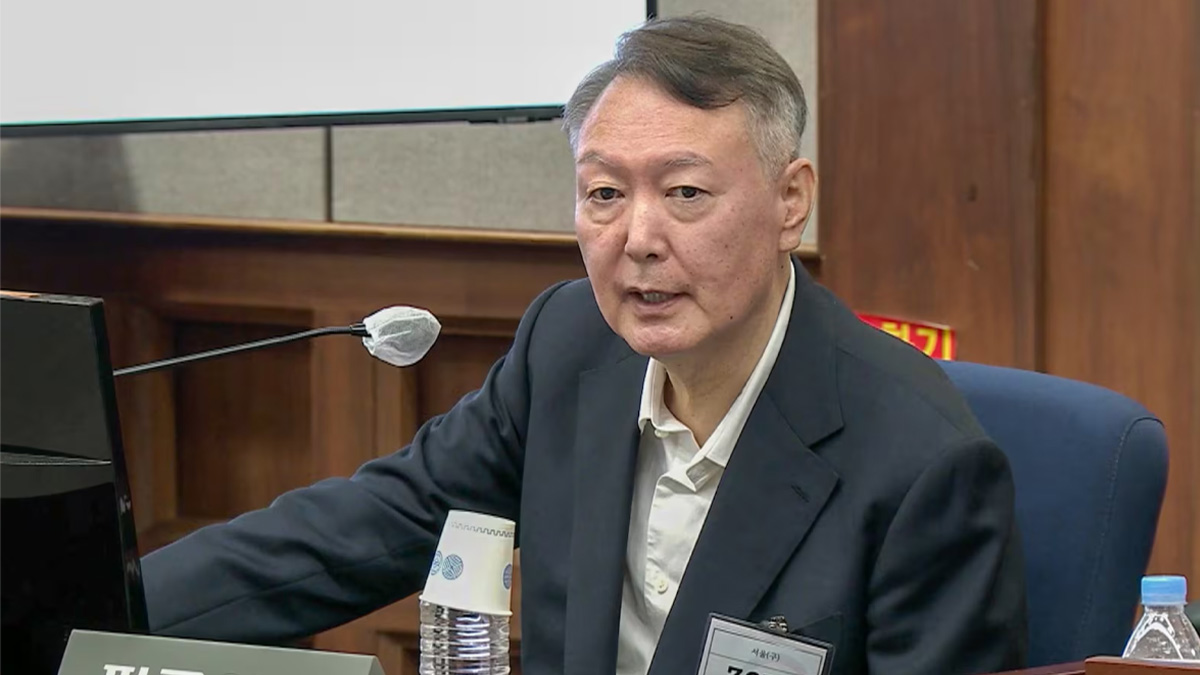
A Seoul court has sentenced former president Yoon Suk Yeol to 30 years in prison after finding he ordered drone infiltrations into North Korea to manufacture a pretext for his December 2024 martial law declaration.
- Yoon Suk Yeol sentenced to 30 years for ordering drone infiltrations into North Korea.
- Court found the operation was intended to justify his December 2024 martial law declaration.
- Former defence minister Kim Yong-hyun received the same 30-year sentence.

A Seoul court on Friday, 12 June 2026, sentenced former president Yoon Suk Yeol to 30 years in prison after finding him guilty of ordering drone infiltrations into North Korea.
The Seoul Central District Court convicted the jailed former president on charges of benefiting the enemy and abuse of power. The sentence matched the recommendation of special counsel Cho Eun-suk.
The court found that Yoon had ordered the operation in October 2024 to provoke Pyongyang. He intended to use the anticipated increase in cross-border tensions as a pretext for his declaration of martial law on 3 December 2024.
Judges said the defendants decided to use psychological warfare to incite North Korea and induce a provocation. The aim was to prompt an armed response, such as a local conflict, or to create a national security crisis from heightened military tension.
The court said the actions betrayed the public's expectation that the president and defence minister would use military force only for legitimate purposes. It added that there was a personal motivation behind the operation.
Judges said the drone operation entailed the use of South Korea's military capabilities for private purposes. They added that presidential powers, including supreme command of the armed forces and the authority to declare martial law, must be exercised to protect the nation's survival and security.
Instead, the court said, Yoon approved the operation believing he could arbitrarily use such powers for his own political gain.
Yoon's legal team vowed to appeal, voicing deep regret over the ruling.
Sentences for senior officials
The court also sentenced former defence minister Kim Yong-hyun to 30 years in prison for his role in the operations. This exceeded the 25 years sought by the special counsel.
Yeo In-hyung, former head of the Defence Counterintelligence Command, was sentenced to 15 years for his involvement. Kim Yong-dae, former chief of the Drone Operations Command, received a three-year sentence suspended for five years.
The defence case
Yoon's legal team argued that the drone deployment was a legitimate military operation. It was a response to North Korea's launches of trash-carrying balloons into South Korea in 2024.
The court rejected this, ruling that the operation undermined South Korea's security interests. It exposed military assets to North Korea and, as a result, strengthened North Korea's military readiness.
In October 2024, Pyongyang accused Seoul of drone infiltrations and of dropping propaganda leaflets over the North's capital. Kim, then defence minister, initially denied the accusation. The defence ministry later said it could neither confirm nor deny it.
A deepening political crisis
Friday's ruling marked the latest conviction for Yoon, who remains in custody and faces multiple trials linked to his martial law bid.
His late-night televised address in December 2024, which suspended civilian rule, plunged South Korea into an unprecedented political crisis. Martial law lasted only about six hours.
Lawmakers raced to the assembly building and voted it down in an emergency session. The incident triggered protests, sent the stock market plunging and caught key allies, including the United States, off guard.
In February 2026, Yoon was sentenced to life imprisonment for leading an insurrection through his martial law declaration. He has appealed that ruling. He maintains that he declared martial law solely for the sake of the nation.
Lee Jae Myung was elected president after months of political chaos in the country.
Continuing tensions
Drone flights remain a flashpoint between the two Koreas, which remain technically at war. In a separate matter unrelated to Yoon's case, South Korean investigators found that government officials had sent drones into the nuclear-armed North in January.
Lee expressed regret earlier in 2026 over that incursion. North Korean leader Kim Jong Un's influential sister described Lee's statement as wise behaviour.
Hopes for a rapprochement faded after the diplomatically isolated North returned to calling the South its most hostile enemy.