Hong Kong court upholds convictions of 12 democracy activists
A Hong Kong court has rejected appeals from 12 democracy activists jailed over a 2020 primary election, upholding subversion convictions in the city’s largest national security trial. Amnesty International criticised the ruling as a missed chance to correct injustice.
- Hong Kong’s top court has upheld the convictions and sentences of 12 democracy activists jailed for subversion.
- The case centres on a 2020 unofficial primary election deemed a subversive plot under the national security law.
- Amnesty International Hong Kong Overseas criticised the ruling as a missed opportunity to correct a mass injustice.

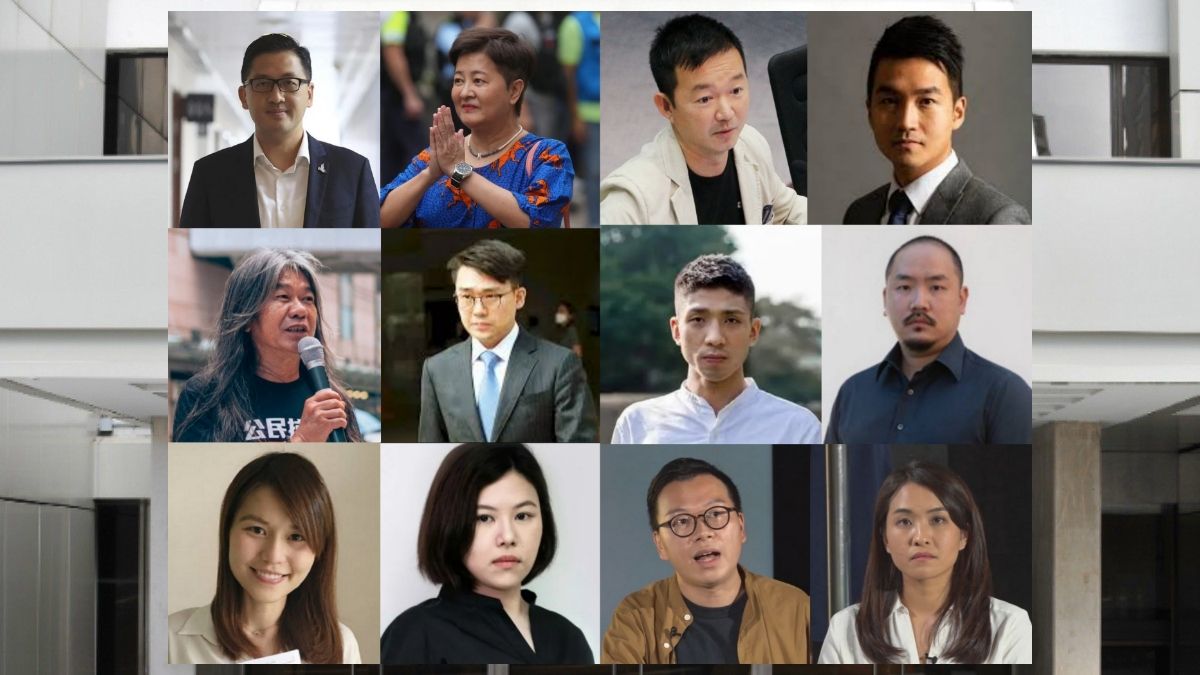
HONG KONG: An appeals court in Hong Kong on 23 February 2026 has upheld the convictions and sentences of 12 democracy campaigners jailed for subversion, in the city’s largest trial under a Beijing-imposed national security law.
The 12 appellants were among 45 opposition figures sentenced in 2024 for organising an unofficial primary election in 2020. Authorities said the plan amounted to a conspiracy to subvert state power.
The Court of Appeal dismissed the appeals on 23 February, 2026. High Court Chief Judge Jeremy Poon delivered the ruling, rejecting arguments that the defendants’ actions were lawful political strategy.
Among those whose appeals were rejected were former lawmaker Leung Kwok-hung, widely known as “Long Hair”, and former journalist Gwyneth Ho.
Origins in 2020 primary election
The case stems from an unofficial primary election held in July 2020.
Organisers aimed to improve the opposition’s chances of winning a legislative majority.
They had planned to use that majority to veto the government budget unless demands such as universal suffrage were met. Judges at trial ruled that such a strategy would have triggered a “constitutional crisis”.
The primary followed months of mass protests in 2019, some of which turned violent.
In June 2020, Beijing imposed a sweeping national security law on the city, criminalising acts of secession, subversion, terrorism and collusion with foreign forces.
A record turnout of more than 600,000 voters participated in the July 2020 primary, despite intense summer heat. The official legislative election scheduled for later that year was subsequently postponed.
Mass arrests and trial outcomes
Months after the primary, authorities conducted a mass arrest of opposition figures.
The move drew international condemnation and heightened concerns that civil liberties in the semi-autonomous city were being eroded.
Those charged ranged in age from 28 to 69.
They included elected lawmakers, district councillors, trade unionists and academics, representing a broad ideological spectrum from moderate reformists to localists.
In 2024, the court convicted 45 defendants and acquitted two.
Sentences ranged from four years and two months to 10 years, depending on individual roles and mitigating factors.
Some of the appellants have already spent nearly five years in custody.
As of January 2026, 18 other defendants who did not challenge their convictions had been released after completing their terms.
Defence arguments on constitutional powers
During appeal hearings last year, defence counsel Erik Shum argued that legislators have the constitutional power to veto the budget as a form of check and balance under Hong Kong’s Basic Law.
“In order to check the unpopular exercise of powers by the executive, one of the important measures is to tie the purse,” Shum told the court.
He further argued that lawmakers should not be answerable to the courts for how they vote, citing the principle of separation of powers.
Prosecutors had also appealed the acquittal of one of the two defendants found not guilty, lawyer Lawrence Lau. On 23 February, 2026, the court upheld his acquittal.
Rights groups criticise judgment
In response to the ruling, Amnesty International Hong Kong Overseas criticised the decision, calling it a missed opportunity to rectify what it described as a large-scale injustice.
In a statement, the group said the judgment “once again reveals the nature of the 47-person case as a large-scale political prosecution aimed at eliminating democratic opposition”.
It noted that more than 600,000 people had voted in the 2020 primary, describing participation as an exercise of freedoms of expression, association and political participation.
The organisation also expressed concern that, since the implementation of Article 23 legislation in 2024, at least eight defendants in the 47-person case had reportedly been denied early release on new national security grounds.
It described the use of the new provisions as “weaponisation” of national security law and urged authorities to immediately and unconditionally release those still imprisoned.