Hong Kong proposes new powers for leader to classify criminal cases as national security matters
Hong Kong has proposed legislation allowing the chief executive to certify whether a criminal act involves national security, a determination that would bind the courts and extend national security procedures to a broader range of cases. Critics warn of implications for judicial independence.
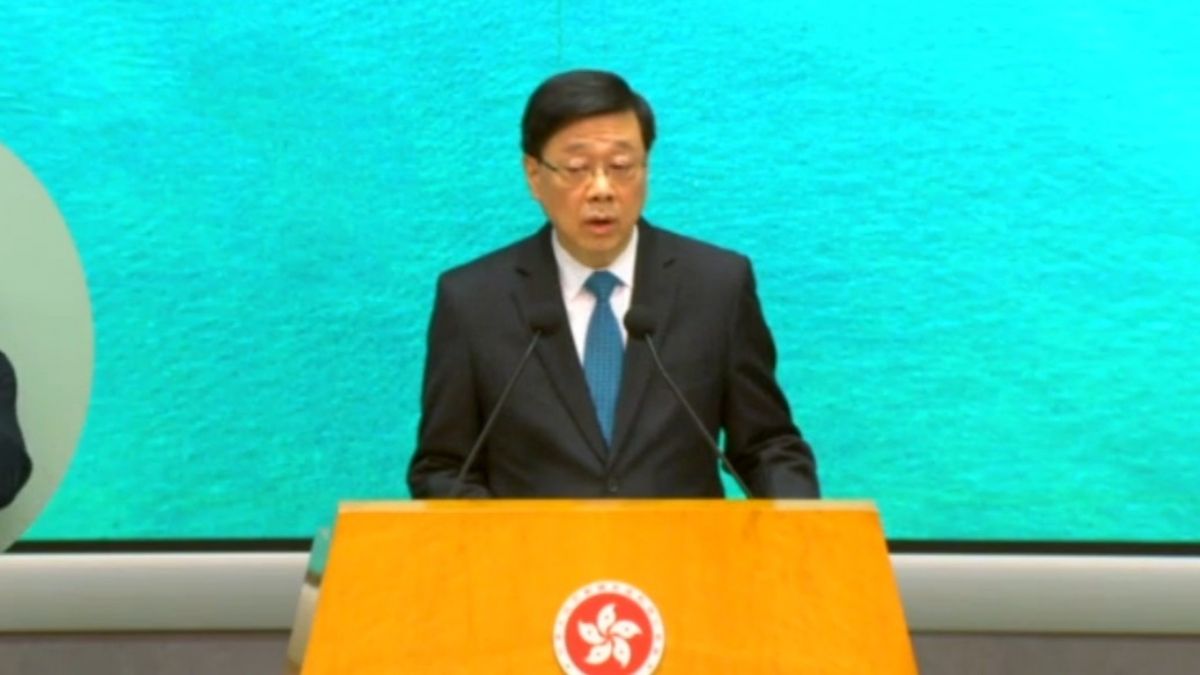
- The proposal would allow the chief executive to certify criminal acts as involving national security, with courts bound by that determination.
- The government says the change clarifies existing procedures and creates no new offences, penalties or enforcement powers.
- Legal experts and rights advocates warn the measure could further expand executive authority and weaken judicial safeguards.

Hong Kong has proposed new legislation that would empower the chief executive to formally certify whether a criminal act involves national security, a determination that would be binding on the courts and trigger the application of national security procedures under the city's existing legal framework.
The proposal, submitted on 8 June 2026 by the Security Bureau and Department of Justice to the Legislative Council's Panel on Security and Panel on Administration of Justice and Legal Services, represents the latest effort by authorities to strengthen Hong Kong's national security regime following the introduction of two major security laws in recent years.
Under the proposed subsidiary legislation, if the chief executive issues a certificate stating that an act involved in a criminal case concerns national security, the case would automatically be classified as a "case concerning offence endangering national security" under the Beijing-imposed Hong Kong National Security Law (HKNSL) and the Safeguarding National Security Ordinance (SNSO).
The government has indicated that the legislation will be introduced through a negative vetting procedure, allowing it to be gazetted and come into force before lawmakers complete their scrutiny.
Clarifying existing national security mechanisms
According to the government paper, the proposal seeks to clarify the classification mechanism for what are described as "other offences endangering national security under the law of the HKSAR".
Officials argued that the legislative intent of the HKNSL extends beyond the four headline offences established when the law was imposed by Beijing on 30 June 2020: secession, subversion, terrorist activities and collusion with foreign forces.
The paper states that offences endangering national security also include other crimes under Hong Kong law where the facts and circumstances demonstrate conduct that is "in the nature of endangering national security".
The proposed legislation would expressly provide that where the chief executive certifies that an act involves national security under Article 47 of the HKNSL or Section 115 of the SNSO, the related criminal case and offence would automatically be treated as national security matters.
The government said this would provide greater legal certainty in applying national security procedures.
"Stating clearly the above mechanism by way of subsidiary legislation can improve the legal system and enforcement mechanisms for the HKSAR to safeguard national security," the Security Bureau and Department of Justice said in their submission.
Officials cited what they described as a "complicated geopolitical landscape" and continuing national security risks as justification for accelerating the legislative process.
Extension to alternative offences
A significant aspect of the proposal concerns alternative charges brought in criminal proceedings.
The government has proposed that where an individual is charged with a national security offence and is also charged with, or ultimately convicted of, an alternative offence arising from the same act, that alternative offence would also be treated as an offence endangering national security.
As a result, procedures and protections contained within the national security framework could continue to apply even if prosecutors proceed on alternative criminal charges rather than a principal national security offence.
The proposal states that once a case or offence is certified as involving national security, the procedural provisions contained in Chapter IV of the HKNSL, as well as relevant provisions in the SNSO and other local legislation, would apply.
Existing powers and legal basis
The government's proposal relies on powers that already exist within Hong Kong's national security framework.
Article 47 of the HKNSL provides that courts must obtain a certificate from the chief executive when questions arise regarding whether an act involves national security or whether evidence concerns state secrets. The certificate is binding on the courts.
Section 115 of the SNSO, enacted in March 2024 under Article 23 of the Basic Law, further allows the chief executive to issue such certificates whenever considered appropriate, including before legal proceedings have commenced.
The government argues that determining whether conduct falls within the category of "other offences endangering national security" necessarily requires deciding whether the conduct involves national security, making the existing certification mechanism the appropriate tool.
The proposal would be enacted under Section 110 of the SNSO, which authorises the Chief Executive in Council to make subsidiary legislation necessary for safeguarding national security and implementing both the HKNSL and the SNSO.
Authorities emphasised that the proposed legislation "does not involve the creation of any new criminal offence, penalty or enforcement power".
Government defends proposal
Chief Executive John Lee defended the proposal on Tuesday, arguing that many threats to national security originate from state actors and involve highly sensitive intelligence unavailable to the public.
"Having a clearer mechanism of classifying offenses endangering national security will have the benefit of reducing the risk of controversies or debates in court," Lee said.
Secretary for Justice Paul Lam similarly argued that the executive branch is best placed to make such determinations because they often involve highly confidential information.
"There’s no such thing about attempting to get innocent people convicted through any subsidiary legislation," Lam told lawmakers.
Lam stressed that courts would continue to determine whether defendants are guilty and remain responsible for ensuring fair trials.
The government's paper also states that all defendants will continue to enjoy fair trial rights guaranteed under the Basic Law and the Hong Kong Bill of Rights Ordinance, regardless of whether their cases involve national security.
Legal experts raise concerns
The proposal has nevertheless drawn criticism from legal scholars and observers concerned about the concentration of authority in the executive branch.
Simon Young, a law professor at the University of Hong Kong, said the document largely confirms principles already recognised in existing law and court decisions.
However, he warned of the implications of allowing national security classifications to rest on executive determinations that may rely on information unavailable to defendants.
"This is not new and something I had warned about from the beginning, the danger to the rule of law and fair trial from an unreviewable executive power to determine critical facts binding on the court," Young said.
Eric Lai, a fellow at Georgetown Center for Asian Law, argued that the proposal could significantly expand the circumstances in which ordinary criminal cases become subject to national security procedures.
He said the chief executive's determination could potentially transform a broad range of criminal matters into national security cases without sufficient institutional safeguards.
Lai also suggested that offences such as commercial fraud or money laundering could potentially be linked to national security concerns, raising questions about the future scope of the legislation.
Broader national security context
The proposal comes against the backdrop of Hong Kong's far-reaching national security framework established after the city's 2019 anti-government protests.
Beijing imposed the HKNSL in 2020, fundamentally reshaping Hong Kong's legal and political landscape.
The law has been used to prosecute numerous democracy activists, opposition politicians and civil society figures.
In March 2024, Hong Kong enacted the Safeguarding National Security Ordinance, commonly known as Article 23 legislation, creating additional offences including espionage, external interference and the disclosure of state secrets.
Critics contend that the combined effect of the two laws has curtailed freedoms that Beijing pledged to preserve under the "one country, two systems" framework following Hong Kong's return to Chinese sovereignty in 1997.
Hong Kong and Chinese authorities reject those claims, maintaining that the legislation is necessary to restore stability, prevent foreign interference and ensure long-term prosperity.
The government has indicated that it intends to complete the legislative process "as soon as possible", with the subsidiary legislation expected to take effect immediately upon publication in the Gazette.