Hong Kong artist stopped by police after displaying 6.4-metre red string before Tiananmen anniversary
Performance artist Sanmu Chan was stopped and searched by plainclothes police in Causeway Bay after displaying a 6.4-metre red string ahead of the 37th anniversary of the 1989 Tiananmen crackdown, as authorities maintained heightened security around commemorative activities.
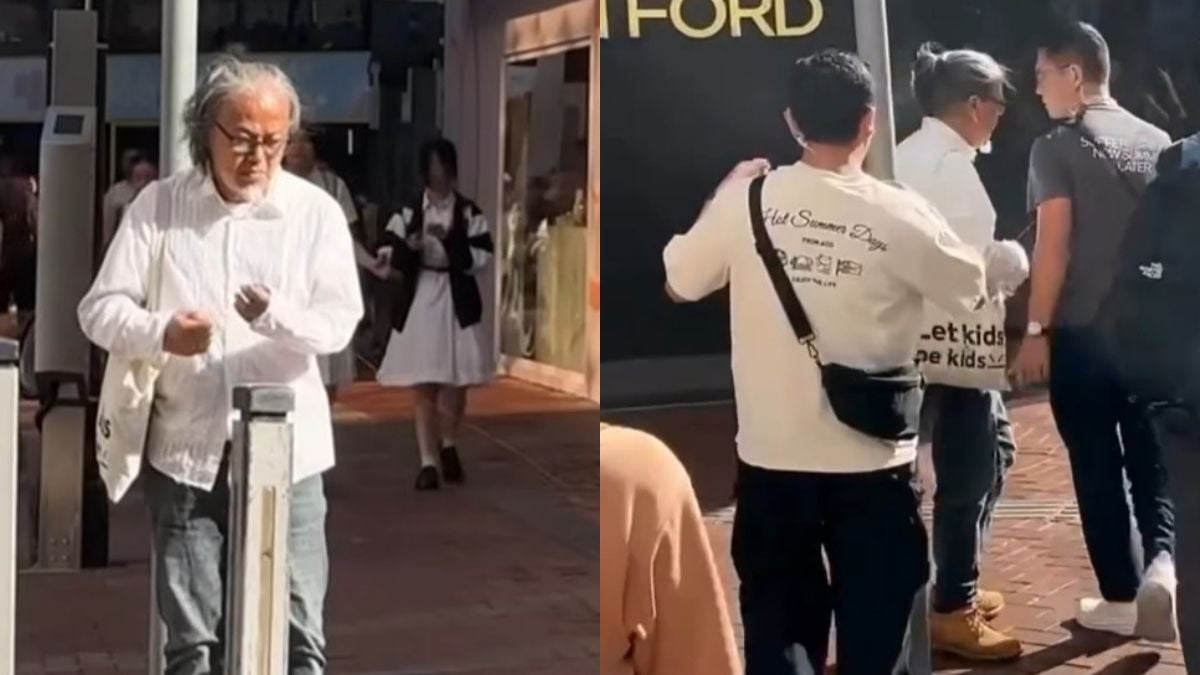
- Performance artist Sanmu Chan was stopped by police after displaying a 6.4-metre red string in Causeway Bay.
- Another artist carrying a question mark-shaped balloon was also searched and identified by officers.
- The incidents highlight continuing restrictions surrounding Tiananmen commemorations in Hong Kong.

A Hong Kong performance artist was stopped and searched by plainclothes police in Causeway Bay on Wednesday after attempting to display a symbolic red string ahead of the 37th anniversary of the 1989 Tiananmen Square crackdown, underscoring continuing sensitivities surrounding public commemorations in the city.
Sanmu Chan appeared at the junction of Lockhart Road and East Point Road in Causeway Bay at about 4.25pm on 3 June 2026, one day before the anniversary of the military crackdown that ended student-led protests in Beijing.
Video footage shared on social media showed Chan arriving at the busy shopping district carrying a red string and attempting to tie it to a street signpost. The location is situated near Victoria Park, which for decades hosted annual candlelight vigils commemorating those killed during the events of June 1989.
Within minutes, Chan was surrounded by a group of plainclothes police officers.
Officers searched him and checked his identification documents before allowing him to leave. He was later seen entering a convenience store to purchase a can of beer.
Subsequently speaking to reporters at the scene, Chan revealed that the red string measured 6.4 metres in length, an apparent symbolic reference to 4 June.
He said the string was intended to evoke remembrance of the deceased, but declined to elaborate further on the meaning of the performance.
When asked about changes in Hong Kong, Chan initially responded that the situation was "getting worse" before later saying conditions had "improved currently".
He also told reporters in Cantonese: "When you want to speak or do anything, you are under surveillance. This is a very abnormal situation."
Police presence around anniversary
Later on Wednesday evening, another artist, Chan Mei-tung, was stopped by police in the same area.
She was carrying a balloon shaped like a question mark when officers approached her. Police subsequently searched her and checked her identification before she left the area.
According to the Hong Kong Free Press (HKFP), police said officers patrolling East Point Road and Lockhart Road had noticed a man and a woman loitering nearby.
Officers approached both individuals to understand the circumstances and the pair later left of their own accord, police said.
The force did not directly answer questions about whether public tributes to victims of the 1989 crackdown were lawful.
However, police said enforcement actions were conducted in accordance with the law and based on actual circumstances.
The force added that operational deployments were made appropriately in response to potential threats to national security, public safety and public order.
Commemorations increasingly restricted
Chan was among a number of artists who previously participated in public performances linked to Tiananmen remembrance activities in Causeway Bay during the years when annual candlelight vigils were held at Victoria Park.
Hong Kong's last large-scale June 4 vigil took place in 2019.
In 2020, authorities prohibited the annual gathering, citing public health restrictions during the Covid-19 pandemic. The event had historically attracted crowds numbering in the hundreds of thousands.
The commemorations ended after Beijing imposed the national security law on Hong Kong on 30 June 2020.
The Hong Kong Alliance in Support of Patriotic Democratic Movements of China, which organised the annual vigil, subsequently disbanded. Several of its leading figures are now facing trial under national security legislation.
Since then, police have routinely conducted searches and detentions involving activists, artists and members of the public around the anniversary period.
Despite the heightened police presence this year, local media reported that some residents continued to mark the occasion quietly in their own ways.
Reports indicated that photographs of the Goddess of Democracy statue and June 4-themed clothing were shared from Victoria Park as symbolic acts of remembrance.
Human rights concerns
Human Rights Watch (HRW) said Chinese authorities continue to suppress public discussion of the Tiananmen crackdown while expanding political and social controls across the country.
The organisation stated that the Chinese government has never accepted responsibility for the killings, publicly disclosed the total number of victims, compensated affected families or prosecuted those responsible for the military operation.
"By burying the past, the Chinese government is also burying respect for fundamental rights in the future," said Yalkun Uluyol, China researcher at Human Rights Watch.
HRW called on Beijing to end censorship surrounding the events, permit public commemorations, compensate victims' families and release individuals imprisoned for seeking accountability.
The organisation argued that efforts to erase public memory of the crackdown continue to have broader implications for civil liberties and freedom of expression.
Pressure on victims' families
Human Rights Watch also highlighted what it described as increasing pressure on the Tiananmen Mothers, a group representing relatives of those killed during the 1989 crackdown.
According to the organisation, police disrupted the group's annual New Year gathering for the first time in 2025.
Members recently appealed to authorities to "restore justice and dignity to every family that lost a loved one", renewing long-standing calls for official recognition of victims and a full accounting of the events.
Thirty-seven years after the crackdown, discussion of Tiananmen remains among the most heavily censored topics in China.
Authorities continue to restrict public and online discussion, while references to the anniversary are routinely removed from social media platforms.
Global remembrance continues
As commemorative activities have become increasingly restricted in Hong Kong, overseas cities have assumed a larger role in preserving public remembrance of the anniversary.
According to HRW, events marking the anniversary are scheduled to take place in more than 30 cities across seven countries this year.
Cities including London, New York, Berlin and Taipei are expected to host commemorative gatherings.
The organisation has urged foreign governments to press Beijing to acknowledge the killings, provide reparations to victims and hold those responsible accountable.