If education is national defense, why are we penny-pinching on class sizes?
We call people our greatest resource, yet we track a teacher’s 52-cent debt with more precision than we do their burnout. While we approve billions for defense without public scrutiny, we frame smaller class sizes as "fiscally radical." A system that treats its primary human investors as administrative overhead isn't efficient—it’s complacent. We are penny-wise and talent-foolish.

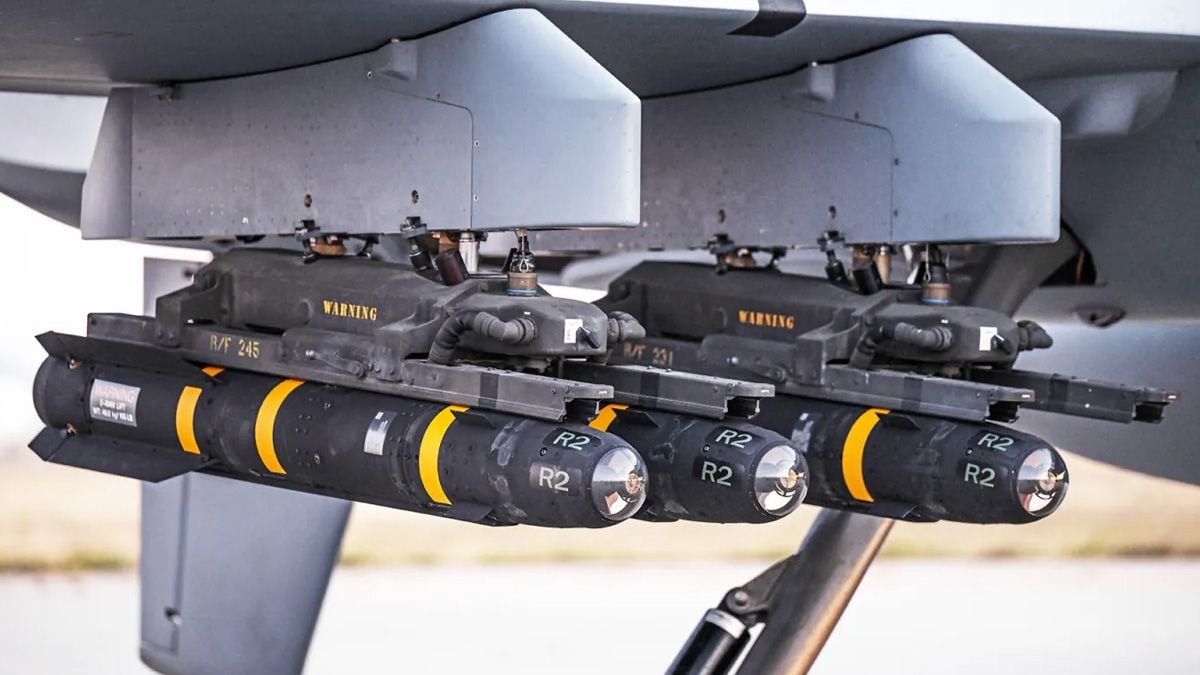
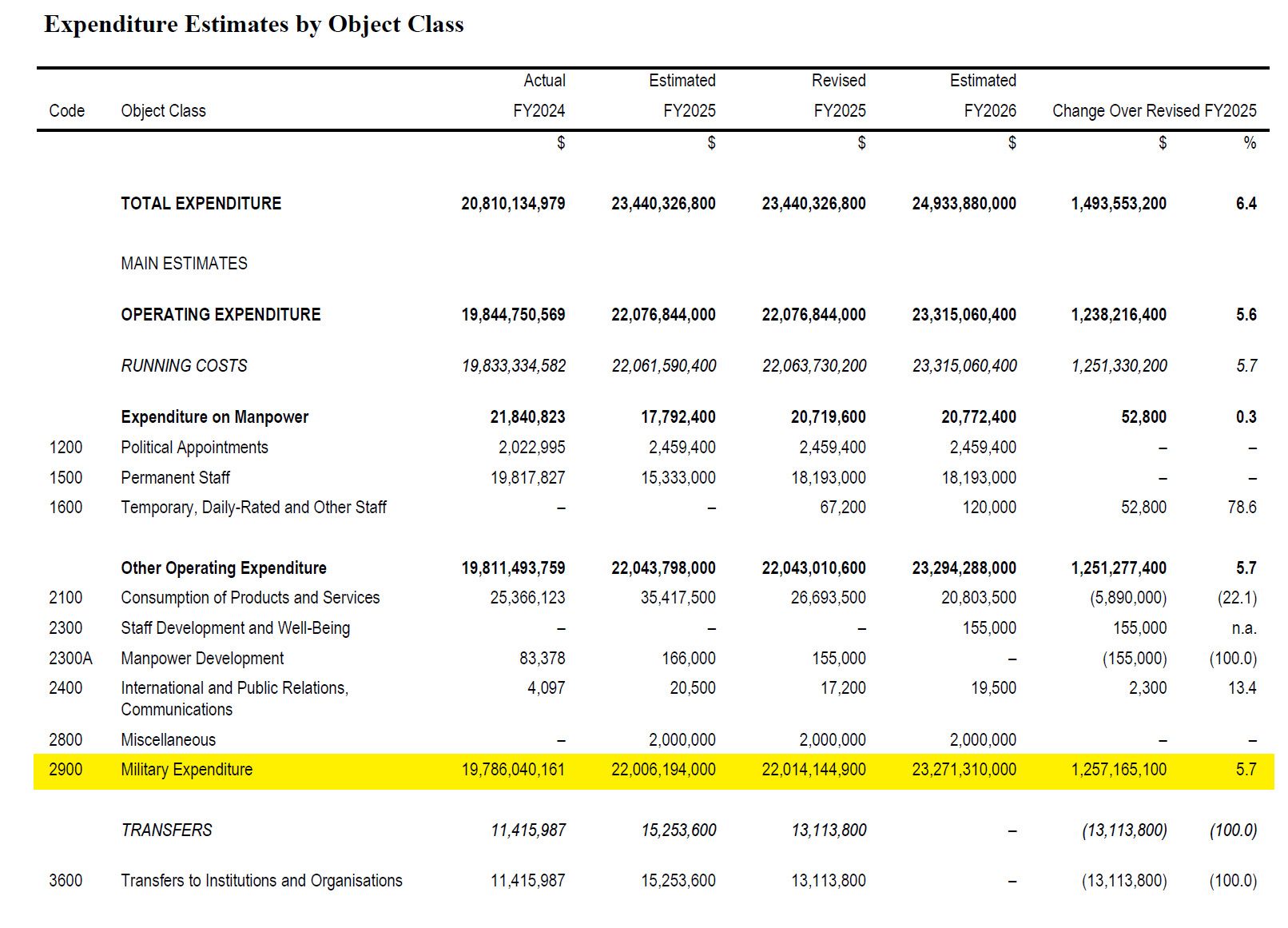
Parliament is in the process of approving S$25.8 billion for national defense in Budget 2026. S$23.3 billion of that — the operational component — is a black box.
No line-item breakdown. No public scrutiny. We accept this because we're told national security is priceless — a non-negotiable insurance policy.
That's a reasonable position. But then explain why, when we turn to the Ministry of Education (MOE) — the institution responsible for our only true sovereign resource, our people — the language suddenly changes.
"Whatever it takes" becomes "finite resources." "National priority" becomes "fiscal prudence." The blank cheque disappears. The magnifying glass comes out.
That is not a funding problem. That is a values problem.
The Math Nobody Wants to Confront
For years, leaders like former Education Minister—and current Minister for Defence—Chan Chun Sing have framed smaller class sizes as fiscally radical.
The argument goes: "Do we mean we should double our teaching force to halve class sizes? Can we achieve this without affecting quality?"
It's a reasonable question. But it's never asked about defence procurement.
Singapore is acquiring Invincible-class submarines at roughly S$600 million each at the time of purchase — before maintenance, before operating costs, before the decades of expenditure required to keep those machines functional. We buy them because security is worth it.
So apply that same logic to the classroom.
The state knows the value of this resource at the point of purchase. Between NIE training, salaries, and performance-linked bonuses, a single entry-level graduate teacher represents a fully-loaded annual investment of roughly S$60,000.
For the price of just one submarine, the state could fund the deployment of 10,000 educators into our classrooms for an entire year. Even the S$335 million Founders' Memorial—a monument to the past—represents the equivalent of 5,500 teachers building the future.
The issue isn't that the money doesn't exist; it's that we are willing to pay the 'acquisition cost' for talent while refusing to pay the 'maintenance cost' of a manageable workload.
Nobody demands a feasibility study for the submarine. Nobody asks whether we can 'afford' the memorial. But reduce class sizes? Suddenly we need a cost-benefit framework and a parliamentary debate.
This obsessive scrutiny isn't about saving money—it's about a lopsided definition of accountability. While the billions in defense disappear into a 'strategic' void, the system compensates by chasing the shadow of every cent in our schools.
Fifty-Two Cents
If you want to understand how the system truly values teachers, look no further than the 2018 carpark saga.
Following an Auditor-General's Office report, MOE moved to charge teachers up to S$960 a year to park at their own schools. The justification was "fairness." Meanwhile, MPs paid roughly S$365 a year to park at Parliament House in the course of their duties.
Public outrage forced a reversal. But what it revealed couldn't be walked back.
Then there's Jo Ann Kuek — a former teacher who resigned due to burnout and developed lasting stress-related health problems. After everything she gave the profession, she was chased by the ministry for a S$0.52 debt notice due to a computation error.
Fifty-two cents.
This is a system that tracks every cent of its own money with forensic precision, while treating the educator's time as essentially worthless. Teachers have no overtime to claim. No shift allowances. No recognition of the invisible hours. The accounting is meticulous — but only in one direction.
A Demographic Window We're Actively Wasting
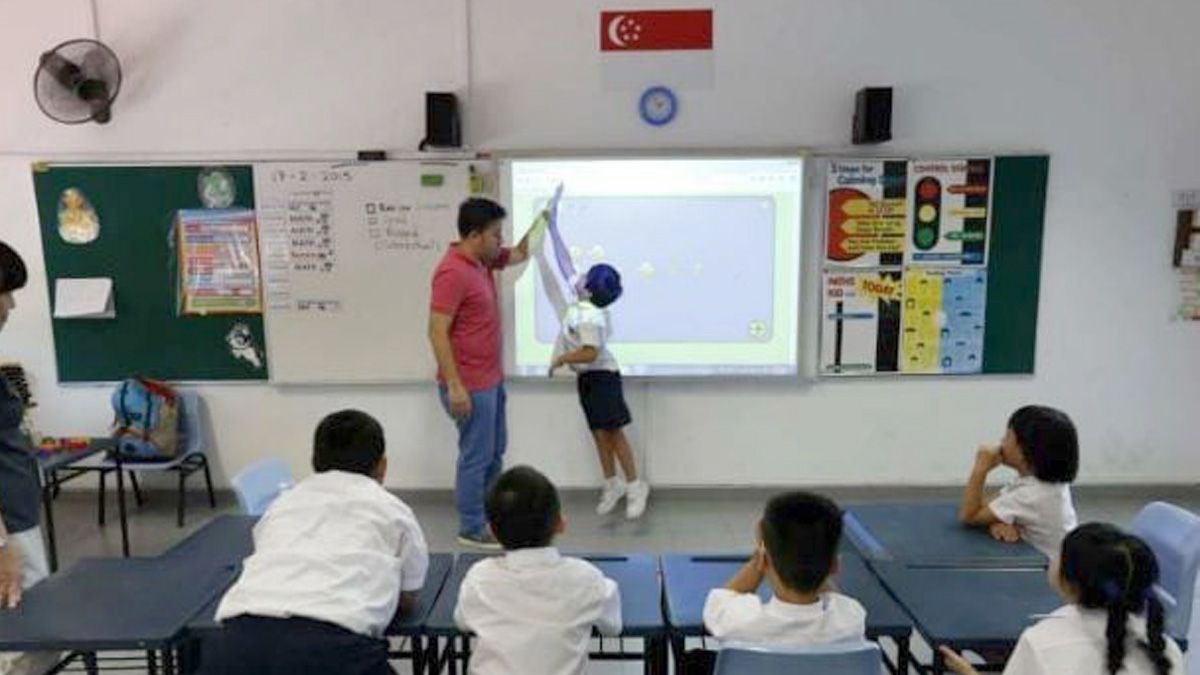
Singapore's Total Fertility Rate hit a record low of 0.97 in 2023 and stayed as such in 2024. Fewer children than at any point in our history. This should be the moment — finally — to give every child the intimate classroom experience that numbers previously made impossible.
Instead, the opposite is happening.
Budget figures show that the Education Service headcount — the core teaching establishment — fell from 31,202 in FY2023 to 30,882 in FY2024, before recovering slightly.
That modest contraction, against a backdrop of a shrinking student cohort, should have translated into smaller classes.
Instead, according to MOE's own Education Statistics Digest, the average primary school form class size sits at 34 students, and secondary at 33. Primary One and Two classes are capped at 30 — an acknowledgment that younger learners benefit from more intimate settings. If that's true for six-year-olds, why does the logic stop there?
We are holding the profession flat in headcount while doing nothing to reduce the load per teacher. History has handed Singapore a rare demographic window to fix its classrooms — and the opportunity is being quietly passed over.
The S$1.8 Billion Bill Passed to Parents
The government frames smaller class sizes as a cost to the state. What it won't acknowledge is that the cost is already being paid — just not by the government.
In 2023, Singaporean families spent S$1.8 billion on private tuition, according to the Household Expenditure Survey released in December 2024. That is not a lifestyle choice. That is parents funding a second school every evening to patch what an overstretched classroom couldn't cover.
When one teacher manages over 30 children with different learning needs, different home situations, different gaps — it is not a failure of effort that some fall through. It is a failure of arithmetic.
The tuition industry doesn't exist because Singaporean parents are anxious overachievers. It exists because we built a classroom model that cannot serve every child, and then quietly handed the remediation bill to families.
We call it an education system. In practice, it functions like an outsourcing arrangement.
Two Percent and Forty Percent
The government's own data, presented in Parliament in July 2024, shows that the annual resignation rate of teachers has remained stable at around 2% per year since 2018. MOE points to this as evidence of a stable profession. On the surface, it looks reassuring.
But stability in resignation rates and stability in morale are not the same thing.
The 2024 TALIS results tell a different story beneath that headline figure. Forty percent of Singapore teachers under 30 intend to leave the profession within five years — double the OECD average of 20%.
Salary satisfaction has dropped 17 percentage points since 2018. Singapore teachers report working an average of 47.3 hours per week, well above the OECD average of 41 hours.
What the 2% resignation rate may actually reflect is not contentment, but constraint. Teachers on bond, teachers who have invested years in a pension-linked career, teachers who have few equivalent options in the private sector — they don't resign. They endure.
The parliamentary reply itself hints at this: the resignation rate among teachers three to five years in — when bonds end — jumps to 4%, double the overall rate.
The profession isn't haemorrhaging teachers. It's quietly losing heart. And a workforce that stays but disengages is arguably more damaging than one that simply leaves — because those are the teachers standing in front of our children every day.
Reducing the load per teacher — through smaller classes — is not just a quality-of-learning intervention. It is a retention strategy.
What This Is Really About
This is not a call to defund defence. It is a call for consistency of logic.
If national security justifies a black-box budget, then the institution producing the next generation of soldiers, engineers, doctors, and thinkers deserves more than a magnifying glass on parking fees. If "maintenance" is a multi-billion dollar given for submarines, then ensuring teachers aren't burning out should not be framed as a luxury we cannot afford.
Singapore's founding leaders understood this instinctively.
In August 1978, then-Prime Minister Lee Kuan Yew tasked Dr. Goh Keng Swee—then Deputy Prime Minister and Minister for Defence—and his team of systems engineers from the PMO, Ministry of Finance, and the Defence Ministry to go into MOE and fix it.
Not educators. Engineers. The explicit goal was to make the ministry "more sensitive to the needs of our changing situation" and to adjust "work load on teacher and pupils to fit the rapidly changing scene."
Even then, the findings were damning. Standards were being set that "only the ablest students can cope with," leaving the average student "unnecessarily burdened" and the below-average "hard pressed."
But there is a bitter irony in looking back.
In 1978, Dr Goh's engineers were alarmed by a relatively lean curriculum that was already too rigid for the average child.
Today, we have expanded that curriculum's volume manyfold — adding "holistic" layers and 21st-century competencies onto a workforce already stretched to its limit. The engineers would not recognise what they were trying to fix.
Somewhere along the way, the ruthless clarity of "fit the workload to the changing scene" was replaced by a complacent "more is better" philosophy.
We speak endlessly about investing in people, while the people doing the investing — the teachers — are losing heart in staff rooms, drowning in a volume of work that would baffle the systems engineers of 1978, and being chased for fifty-two cent debt notices on their way out the door.
If we can't afford to waste a submarine, we certainly can't afford a system that treats its primary human investors as an administrative overhead.
As Education Minister Desmond Lee and MOS Jasmin Lau meet with educators like Jo Ann Kuek, the 2% headline resignation rate should not be the number they're focused on. The number that matters is 40% — the share of young teachers still showing up every day while quietly planning their exit.
We can approve a S$25.8 billion defence budget without public line-item justification. We can build monuments to the past without a feasibility study. Surely we can stop being penny-wise and talent-foolish about the people shaping our future.
Move toward smaller classes. Give teachers the bandwidth to actually teach. Treat the profession with the same strategic urgency we give our borders. Or at least stop pretending that people are our greatest resource—because a resource you refuse to maintain eventually becomes a liability.