Chan Chun Sing rejects call to peg NSF pay to Local Qualifying Salary, says NS is duty not transaction
During the 27 February 2026 Committee of Supply debate, Workers’ Party MP Kenneth Tiong urged raising second-year NSF allowances to S$1,800 with CPF. Defence Minister Chan Chun Sing rejected pegging pay to labour benchmarks, warning against conflating national duty with employment.
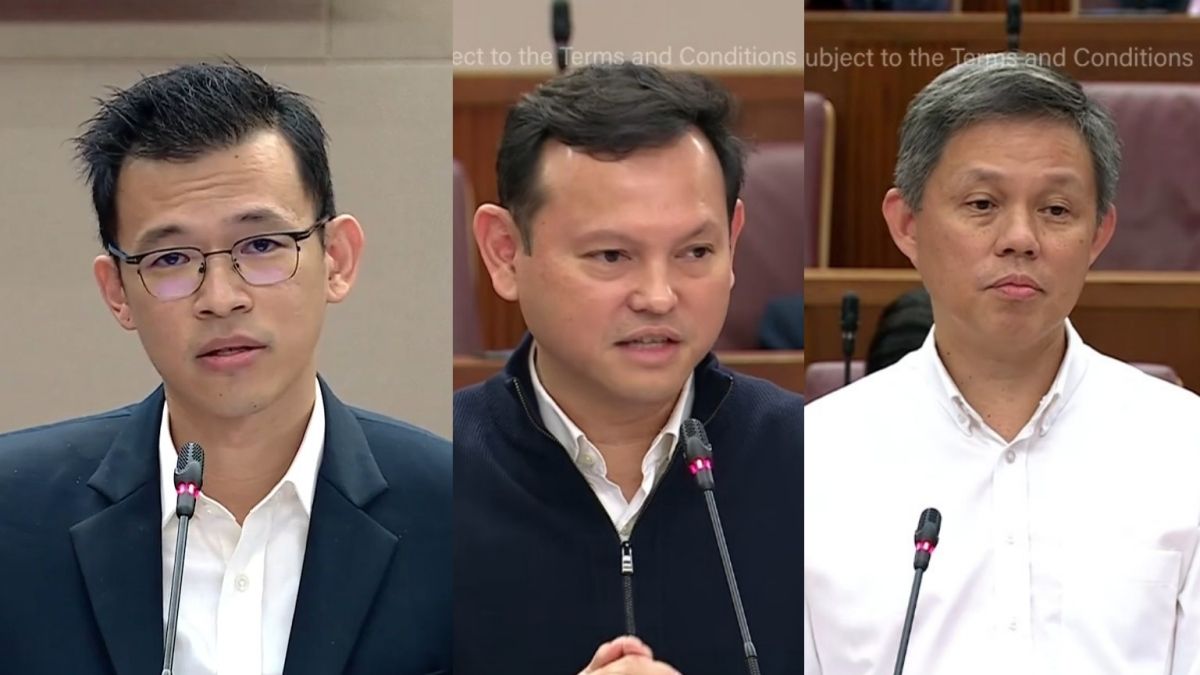
- WP MP Kenneth Tiong proposed pegging second-year NSF allowances to the S$1,800 LQS with CPF.
- Mindef said LQS is an administrative tool, not a wage benchmark, and NS is not employment.
- Chan Chun Sing urged MPs not to “conflate duty with transaction”, pledging continued reviews.

SINGAPORE: A proposal to peg second-year National Service Full-time (NSF) allowances to Singapore’s Local Qualifying Salary (LQS) drew firm opposition from Defence Minister Chan Chun Sing during the Committee of Supply debate on 27 February 2026.
Workers’ Party MP Kenneth Tiong argued that allowances should be raised to S$1,800 with CPF contributions, while the Ministry of Defence maintained that National Service (NS) is a civic duty rather than an employment relationship.
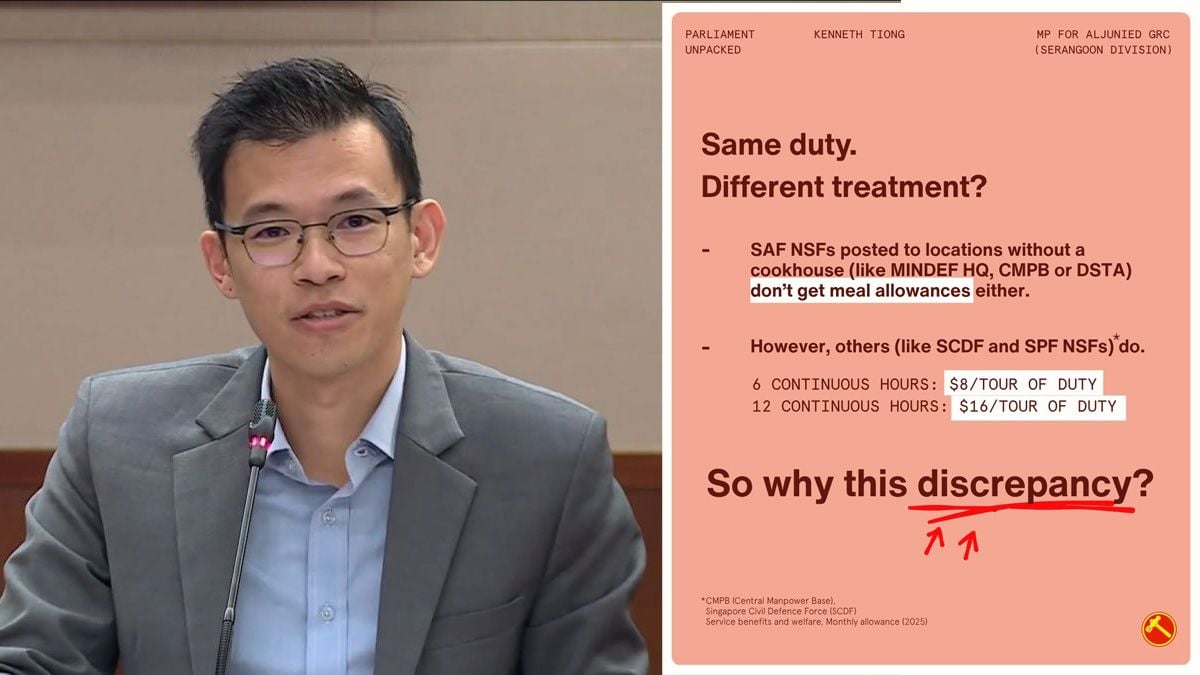
WP's Kenneth Tiong urges align NSF allowances with LQS
Speaking in Parliament, Tiong urged the Government to raise second-year NSF allowances to the new LQS of S$1,800, including employer CPF contributions.
He noted that in Budget 2026 the Government announced an increase in the LQS to S$1,800, under which workers earning that amount receive CPF contributions as a matter of law.
Tiong pointed out that a second-year corporal in a combat vocation earns about S$1,035 monthly with no CPF contributions.
“If S$1,800 is the floor for every worker in Singapore, surely it is the floor for every soldier,” he said.
Tiong argued that by their second year, NSFs are fully trained and operationally deployed, manning posts and running day-to-day operations alongside regulars.
“They should be paid accordingly,” he said, estimating that raising allowances would cost between S$150 million and S$200 million annually, or under 1 per cent of the S$25 billion defence budget.
He asked whether the Ministry would commit to at least matching the LQS for second-year NSFs.
Mindef: LQS not a wage benchmark
Responding, Senior Minister of State for Defence Zaqy Mohammad said the Ministry “deeply value[s] our national servicemen’s commitment and contributions in defending Singapore”.
He said NS allowances have been reviewed four times in the past decade, in 2015, 2020, 2023 and most recently in July 2025.
As an example, he noted that the allowance for a recruit in basic military training has increased by 65 per cent over the last 10 years.
Zaqy stressed that allowances are only one component of broader recognition measures.
He cited NS HOME — covering housing, medical and education support — which provides top-ups to CPF accounts and LifeSG credits. Servicemen receive up to S$6,500 upon completing full-time NS, with CPF contributions forming a significant portion.
On comparisons with the LQS, Zaqy said it is an administrative tool used to determine a firm’s work permit and S Pass quota entitlement.
“It is not a minimum wage or general salary benchmark for all forms of service in Singapore,” he said.
He added that salaries are transactions for labour services rendered, intended to meet living expenses and commitments, while NS is “a unique civic duty and contribution by all able-bodied Singaporean men”.
Framing NS as employment, he cautioned, could erode the social compact and ethos of service.
Tiong presses on compensation
In a follow-up, Tiong questioned whether duty and compensation were mutually exclusive.
He noted that SAF regulars serve the same mission while receiving market-rate salaries and CPF contributions.
“I don’t think duty and compensation are incompatible at all,” he said.
Tiong also disagreed that accommodation, food and equipment should be considered part of a compensation package.
“These are simply operational necessities for the SAF,” he said, arguing that feeding, housing and equipping soldiers are required to ensure operational readiness.
He reiterated that the proposal would cost less than 1 per cent of the defence budget and asked why the funds could not be found “to pay our soldiers fairly”.
Chan: No amount of money can equate to service
Defence Minister Chan Chun Sing responded that he would be “the first one to champion” recognising the contributions of NSFs and NSmen, having served both full-time NS and as a regular.
However, he drew a distinction between recognition and compensation.
“Those of us who have served in national service will be very careful to not use the word compensate,” he said.
“In truth, no amount of monetary compensation can be equated with the contributions of our NS men.”
Chan said service extends beyond the initial two years, with many continuing to serve for at least 10 years of operationally ready NS, and some volunteering even longer.
“What is the ultimate price for all these contributions? It is not how much money we give them. Ultimately it is the security and survival of Singapore that we are defending,” he said.
He assured the House that the Government would continue to review allowances and support measures in consultation with the Ministry of Finance, subject to budgetary space.
“We will take care of our NSmen,” Chan said. “But I appeal to members of this House not to conflate duty with transaction.”
He added that while enhancements to allowances, HOME awards, NS credits and tax incentives would continue where possible, it was not in Singapore’s interest to reduce “this sacred duty” into a transactional relationship.