Legal scholar calls for formalisation of Leader of the Opposition office after Pritam Singh ouster
A Singaporean constitutional law scholar argues the office of Leader of the Opposition has no legal basis, following Prime Minister Lawrence Wong's removal of Pritam Singh from the role in January 2026.
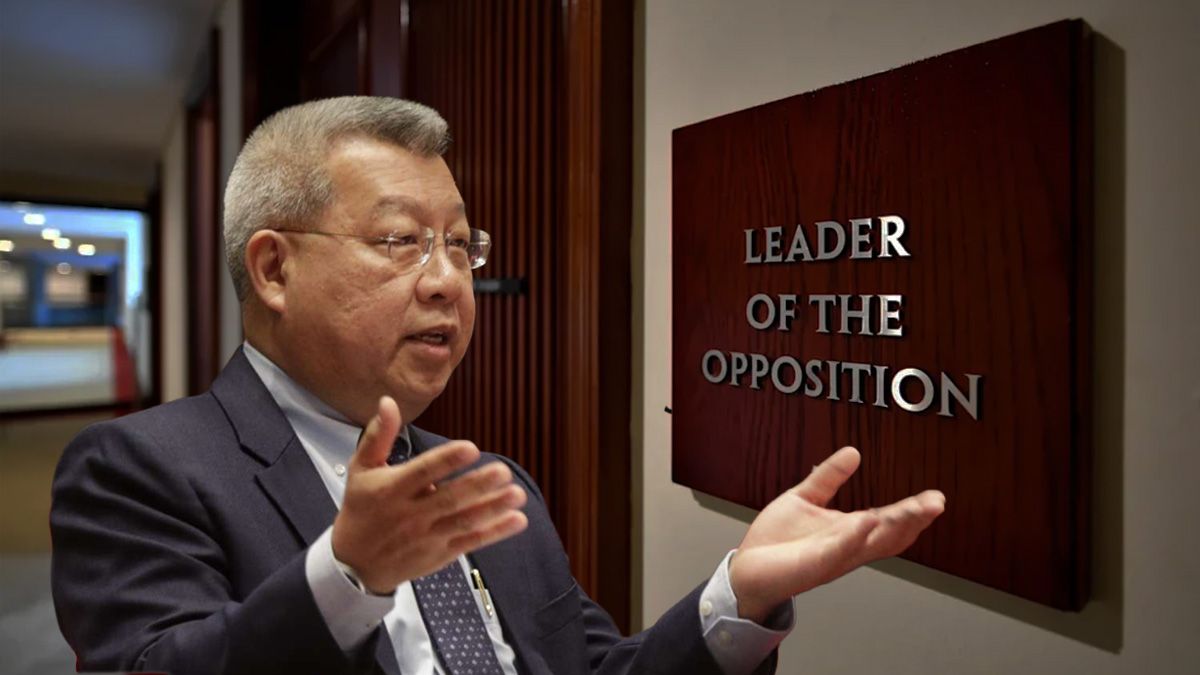
- Kevin Tan asserts that the Leader of the Opposition office was created via executive power rather than constitutional or statutory amendments.
- The scholar critiques the Prime Minister’s authority to unilaterally vacate the office and set conditions for a successor as a potential form of patronage.
- Proposed reforms include adopting a statutory framework similar to the UK and ensuring the Speaker of Parliament is a non-partisan figure.

The removal of Pritam Singh as Singapore's Leader of the Opposition in January 2026 has prompted both a government declaration of support for institutionalising the role and a sharp legal critique from a constitutional law scholar who argues the office has never had a proper legal foundation.
Kevin Tan, who teaches at the Faculty of Law, National University of Singapore, and at the S Rajaratnam School of International Studies, Nanyang Technological University, published the commentary on 26 February 2026 through Academia.sg, an independent, volunteer-run collective of Singaporean scholars.
Tan argues that the office of Leader of the Opposition (LO) was created through executive fiat and that its recent vacancy exposes an urgent need for legislative reform.
Government supports institutionalisation, urges patience
On 3 February 2026, Minister Chan Chun Sing, Coordinating Minister for Public Service and Minister for Defence, issued a written parliamentary reply on behalf of Prime Minister Lawrence Wong, stating that the government supports, in principle, the institutionalisation of the LO role in Singapore's Constitution.
Chan was responding to questions from Nominated Member of Parliament Dr Neo Kok Beng, who asked whether the LO position would be formally enshrined in law, what criteria determine eligibility, and whether the Prime Minister would appoint an LO if no elected opposition MP met those criteria.
Chan affirmed the government's support for institutionalisation but noted that the position, only formalised in 2020, remains relatively new.
He argued that its future codification should be informed by parliamentary practice and experience, stating that it would be appropriate to allow conventions to further develop and mature before any eventual codification in statute.
On eligibility, Chan outlined three considerations: the individual should be the leader of the main opposition party where such a party exists and commands a significant number of elected seats; the candidate must uphold high standards of honesty and integrity; and the individual must command the trust and respect of Parliament.
He added that while some requirements may eventually be included in statute, conventions of conduct and moral expectations would remain uncodified but fundamental.
On the question of whether an LO would be appointed if no qualified opposition MP existed, Chan described the scenario as hypothetical and highly unlikely, noting that rules guaranteeing at least twelve non-ruling party MPs in Parliament made the absence of a suitable candidate implausible.
The vacancy and its circumstances
The government's response came in the wake of Singh's removal as LO on 15 January 2026. Singh, secretary-general of the Workers' Party (WP), had been convicted for lying to the Committee of Privileges while under oath.
Following the High Court's dismissal of his appeal, Parliament — in which the People's Action Party (PAP) holds a majority — passed a motion declaring him unsuitable to continue in the position. Prime Minister Wong's press statement confirming the vacancy followed from that motion.
Wong's statement invited the Workers' Party to nominate a replacement, with the condition that the nominee should not have been implicated in the Committee of Privileges findings.
The Workers' Party declined, stating that the only tenable candidate would be the leader of the largest opposition party in Parliament — namely, the Workers' Party itself — and that the LO title arises from electoral legitimacy, not executive discretion.
An office created without legal authority
Tan traces the legal problem to the origins of the office. On 11 July 2020, following the general election that returned ten Workers' Party MPs to Parliament, then-Prime Minister Lee Hsien Loong informed Singh he would be formally designated as LO and provided with appropriate staff support and resources.
This was given formal expression through a ministerial statement read in Parliament on 31 August 2020 by Minister in the Prime Minister's Office Indranee Rajah.
The statement acknowledged explicitly that the position of LO was not provided for in Singapore's Constitution or the Standing Orders of Parliament, yet declared it would be more formally recognised given the increased number of opposition MPs.
No constitutional amendment followed. No legislation was enacted. No parliamentary vote was held. The LO's additional allowance — set at twice that of an ordinary MP — was incorporated into the annual Budget and Supply Bills by way of a joint press statement from the offices of the Speaker of Parliament and the Leader of the House.
Tan examines Singapore's Constitution for any provision authorising the Prime Minister to create such an office and finds none. He also considers section 3 of the Parliament (Privileges, Immunities and Powers) Act, which provides that parliamentary privileges and powers shall mirror those of the House of Commons at the time of Singapore's establishment as a republic on 9 August 1965.
At that date, the LO in the United Kingdom had already been a fully statutory office for close to thirty years under the Ministers of the Crown Act 1937. To rely on British convention as a legal anchor, Tan argues, Singapore would need an equivalent piece of legislation. There is none.
Lessons from Westminster and the case for reform
Tan examines why the United Kingdom codified the office in statute, pointing to the fragmentation of the Liberal Party following the Asquith-Lloyd George split of December 1916, which left no clear answer as to which group constituted the main opposition or who led it in the House of Commons.
By the 1930s, Parliament concluded that if the Prime Minister had the final word on who received the LO's state salary, the independence of the opposition leadership could not be assured.
The 1937 Act resolved this by defining the LO as the leader in the House of the opposition party with the greatest numerical strength, with the Speaker empowered to make a final determination where doubt remained. The effect was to remove any discretion the Prime Minister might have had over the designation.
Tan argues Singapore must now place the office on a proper legislative or constitutional footing along similar lines. He also calls for an amendment to Article 40(2) of the Constitution to require the Speaker of Parliament to be entirely independent of any political party. Since 1970, every Speaker has been a member of the PAP.
Tan notes that Singapore once had independent Speakers, with the last, Punch Coomaraswamy, serving from 1966 to 1970.
"On no account should this decision be placed on the shoulders of the PM as that would confer on the PM the power of patronage over the LO," Tan writes.
"The office and duties and responsibilities of an LO are too important to be left to convention, or worse still, the Prime Minister's indulgence. Reform is needed and the time is now."