Crisis committee to tackle food prices and diplomacy, not just fuel, Shanmugam says
Singapore's Homefront Crisis Ministerial Committee, chaired by Coordinating Minister K Shanmugam, is coordinating the government's response to energy disruptions, rising prices, and security implications arising from the Middle East conflict.

- HCMC scope extends beyond fuel to food prices, supply shocks, security and diplomacy.
- Singapore has not yet imposed electricity or fuel consumption restrictions unlike other countries.
- Parliament will receive a detailed briefing on the committee's work next week.

Singapore's Homefront Crisis Ministerial Committee (HCMC) is examining a range of pressures beyond fuel disruptions, including rising food prices, supply chain shocks, diplomatic relationships and security risks arising from the ongoing Middle East conflict, Coordinating Minister for National Security and Minister for Home Affairs K Shanmugam has said.
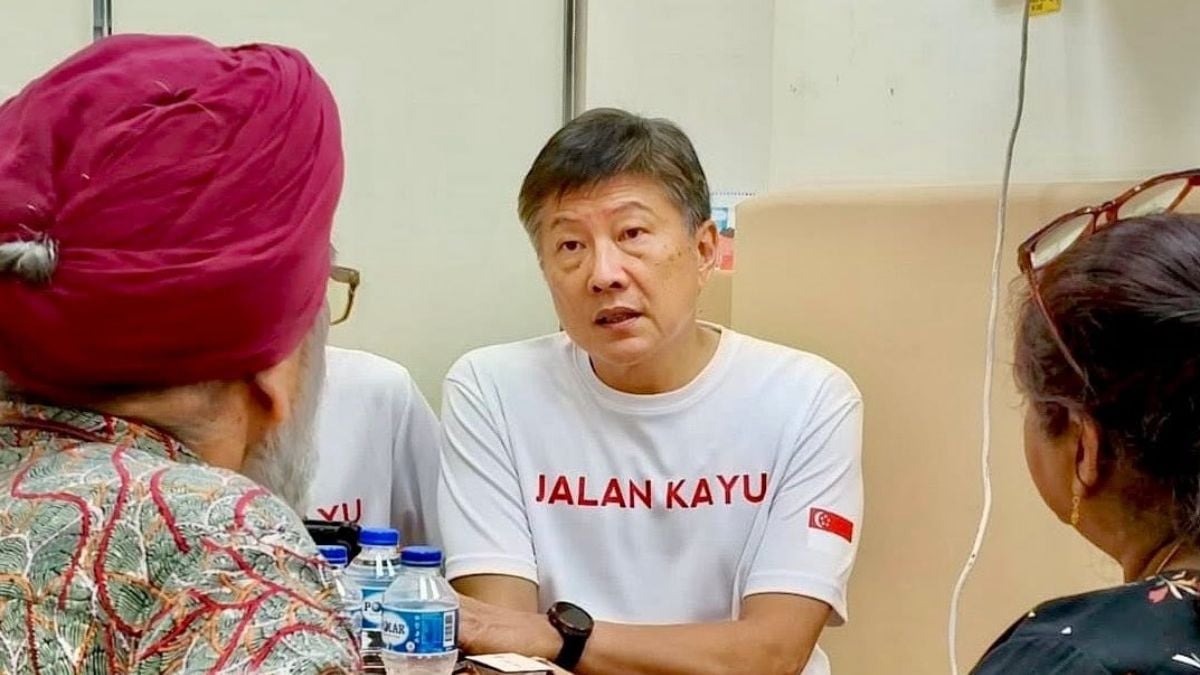
Shanmugam, who chairs the committee, gave his first public briefing on its work at a community event in Chong Pang on Saturday, 4 April 2026 — two days after Prime Minister Lawrence Wong announced its activation and warned of "severe consequences" should energy disruptions in the Middle East persist.
The committee has been meeting for several weeks, Shanmugam said, with work already under way before Thursday's public announcement.
Background: one month of conflict
The HCMC's activation comes one month into Operation Epic Fury, the US-Israeli military campaign against Iran that began on 28 February 2026. The opening strikes killed Iran's then-supreme leader, Ayatollah Ali Khamenei, along with dozens of senior officials, according to reporting by Le Monde.
Iran responded by closing the Strait of Hormuz, halting the transit of approximately one-fifth of the world's oil and gas flows. Traffic through the strait has not resumed since.
Oil prices have risen more than 60 per cent since the conflict began. US West Texas Intermediate crude futures have crossed US$104 a barrel, while international benchmark Brent crude has reached US$106 a barrel.
Wong, in his Thursday announcement, said Singapore faced "severe consequences" if the disruption persisted. He described the developments as "unprecedented" and noted that even a near-term ceasefire would not immediately resolve supply constraints, given the extent of damaged infrastructure.
Scope of the committee
Shanmugam outlined on Saturday that the committee's mandate extends well beyond managing fuel supply.
"It's not just on fuel, but on related products. Food is an obvious example, but there will be other implications too," he said. "And then there are diplomatic issues, our relationships with countries, bilateral as well as multilateral, security issues — a number of different issues. That's why you have an inter-ministerial committee."
On food, Shanmugam pointed to Singapore's near-total dependence on imports as a key vulnerability. "Fertiliser prices have to go up. And the cost of bringing those food products, transportation to Singapore, that will go up. It will have an impact," he said.
He also cited delivery riders as an example of workers already facing higher operating costs due to elevated fuel prices.
Committee structure
The HCMC was originally established following the SARS outbreak as part of Singapore's broader crisis management framework. Its structure predates the current crisis by many years, and is designed to be activated during major national emergencies requiring cross-ministry coordination.
Deputy Prime Minister Gan Kim Yong serves as adviser to the committee. Participating ministries include the Ministry of Sustainability and the Environment for food security issues, the Ministry of Trade and Industry for energy and electricity matters, the Ministry of Foreign Affairs, the Ministry of Defence, and the Ministry of Home Affairs.
Beneath the ministerial committee sits the Homefront Crisis Executive Group (HCEG), comprising permanent secretaries and heads of government agencies. The HCEG reports to the HCMC, which in turn reports to the Cabinet.
Shanmugam confirmed that meetings at both levels had been ongoing for several weeks prior to the public announcement, and that a number of steps had already been taken. He declined to specify what those steps were.
No restrictions yet
Shanmugam noted that Singapore has not yet introduced measures to limit electricity or fuel consumption, unlike a number of other countries that have responded to the energy crunch with mandatory cutbacks.
"We haven't taken those measures yet, and we will explain how we approach it," he said.
Manpower Minister Tan See Leng said on 11 March 2026 that Singapore's stockpile of liquefied natural gas (LNG) and diesel remained sufficient to last for months. Wong said on Thursday that refineries had begun scaling back production, firms were sourcing supplies from beyond the Middle East, and LNG importers were securing alternative sources globally.
The government is also deepening longer-term energy partnerships, including with Australia, which already supplies more than one-third of Singapore's LNG, and with New Zealand to ensure supply lines for essential goods and food remain open.
Support for households and businesses
Wong said on Thursday that additional household support is being rolled out, including enhanced U-Save rebates brought forward from earlier timelines. Targeted support will be extended to sectors more severely affected by energy price increases. Full details are to be announced in parliament next week.
Parliament will also receive a more detailed account of the HCMC's work when it sits next week. Shanmugam confirmed that worst-case scenario planning forms part of the committee's ongoing work, but declined to elaborate.
"It's a serious situation all around the world," Shanmugam said. "The government is there to deal with these issues."