Paul Tambyah calls govt response to energy crisis timid, proposes petrol tax cuts, windfall levy
Paul Tambyah has criticised the Government’s response to the energy crisis as “timid”, proposing petrol tax cuts and a temporary windfall levy on oil and gas firms.
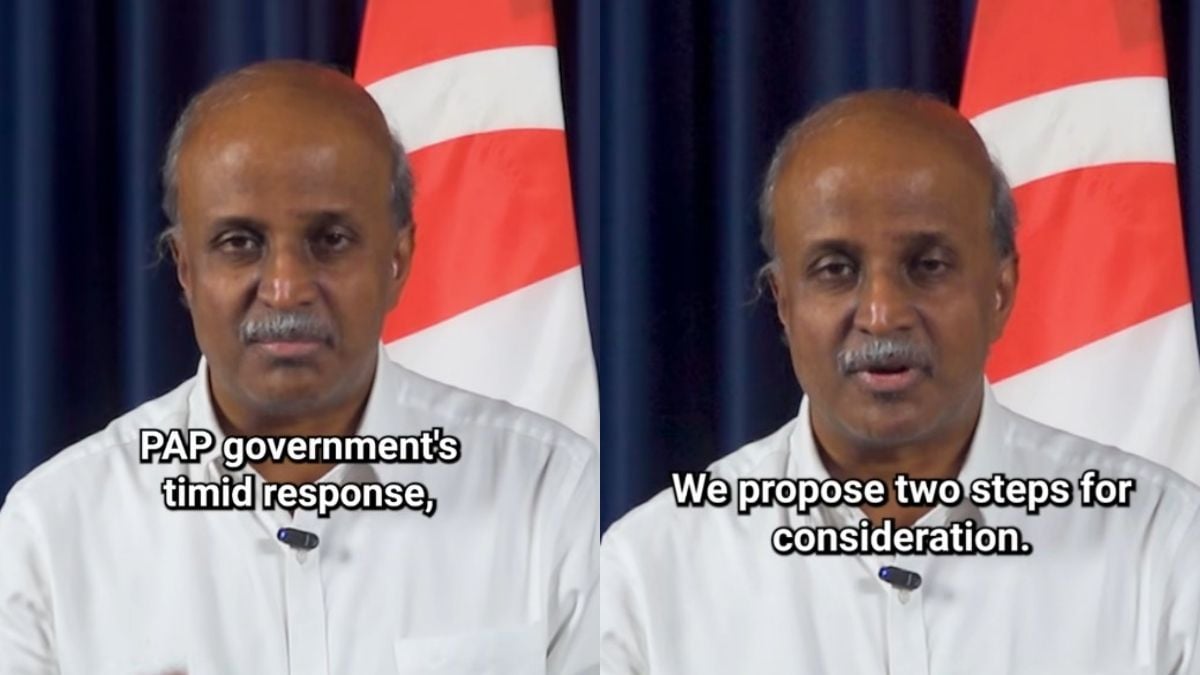
- SDP Chair Paul Tambyah criticised the Government’s response as limited and insufficient for rising energy costs.
- He proposed reversing petrol tax hikes and introducing a temporary windfall levy.
- PSP earlier warned existing measures may not adequately support vulnerable self-employed workers.

Singapore Democratic Party (SDP) Chairman Dr Paul Tambyah has described the Government’s response to the energy crisis as “timid”, calling for more decisive measures to address rising costs affecting households and businesses.
In a video uploaded on 14 April 2026, Dr Tambyah said the crisis had already had a “serious impact on the livelihood of Singaporeans”, highlighting growing financial strain.
He said the SDP was “disappointed by the PAP government’s timid response”, which he characterised as largely limited to vouchers, modest corporate tax rebates, incentives for energy-efficient devices, and cash payments ranging from S$200 to S$400 for those most affected.
Government relief measures
The Government last week announced nearly S$1 billion in relief measures aimed at easing cost pressures for households and businesses.
Around 2.4 million Singaporeans are expected to receive an enhanced Cost-of-Living Special Payment, with an additional S$200 added. Eligible recipients will receive between S$400 and S$600 in September.
To support workers most affected by rising fuel prices, S$200 in cash will be disbursed to active platform workers, private-hire car drivers and taxi drivers by the end of April.
Acting Minister for Transport and Senior Minister of State for Finance Jeffrey Siow said the Government was acting without delay and would supplement Budget 2026 measures with further support packages.
Calls for stronger action
Dr Tambyah said more robust intervention was needed to address underlying issues driving cost increases.
“Bold action is needed to tackle these underlying issues,” he said.
He outlined two key proposals from the SDP.
The first is to rescind the 23 per cent petrol tax hike introduced in 2021, effectively reverting to 2020 levels.
“Basically, return to the 2020 petrol tax which was already the highest in ASEAN,” he said.
“We already feel enough pain, there’s no need for more pain to be inflicted on ordinary Singaporeans.”
The second proposal involves introducing a temporary windfall levy on oil and gas companies operating in Singapore.
Dr Tambyah noted that Singapore is moving towards the Organisation for Economic Co-operation and Development’s Pillar 2 framework, which sets a minimum effective tax rate of 15 per cent on multinational enterprises.
He proposed increasing this to 17 per cent for the next two years, arguing that the additional revenue would be sufficient to fund expanded relief measures.
“The revenue generated would be more than sufficient to cover any additional cost for the vouchers that have been promised,” he said.
Dr Tambyah described the current crisis as a critical moment requiring strong leadership and broader public engagement.
“This is a difficult time for all of us, it is a time which calls for strong leadership and bold action,” he said.
He added that it was also “a time which calls for many voices”, stressing that Singaporeans should be heard as the country navigates the crisis.
“Our future and the future of our children is at stake,” he said.
PSP earlier calls govt support measures inadequate amid Middle East conflict
Separately, the Progress Singapore Party (PSP) in a 13 April statement expressed support for the Government’s relief package but cautioned that it may not adequately address the needs of vulnerable groups.
The party highlighted concerns about self-employed workers facing sharp increases in fuel costs, including private-hire and school bus drivers.
While welcoming measures such as bus service funding and early distribution of Community Development Council vouchers, the PSP argued that broad-based support risks overlooking those most affected.
It proposed targeted measures such as fuel vouchers and extended public transport operating hours to ease cost pressures.
The party also called for longer-term reforms, including incentives for electric vehicle adoption, and criticised official messaging as disconnected from the realities of rising living costs.