PSP says support measures inadequate amid Middle East conflict, calls for targeted relief and jobs reform
The Progress Singapore Party has welcomed a S$1 billion government support package but warned it may fall short for self-employed workers facing fuel price spikes. It also raised concerns over graduate employment outcomes and questioned whether ministerial incentives remain aligned with everyday Singaporeans.

- PSP supports relief measures but calls for targeted aid for self-employed workers facing fuel cost spikes.
- Concerns raised over weak employment outcomes among private university graduates and need for reform.
- Questions posed about alignment between ministerial incentives and everyday Singaporean realities.

The Progress Singapore Party (PSP) has called for more targeted assistance to support self-employed workers, warning that current relief measures may not adequately address their needs amid rising energy costs.
In a statement issued on 13 April 2026 in its eighth edition of The Palm newsletter, the party welcomed the Government’s S$1 billion support package aimed at helping households and businesses cope with escalating energy prices.
The PSP said initiatives such as funding support for essential bus services, covering 13 per cent of fare revenue, would provide “much-needed support” to cushion immediate pressures.
It added that households were likely to respond positively to the early issuance of Community Development Council (CDC) vouchers.
However, the party cautioned that these broad-based measures may not go far enough, particularly for self-employed individuals such as school bus drivers and private-hire drivers.
Targeted support for self-employed workers
The PSP highlighted that such workers lack the financial buffers available to larger companies and are especially vulnerable to sudden spikes in fuel prices.
“Unlike large companies, these individuals lack deep financial reserves and are highly exposed to sudden fuel price spikes,” the party said.
It argued that targeted support would be more effective than general cash payouts, proposing fuel vouchers for petrol or diesel as a more direct form of assistance.
This approach, it said, would ensure that aid reaches those who drive longer distances and face the highest operating costs.
The party stressed that the impact of rising energy prices has been immediate and severe, noting that fuel costs have increased by more than 50 per cent within a month.
“It is difficult for households and small businesses with low profit margins to absorb an increase in fuel prices of more than 50% within a month,” it stated.
Call for broader and innovative solutions
Beyond immediate relief, the PSP suggested that the current crisis presents an opportunity to accelerate longer-term policy shifts.
Referring to remarks by Senior Minister of State Zaqy Mohamad in Parliament to “never waste a good crisis”, the party said it agreed with the sentiment.
“This crisis presents opportunities to, for example, accelerate the transition to electric vehicles by offering additional incentives for businesses and private transport operators to switch,” it said.
The party also proposed extending public transport operating hours to better support workers who might otherwise rely on private-hire services for commuting.
Such measures, it argued, would help alleviate cost pressures while improving accessibility for lower-income workers.
At the same time, the PSP cautioned against relying on what it described as tone-deaf messaging.
It noted that suggestions encouraging Singaporeans to use fans instead of air-conditioning or to switch from driving to public transport may not fully reflect the lived realities of those already struggling with rising costs.
“Beyond these exhortations, the Government must do more to support Singaporeans through this shock,” the party said.
Concerns over graduate employment outcomes
Separately, the PSP raised concerns about employment outcomes for graduates from private education institutions, citing recent survey findings.
According to the latest Private Education Institution Graduate Employment Survey, fewer than one in two graduates secured full-time permanent employment within six months of graduation.
More than one in five graduates were reported to have not found any form of employment during the same period.
The party described these figures as “worrying” and indicative of a structural issue requiring policy attention.
It called for closer collaboration between the Ministries of Education and Manpower and private universities to improve graduate employability.
The PSP suggested that curricula should incorporate more meaningful on-the-job training, structured internships, and stronger alignment with industry requirements.
“These are worrying figures that point to a structural issue that cannot be ignored,” it said.
Linking institutional accountability to outcomes
The party also proposed tying the licensing of private education institutions to their graduates’ employment outcomes.
Institutions that consistently produce poor results, it argued, should face non-renewal of licences to protect students from investing in programmes that do not lead to viable careers.
In addition, the PSP called for a broader cultural shift away from viewing university degrees as the default measure of success.
It urged the Government to do more to uplift non-degree career pathways by improving wages and career progression opportunities.
This, it said, would enable students to make more informed decisions rather than feeling compelled to pursue degrees with uncertain returns.
Leong Mun Wai: Are ministerial incentives aligned with ordinary Singaporeans?
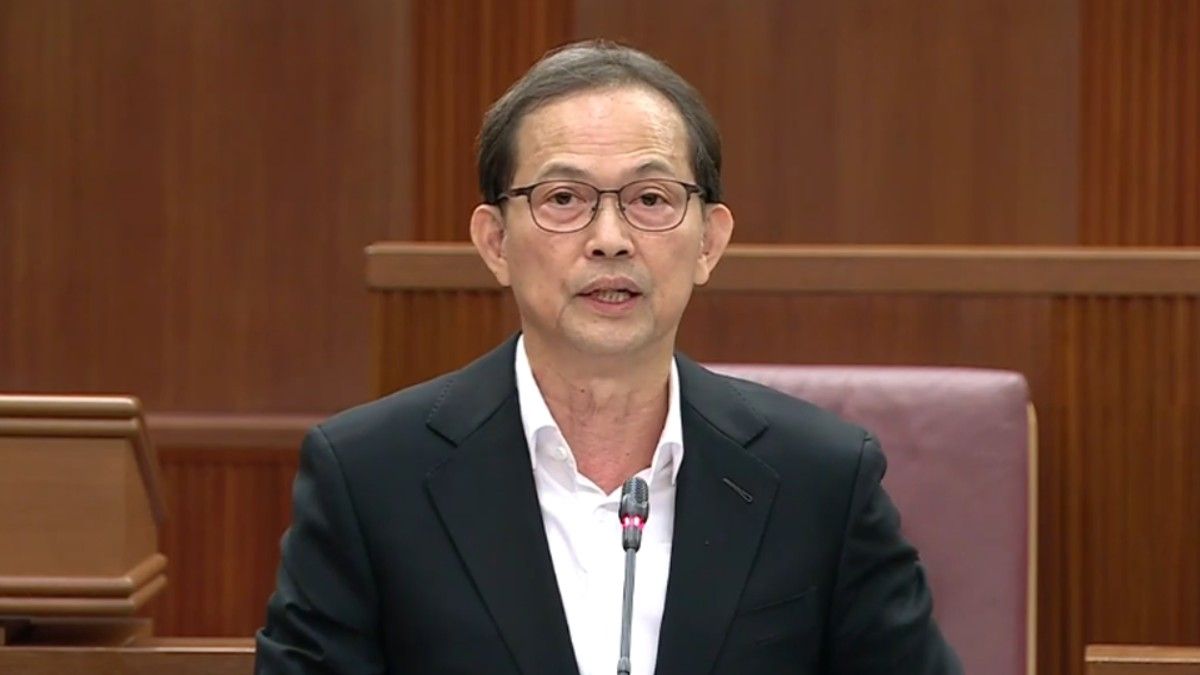
In a separate statement, PSP chief Leong Mun Wai raised questions about whether ministerial incentives remain aligned with the experiences of ordinary Singaporeans.
The remarks come amid a Government review of ministerial salaries.
Leong, also a former Non-Constituency Member of Parliament, noted that Singapore’s ministers are among the highest paid globally, with the stated aim of attracting capable individuals and maintaining integrity in public office.
While acknowledging these objectives, he questioned whether a gap may exist between policymakers and citizens.
“However, when leaders are multi-millionaires and live very different lives from the average Singaporean, a gap can emerge,” he said.
He asked whether leaders fully experience the pressures faced by many residents, including rising living costs, job insecurity, and social stress.
Incentives and policy priorities
Leong also pointed to the structure of ministerial compensation, which is partly linked to gross domestic product (GDP) growth.
He observed that in recent years, a significant portion of GDP growth has been driven by population expansion.
This, he suggested, raises broader questions about policy incentives and priorities.
“For instance, if population growth can be more readily increased through immigration than through long-term efforts to raise total fertility rate, what does that mean for policy priorities?” he asked.
“These are not criticisms, but questions worth considering — because alignment between leadership incentives and societal outcomes is key to building trust and achieving sustainable progress,” he said.