Bekasi train collision puts electric taxi operator Green SM under scrutiny in Indonesia probe
A deadly train collision in Bekasi has intensified scrutiny of Green SM and its Vietnamese parent company as investigators examine safety, operations, and regulatory compliance.
- A Bekasi train collision has intensified scrutiny of Vietnamese-owned Green SM and its parent company.
- Police link the initial trigger to a stalled electric taxi at an unofficial railway crossing.
- Authorities are examining signalling systems, infrastructure, and operational compliance.

The fatal train collision in Bekasi, West Java, has brought heightened attention to Green SM, an electric taxi operator, and its parent company, Green and Smart Mobility (GSM), as Indonesian authorities continue a multi-agency investigation into the incident.
The crash occurred on the evening of 27 April 2026 near Bekasi Timur Station and involved a commuter line train and the Argo Bromo Anggrek intercity service. At least 16 people were killed, all of them women travelling in a designated women-only carriage, after the intercity train struck the rear of a stationary commuter train.
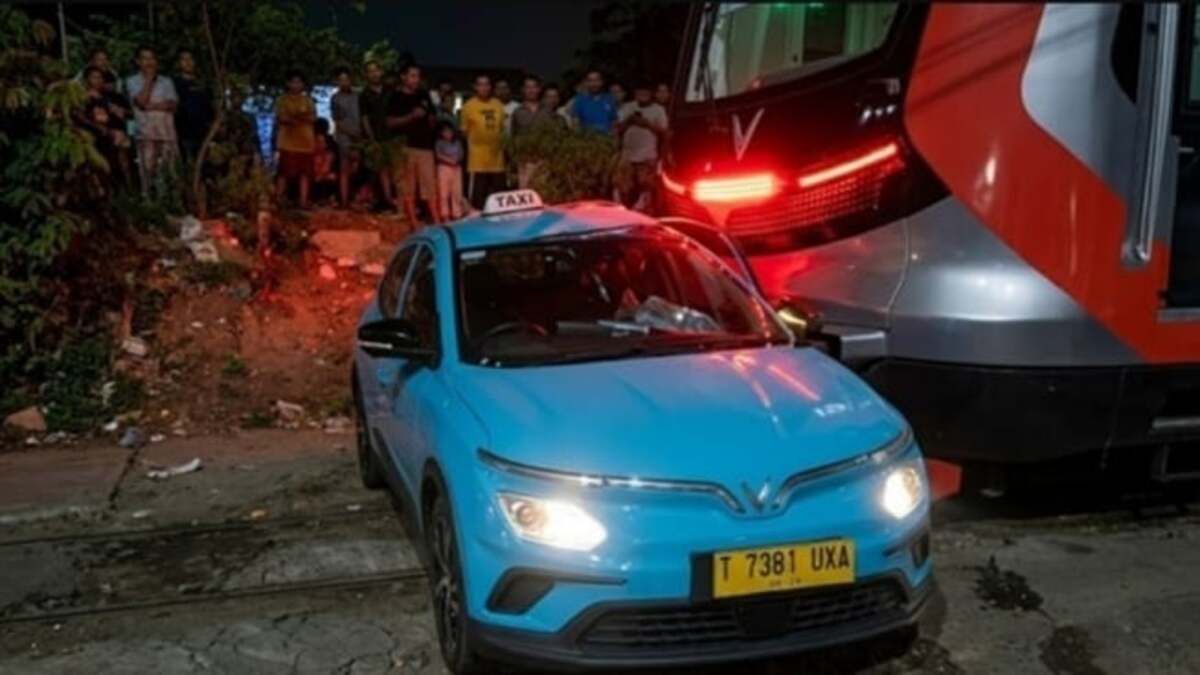
Police have identified the initial trigger of the sequence of events as a Green SM electric taxi that became immobilised on a railway crossing after reportedly experiencing an electrical fault.
The vehicle was subsequently struck by a commuter train, forcing it to halt on the track. While evacuation efforts were under way, the Argo Bromo Anggrek train approached from behind at speed and collided with the stationary commuter service.
As investigators reconstruct the incident, attention has increasingly focused on the operator of the taxi and the broader corporate structure behind it.
Ownership and Expansion of Green SM
Green SM operates under GSM, a mobility company founded by Vietnamese businessman Pham Nhat Vuong. He is the founder and chairman of Vingroup, one of Vietnam’s largest private conglomerates with interests spanning real estate, retail, healthcare, education, technology, and manufacturing.
A central component of Vingroup’s industrial expansion is VinFast, its electric vehicle arm. All Green SM taxis are based on VinFast electric cars, forming part of a vertically integrated model linking vehicle production with transport services.
GSM was formally launched in March 2023 as a platform for electric mobility services. Its operations include ride-hailing, taxi services, and leasing of electric cars and motorcycles to individual drivers and fleet operators. Company plans outlined at launch included the deployment of approximately 20,000 electric cars and 60,000 electric motorcycles to support these services.
Green SM, as the brand used for ride-hailing and taxi services, initially operated in Vietnam before expanding into international markets, including Indonesia. In the Indonesian market, the company has positioned itself as an alternative to conventional petrol-based transport services, promoting the environmental benefits of electric vehicles, including lower emissions and reduced noise.
The Bekasi incident has placed this expansion under scrutiny, particularly regarding operational readiness, driver management, and safety oversight in a relatively new market.
Viral Footage and Public Reaction
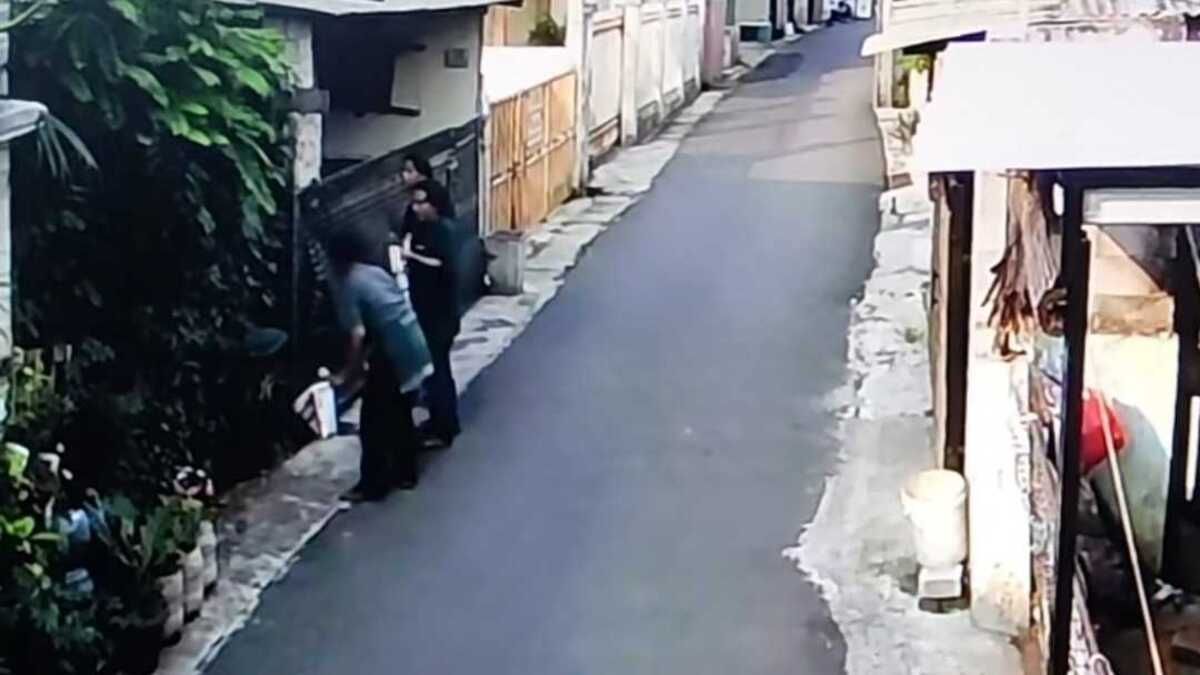
Public attention has been amplified by the widespread circulation of video footage related to the incident. One widely shared video shows a Green SM taxi positioned on railway tracks shortly before being struck by a commuter train at a level crossing.
In the days following the crash, additional compilations of videos circulated online, appearing to show Green SM vehicles involved in various traffic violations and minor collisions in separate incidents. These compilations, shared across social media platforms, have contributed to increased public concern regarding driver conduct and operational safety.
View this post on Instagram
Authorities have not formally linked these separate incidents to the Bekasi crash. However, the volume and visibility of the footage have intensified scrutiny of the company and prompted broader questions about its operational controls.
Company Statements and Response
Green SM Indonesia issued its first public statement on 28 April 2026, one day after the collision. In that statement, the company confirmed that it was aware of the incident and was cooperating with authorities by providing relevant information to support the investigation. The statement emphasised the company's commitment to safety but did not include condolences to the victims.
View this post on Instagram
A second statement was released on 29 April, after public criticism emerged on social media regarding the absence of an expression of sympathy. In the updated statement, the company extended condolences to the victims and their families.
“We extend our deepest condolences to the families and loved ones of the victims,” the company said, adding that it would continue to coordinate with authorities and support the investigative process.
View this post on Instagram
The company reiterated that safety and transparency remain its priorities and stated that it maintains operational standards through supervision systems and ongoing service improvements.
Regulatory and Investigative Developments
Indonesia’s Ministry of Transportation has summoned representatives of Green SM to provide clarification regarding the vehicle involved in the incident. Officials said a special team has been formed to examine licensing, operational compliance, and safety procedures.
Government data indicates that the taxi involved in the collision held a valid operating permit in the Greater Jakarta area until October 2026.
Separately, the Jakarta Metropolitan Regional Police have expanded their investigation by scheduling further witness examinations. Investigators are seeking information not only from the taxi operator but also from agencies including the Directorate General of Railways, the Public Works Agency, and the Spatial Planning Agency.
To date, police have gathered statements from at least 31 individuals, including the taxi driver, railway personnel, witnesses at the scene, and victims. The driver of the taxi has been taken into custody for questioning.
Investigators have also noted that the crossing where the taxi became immobilised was unofficial and lacked a standard railway barrier. A makeshift gate had reportedly been installed by local residents.
In addition to the role of the taxi, authorities are examining other contributing factors, including the functioning of railway signalling systems and communication between train operators. Preliminary findings suggest that the stationary commuter train may not have been effectively detected or that there may have been lapses in coordination.
Police are reconstructing the incident using Traffic Accident Analysis methods as part of an ongoing criminal investigation.