Pink Dot turns 18: 'Come get personal' draws thousands to Hong Lim Park
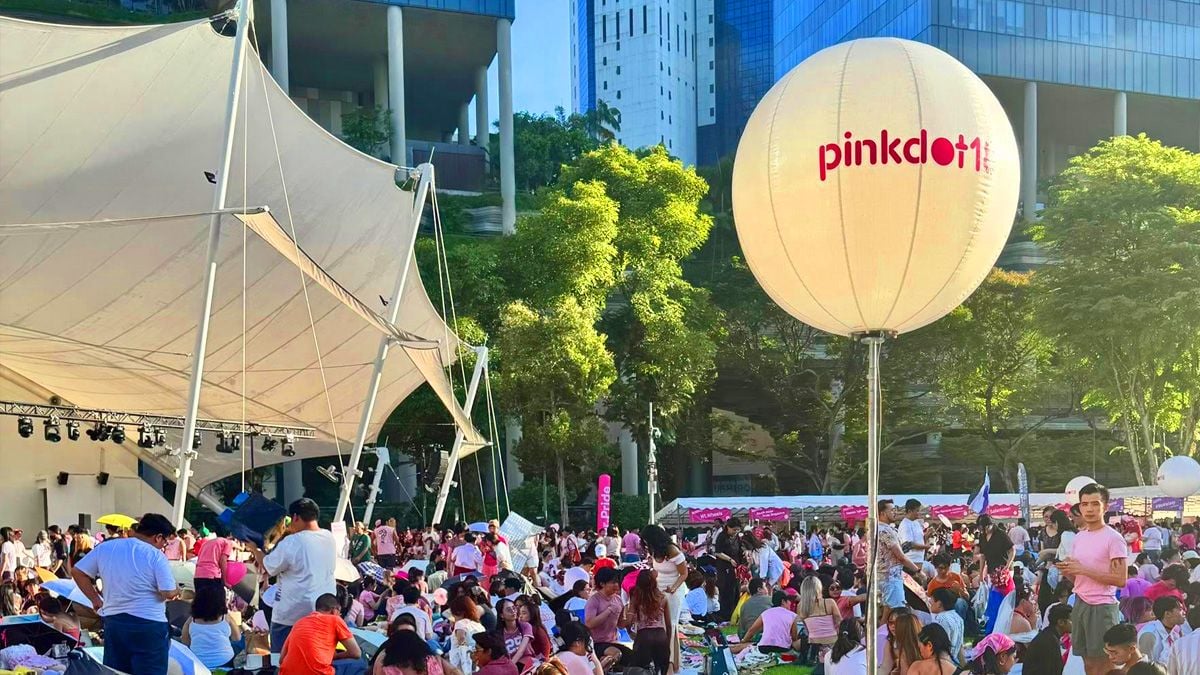
Thousands braved the afternoon heat at Hong Lim Park on 27 June 2026 for the 18th edition of Pink Dot, Singapore's LGBTQ+ community rally, centred this year on personal stories and human connection.
- Thousands attended Pink Dot 18 at Hong Lim Park on 27 June 2026, the event's 18th edition.
- Theme "Come Get Personal" replaced large-stage concert with village-style community booths.
- MPs from PAP and the Workers' Party attended; event marked four years since repeal of Section 377A.

Thousands of supporters turned out at Hong Lim Park on Saturday, 27 June 2026, for the 18th edition of Pink Dot, Singapore's annual gathering in support of the lesbian, gay, bisexual, transgender and queer (LGBTQ+) community.
Dressed in shades of pink and carrying umbrellas and fans against the afternoon heat, attendees of all ages filled the park, exploring community booths, attending storytelling sessions and mingling with strangers and friends alike.
The event marked the fourth consecutive Pink Dot since the repeal of Section 377A of the Penal Code, the law that had long criminalised sex between men.
This year's theme, "Come Get Personal", reflected a deliberate shift in focus — away from single legislative issues and towards individual stories, lived experiences and the diversity of queer life in Singapore.
A redesigned park experience
In a notable departure from previous years, Pink Dot 18 moved away from a centralised stage concert. Instead, the park was organised into four themed villages, each focusing on different aspects of queer life — from identity and relationships to school, work and everyday social navigation.
More than 20 LGBTQ+ community groups hosted experiential booths, installations and facilitated conversations spread across the park. Highlights included an interactive booth by Queer Friendly Chers, queer and ally educators who create safe spaces for students; a reflection wall by The T Project exploring themes of healing and self-acceptance; and a display by South Asian Pride Singapore inviting visitors to contribute to a community tapestry.
Pink Dot spokesperson Andee Tay said the revamped format was designed to highlight the role community groups play throughout the year, not just on Pink Dot day.
Community speakers and programme
The event's soapbox segment ahead of the light-up featured a lineup of speakers sharing personal reflections on queer life in Singapore.
Sam Lo, an artist and transgender advocate, spoke alongside Oon Shu An, an actor and ally. Former Nominated Member of Parliament Dr Tan Yia Swam spoke about how LGBTQ+ individuals in her life had shaped her perspectives as a doctor and mother, while singer-songwriter Thaarmin reflected on growing up as a queer Tamil Singaporean navigating multiple identities.
Political attendance
Members of Parliament from both the ruling People's Action Party (PAP) and the opposition Workers' Party were present at the rally.
Darryl David, PAP Member of Parliament for Ang Mo Kio Group Representation Constituency (GRC), visited community booths and spoke with organisers and community members. He noted the diversity within the LGBTQ+ community and the broad support visible at the event. He also stressed that repealing laws alone is insufficient without accompanying shifts in public mindset.
Sengkang GRC Workers' Party MPs Louis Chua, He Ting Ru and Jamus Lim were also in attendance, though they did not speak to the media.
Attendees' voices
Among those at the event was a parent who has attended Pink Dot since its early years in 2009, describing it as a space of comfort and celebration while acknowledging that meaningful change must extend beyond a single annual event.
A mother attending for the first time brought her daughters, saying she believes in equality and wanted her children to understand that love transcends gender. Another attendee, there with her partner and their 11-month-old twins, described the experience as liberating — noting that their same-sex family attracted no unusual attention from the crowd.
A member of SAFE, a support group for parents and families of LGBTQ+ Singaporeans, urged parents to see their unconditional acceptance as a tool for protecting their children's mental health and self-worth.
Sponsors: Ho Kwon Ping family at the top
Pink Dot 18 was supported by a broad base of individual and corporate sponsors across multiple tiers — a sponsor base that has been exclusively Singaporean for nearly a decade, shaped by government restrictions that fundamentally altered how the event is funded.
The origins of this restriction lie in a Ministry of Home Affairs (MHA) statement issued on 10 June 2016, in which the government made clear that foreign entities should not fund, support or influence events held at Speakers' Corner, including Pink Dot. The MHA framed LGBTQ+ issues as controversial social issues with political overtones, and stated that such matters were for Singaporeans to decide. The rule was applied symmetrically — to both pro- and anti-LGBTQ+ events.
The following year, restrictions were tightened further. Amendments to the Public Order Act rules on general assembly barred even foreign observers from assembling at Speakers' Corner, effectively making Pink Dot a Singapore Citizens and Permanent Residents-only event from 2017. Pink Dot organisers expressed profound regret at having to turn away foreign supporters and said the decision had been taken out of their hands.
The withdrawal of high-profile multinational sponsors — including Google, which had been among the most prominent — left a funding gap that was filled by a local response. Around 100 Singaporean companies stepped up in the immediate aftermath, rallying under the banner of Red Dot for Pink Dot, a campaign encouraging local businesses to take ownership of supporting the event.
That local base has held, but it has its limits. As late as 18 May 2026 — little over a month before Pink Dot 18 — organisers disclosed publicly that they had raised less than half of what was needed to stage the event. A community appeal followed, and donors responded. Pink Dot confirmed it had reached its fundraising target in the weeks before 27 June, but the scramble was a reminder of just how precarious the finances of Singapore's most prominent LGBTQ+ rally remain a decade on from the foreign sponsorship ban.
At the top of the individual sponsors list was the Ho Family — comprising Claire Chiang, Ho Kwon Ping, Ho Ren Hua, Ho Ren Yung and Ho Ren Chun. Ho Kwon Ping is the co-founder and executive chairman of Banyan Tree Holdings, one of Singapore's most prominent business figures, and Claire Chiang is a well-known entrepreneur and social advocate.
Fuchsia-tier corporate sponsors — the highest tier — included AMICI Events and Catering and smol. Coral-tier sponsors included RCLT. Rose-tier sponsors encompassed a wide range of businesses including Adroit, Anak, Haus of Pride, JUNK, Prout, The Media Shop and Sunday Social Market, among others.
Blush-tier sponsors extended the list further, with dozens of small and independent businesses spanning wellness, arts, retail, and professional services.
Among the individual sponsors listed was Li Huanwu, the son of Lee Hsien Yang and Lee Suet Fern, and the grandson of Singapore's founding prime minister Lee Kuan Yew. Li Huanwu, who is gay and married to Heng Yirui, attended Pink Dot 11 in 2019 alongside his husband and both their parents — at the very moment his uncle, then-Prime Minister Lee Hsien Loong, was publicly defending the retention of Section 377A. That family divide, played out at Pink Dot and in the press, became one of the more striking human stories in the event's history. Since then, Lee Hsien Yang and Lee Suet Fern have left Singapore and are living in self-imposed exile following an acrimonious and very public falling-out with the political establishment. Li Huanwu's name on the Pink Dot 18 sponsors list is a quiet footnote to that larger story.
The full individual sponsor list ran to several dozen names — a testament to the grassroots civil society backing that has sustained Pink Dot financially since the foreign sponsorship ban came into force.