RSF calls for transparency over killing of Philippine journalist RJ Nichole Ledesma
Press freedom group Reporters Without Borders has called on Philippine authorities to cooperate fully with a human rights investigation into the killing of journalist RJ Nichole Ledesma, shot dead during a military operation in Negros Occidental on 19 April 2026.
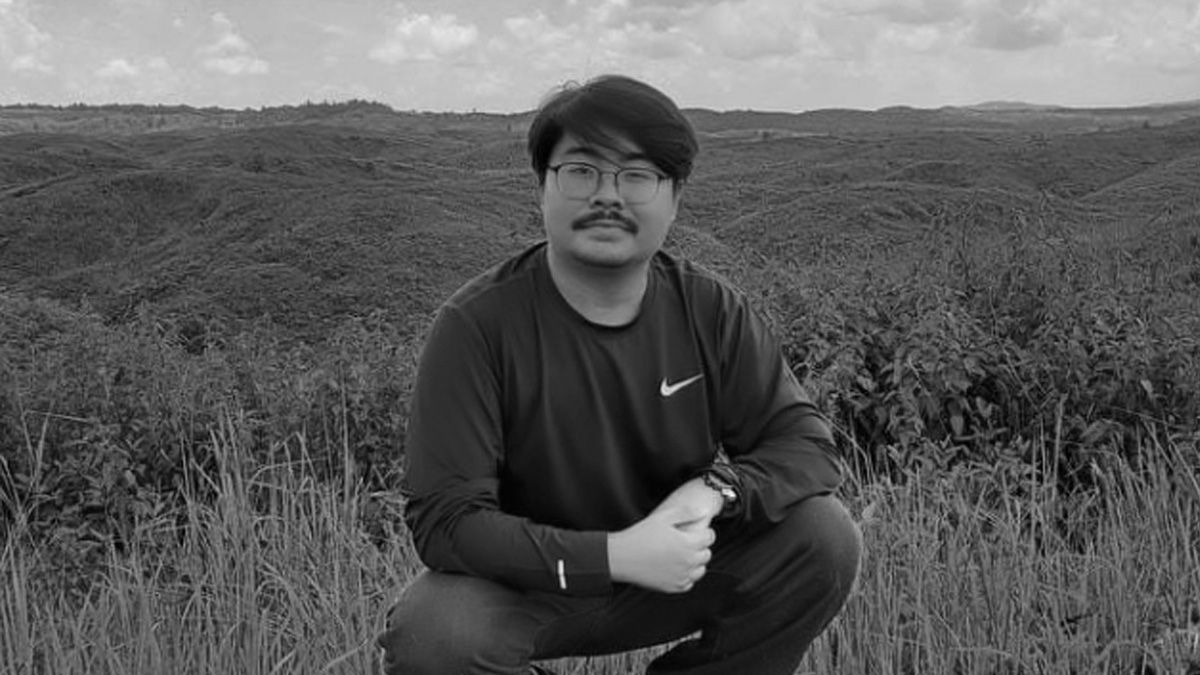

A Philippine journalist was shot dead during a military operation in Negros Occidental province on 19 April 2026, triggering calls from international press freedom organisation Reporters Without Borders (RSF) for full transparency and cooperation with an independent investigation.
RJ Nichole Ledesma, 30, was the editor of online outlet Paghimutad-Negros and the regional coordinator for Negros Island at the independent media network Altermidya. He was among 19 people killed during an army operation targeting a Communist Party armed group in the central Philippines.
Colleagues dispute military account
His colleagues at Altermidya insist that at the time of his death, Ledesma was not at the initial site of the clash. According to a statement released by Altermidya on 22 April, and corroborated by Human Rights Advocates Negros (HRAN), Ledesma was not present at the initial clash site in Sitio Sinugmawan in Barangay Salamanca, Toboso, Negros Occidental.
HRAN said Ledesma was instead in a separate peasant community in Sitio Plariding, where he was conducting immersion reporting on the effects of renewable energy projects on vulnerable farming communities. He was killed, according to the group, during a subsequent military pursuit operation.
The military has disputed this account. In a public statement on 23 April, an army spokesperson declared that all 19 individuals killed during the operation were "members of an armed group," effectively denying Ledesma's status as a journalist.
Army spokesperson Colonel Louie Dema-ala told RSF that Ledesma was "among those who engaged in gunfights with our soldiers, according to firsthand testimonies from our troops."
The armed group targeted during the operation issued its own statement on 27 April, indicating that Ledesma was a journalist and explicitly did not include him in its list of members killed during the clash.
Allegations of planted evidence
Colleagues at Altermidya have alleged that evidence may have been planted to discredit Ledesma. Avon Ang, national coordinator of Altermidya, told RSF that the organisation considers "the military claims are questionable."
Ang said: "If you look at the photos, it really looks like the bandolier, ammo pouch and gun were just put on. And some of the items presented as RJ Nichole Ledesma's belongings, like the boots, were very clean."
Altermidya also noted that Paghimutad-Negros had been subjected to sustained military smear campaigns. In October 2022, a Philippine army brigade labelled one of the outlet's reports "propaganda" in a Facebook post that accused the publication of links to the National Democratic Front of the Philippines (NDFP), a group designated a terrorist organisation by the government.
That post was shared across police and military networks, including by a regional task force operating in the Western Visayas region. Altermidya's statement noted that Paghimutad-Negros had also reported on coordinated attacks against the peasant radio programme "Kaling Kag Tugda," as well as cases of journalists in Negros being profiled or followed by suspected state intelligence agents.
A journalist and community reporter
Ledesma began his career in journalism as editor-in-chief of Spectrum, the student publication of the University of St. La Salle–Bacolod, where he studied Psychology. Since 2020, he had led Paghimutad-Negros, an alternative media outlet focused on human rights reporting and grassroots storytelling, before joining Altermidya as regional coordinator for Negros Island.
His reporting concentrated on environmental issues and the displacement of marginalised communities. Recent work documented the struggles of farming communities affected by large-scale renewable energy projects, including solar farm expansion, windmill installations, and hydropower ventures in Negros Occidental.
He also reported on reclamation projects in Bacolod, the expansion of a palm oil plantation in Candoni, and the working conditions of sakadas and sugar farmworkers. His final article, published in March 2026, focused on local fishermen opposing reclamation projects that threatened to destroy fishing grounds along the coastline.
RSF warns of pattern of criminalisation
RSF Asia-Pacific Director Cédric Alviani said the contradictions between the military's account and the testimony of Ledesma's colleagues demanded careful scrutiny. Alviani stated: "Given the Philippine military's long record of attacks on and criminalisation of journalists, who are often accused of belonging to armed groups without any evidence, it is reasonable to think that RJ Nichole Ledesma was killed because of his work."
RSF called on Philippine authorities, and specifically the military, to cooperate fully with the ongoing investigation and to establish the facts of the case.
The practice of falsely labelling journalists as "subversive" or "terrorists" is so widespread in the Philippines that it has acquired a commonly used term: "red-tagging." RSF noted that Ledesma's case is not the first time army operations have been accompanied by allegations of planted evidence against members of the press.
Frenchie Mae Cumpio, executive director of the news site Eastern Vista, has been held in detention for six years after the military allegedly discovered a pistol, a grenade, and a Communist Party flag during a raid on her home. An RSF investigation concluded that the evidence was very likely planted.
Commission on Human Rights opens inquiry
On 23 April 2026, the Commission on Human Rights announced it had opened a formal investigation into the circumstances surrounding Ledesma's death. RSF called on the Philippine authorities to ensure full cooperation with that inquiry and to provide complete transparency over the conduct of the military operation.
The Philippines ranked 114th out of 180 countries in the RSF World Press Freedom Index in 2026. According to RSF, at least 148 journalists have been killed in the country since the restoration of democracy in 1986, making it one of the most dangerous nations in the world for members of the press.