Singapore balancing EV charger rollout with land and electricity constraints: Sun Xueling
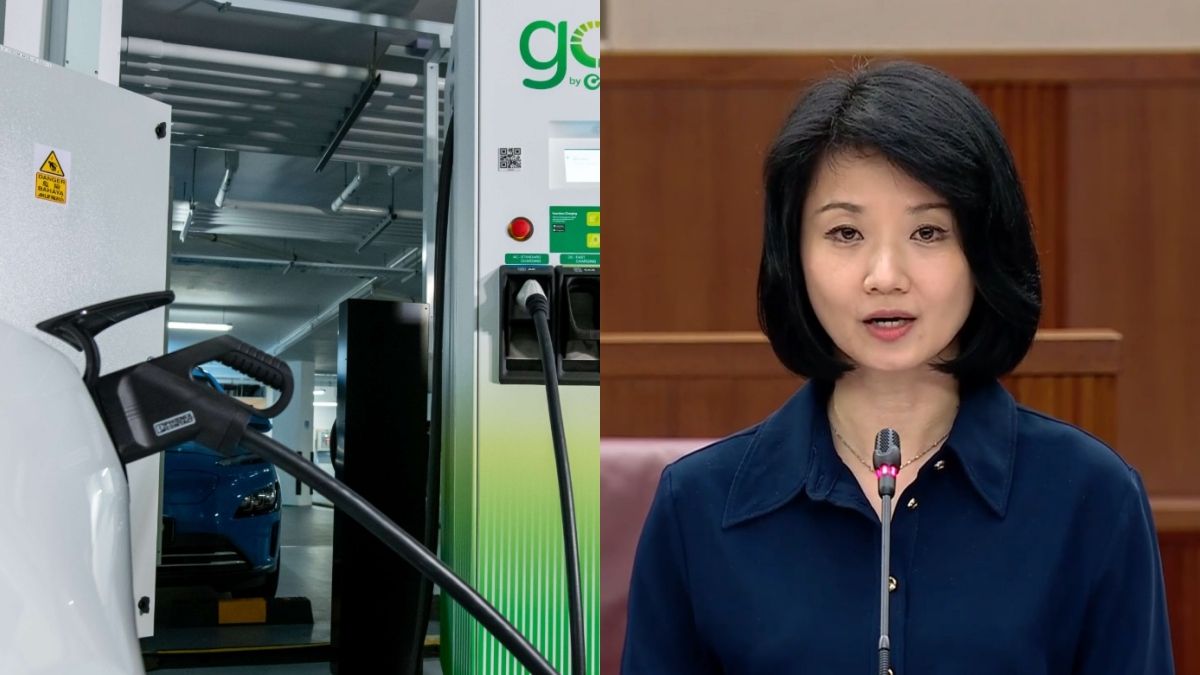
Singapore is calibrating its electric vehicle charger rollout to match demand while managing land and electricity constraints, Senior Minister of State for Transport Sun Xueling said, as authorities study load balancing, scheduled charging and capacity upgrades.

- Singapore is expanding EV chargers based on demand, land availability and electricity capacity.
- Authorities are studying load balancing and scheduled charging to optimise electricity use.
- The Government said it is cautious about overbuilding as EV technology evolves rapidly.

Singapore is deploying electric vehicle (EV) charging infrastructure in line with rising demand while carefully managing land and electricity constraints, Senior Minister of State for Transport Sun Xueling told Parliament on 7 May 2026.
Responding to parliamentary questions from Holland-Bukit Timah MP Edward Chia, Sun said the Government was seeking to optimise the use of existing charging infrastructure while avoiding unnecessary overbuilding as EV technology continues to evolve rapidly.
“We are deploying EV chargers in tandem with growing demand within the constraints of space and electricity,” Sun said.
“As EV technology is continuously improving, we're also mindful not to overbuild as chargers can become obsolete quickly.”
She added that authorities closely monitor charger utilisation rates and will expand deployment where usage is consistently high and electrical capacity permits additional infrastructure.
“We monitor utilisation rates closely and will deploy more chargers when utilisation is high, electrical capacity permitting,” Sun said.
Questions on utilisation and future demand
Chia had asked how the Ministry of Transport (MOT) was ensuring the efficient utilisation of EV charging infrastructure across different times of the day, particularly given Singapore’s land and energy constraints.
He also asked whether the ministry had reviewed its expanded EV charging plans in light of elevated fuel prices, which could increase consumer demand for EV adoption.
In particular, Chia sought updates on targets and resources allocated for deploying both slow and fast charging points.
During supplementary questions, Chia raised concerns about uneven utilisation patterns at charging stations, saying residents had provided feedback that chargers were often underutilised during the day but heavily used during evening peak periods..
He asked whether the ministry was monitoring utilisation rates at individual charging stations and whether such data could be used as key performance indicators when evaluating operators for future tenders and contract renewals.
Chia also asked whether the Government would consider mandating differentiated charging fees between peak and off-peak periods to encourage more balanced usage throughout the day.
“Can we smoothen out demand across the day so we can encourage better utilisation rates,” he asked.
Monitoring charger clusters
In response, Sun said the Land Transport Authority (LTA) currently monitors charger utilisation at the carpark level rather than at individual charging stations.
She said chargers are typically deployed in clusters within carparks, making broader carpark-level monitoring more useful for assessing whether charging provision is sufficient.
“Most of the time we see that the chargers are grouped together in a cluster in a car park,” Sun said.
“So currently we monitor utilisation for the car park rather than at the individual electrical charger level because we feel that this is more useful for us to analyse if the charging provision in the car park is sufficient.”
Sun added that charger utilisation is not currently used as a criterion when evaluating operators for future tenders or contract renewals.
“Currently that is not our position,” she said.
The exchange highlighted ongoing discussions within Government over how to maximise the efficiency of EV infrastructure without significantly increasing strain on Singapore’s electricity grid or urban land resources.
Use of pricing incentives
Sun said EV charging operators are already implementing measures aimed at encouraging more efficient usage patterns throughout the day.
These include idle fees imposed during non-overnight periods to discourage motorists from occupying charging lots unnecessarily after their vehicles are fully charged.
Other operators are offering lower charging prices during off-peak periods to incentivise drivers to shift charging activity away from high-demand evening hours.
Sun said the Government would continue working with EV charging operators to explore additional methods for managing demand and improving electricity distribution across charging networks.
Authorities studying load balancing and scheduled charging
Sun said the Government was also studying other technological approaches that could help distribute electricity demand more efficiently across chargers and buildings.
These include load balancing systems and scheduled charging arrangements linked to software management platforms.
She added that such measures could help Singapore optimise electricity use within existing grid constraints while supporting continued EV adoption.
At the same time, the Government is exploring possible electrical capacity upgrades with the Ministry of Trade and Industry (MTI) and the Energy Market Authority (EMA).
Sun said these discussions were being conducted alongside ongoing efforts to improve charging efficiency and demand management.
She added that authorities would consider whether there is eventually a need to mandate specific charging measures after other options had been fully explored.