Bulgaria claims first-ever Eurovision win as five nations boycott over Israel
Bulgarian singer DARA won the 70th Eurovision Song Contest in Vienna on 16 May 2026 with Bangaranga, securing Bulgaria's historic first victory. Israel finished second amid a five-nation boycott and protests over its participation.

- DARA wins Eurovision for the first time with Bangaranga, achieving a record 173-point winning margin.
- Five nations boycott the contest over Israel's participation, marking the largest political withdrawal in Eurovision history.
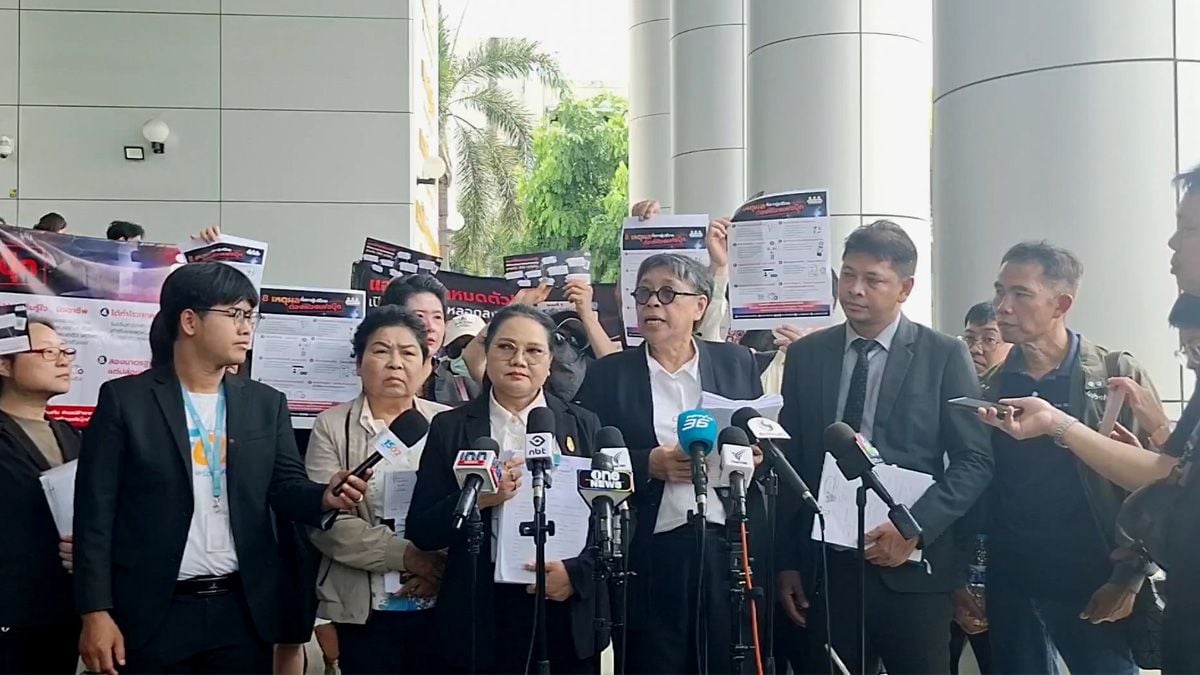
- Eurovision confirms plans for a spin-off Asia edition to be held in Bangkok in November 2026.

Bulgaria's DARA won the 70th Eurovision Song Contest on 16 May 2026, securing the country's first-ever victory in the competition's seven-decade history.
The win came as five nations withdrew from the contest in protest over Israel's participation, and hundreds of demonstrators gathered outside the venue in Vienna.
The Grand Final was held at the Wiener Stadthalle in Vienna, hosted by Österreichischer Rundfunk (ORF) on behalf of the European Broadcasting Union (EBU). Twenty-five finalists competed before an in-person audience of approximately 11,000.
DARA, whose full name is Darina Yotova, performed Bangaranga, a high-energy dance track that proved popular with both national juries and international audiences.
The winning margin of 173 points is the largest recorded in the contest's history. It was also the first time since 2017 that a winning act had topped both the jury vote and the combined audience vote simultaneously.
Votes were received from 148 countries — two more than in 2025 — spanning the participating nations and the rest of the world.
"This is unbelievable. I don't even know what's going on right now," DARA told reporters at a post-show news conference in the early hours of Sunday.
She expanded on the creative vision behind her entry. "We wanted to offer the public something new and fresh, something unexpected, capable of giving Eurovision a new image," she said.
DARA, 27, is an established performer in Bulgaria but had not been among the pre-competition favourites. Bangaranga was co-written by Anne Judith Stokke Wik, Darina Yotova, Dimitris Kontopoulos and Monoir.
Bulgaria reacts
Bulgarian Deputy Prime Minister Atanas Pekanov was among the first to respond publicly. In a Facebook post, he described the victory as "a magnificent story of immense talent, tireless effort, and faith in success, against all criticism."
Prime Minister Rumen Radev congratulated DARA and noted that Sofia is expected to host the 71st Eurovision Song Contest next year. Foreign Minister Velislava Petrova-Chamova described DARA as Bulgaria's "greatest young ambassador."
Petrova-Chamova said the result demonstrated that "talent, courage and hard work" could help meet any goal. Reactions among members of the public were equally enthusiastic.
"We are all extremely proud. She won for all of us, for the whole country," said Petar Stefanov, a finance specialist who watched the final in Sofia, in comments reported by Reuters.
Bulgaria, a European Union member state, joined the euro zone at the start of 2026 following years of political instability. The national broadcaster Bulgarian National Television (BNT) first competed in Eurovision in 2005 and returned this year after a three-year absence.
Israel finishes second amid controversy
Israeli singer Noam Bettan finished second with Michelle, a trilingual ballad performed in Hebrew, French and English.
He received a strong reception from the audience, though audible booing followed as Israel's public vote tally pushed the country from eighth to second place overall.
Eurovision organisers tightened voting rules ahead of this year's contest following allegations that Israel had conducted an intensive campaign to solicit votes.
KAN, Israel's public broadcaster, received a formal warning from the EBU one week before the final. The warning related to online videos in which Bettan had appealed for votes in a manner deemed too aggressive, echoing a similar controversy from the prior year.
KAN stated it operates within the rules, and the videos were removed promptly. It was the second consecutive year in which Israel finished as runner-up.
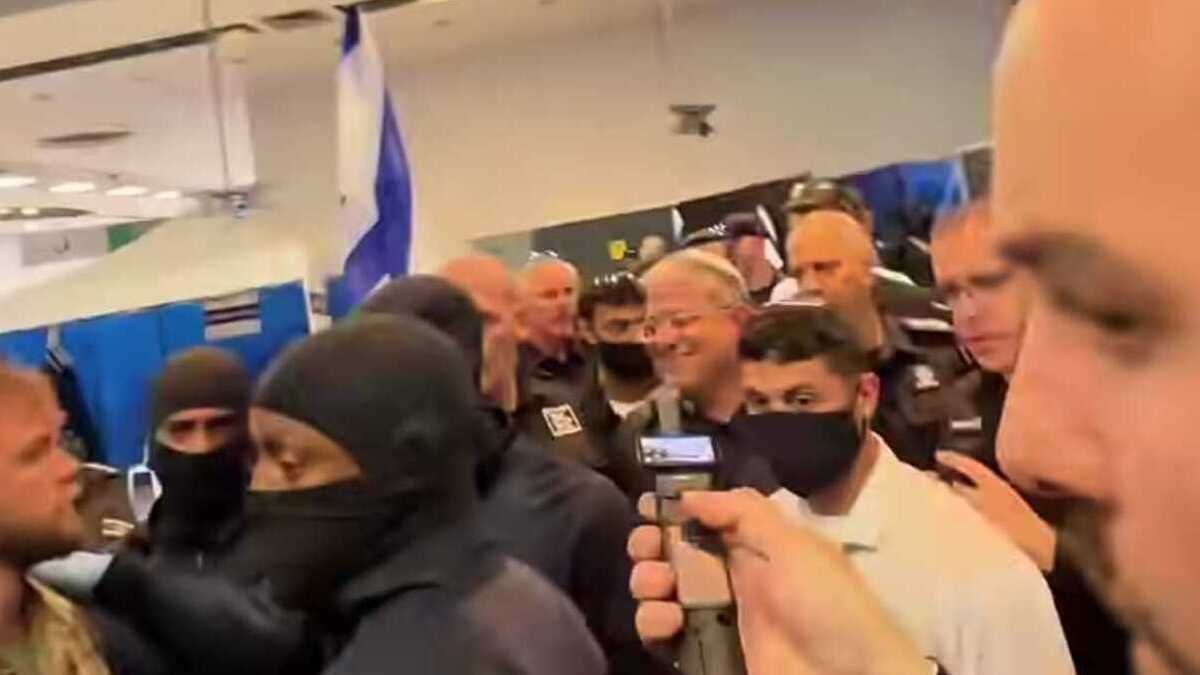
Earlier in the contest week, four audience members were ejected from a semi-final for attempting to disrupt Bettan's performance. No comparable incident occurred during the Grand Final on Saturday.
The five-nation boycott
Spain, the Netherlands, Ireland, Iceland and Slovenia staged what organisers and commentators described as the largest political boycott in Eurovision history. All five cited Israel's ongoing military offensive in Gaza as the reason for their withdrawal.
The conflict has overshadowed the contest for a third consecutive year. According to Reuters, more than 72,740 Palestinians have been killed in Gaza since the conflict began in October 2023.
Spanish public broadcaster Radiotelevisión Española (RTVE), traditionally one of Eurovision's leading financial backers, not only withdrew from the competition but also declined to broadcast the Grand Final.
Instead, RTVE displayed a black banner reading: "Eurovision is a contest, but human rights are not. No indifference. Peace and justice for Palestine."
Belgian public broadcaster Vlaamse Radio- en Televisieomroeporganisatie (VRT) said it was unlikely to compete in the following year's contest unless the EBU held a direct vote on Israel's continued eligibility to participate.
Protests outside the venue
Hundreds of protesters marched near the Wiener Stadthalle ahead of the Grand Final, carrying placards bearing the message "Block Eurovision."
Pro-Palestinian groups had organised a separate outdoor concert the previous day under the banner "No stage for genocide."
Congolese-Austrian artist Patrick Bongola, one of the concert's organisers, addressed reporters outside the arena.
"Inviting Israel on such a beautiful stage as the Eurovision Song Contest stage is an affront to all the people who believe in humanity, who believe in love and togetherness," he said.
Final standings
Romania's Alexandra Căpitănescu finished third with the rock song Choke Me. Australian performer Delta Goodrem placed fourth with the celestially themed ballad Eclipse. Italian singer Sal Da Vinci came fifth with Per Sempre Sì (Forever Yes).
Finnish entry Liekinheitin (Flamethrower), performed by violinist Linda Lampenius and pop singer Pete Parkkonen, had entered the Grand Final as the bookmakers' favourite but finished sixth.
French-American singer Monroe, 17, representing France with the pop opera song Regarde!, had featured in pre-final bookmakers' rankings before slipping following the semi-finals. France ultimately placed 11th.
"I'm really proud. I think we gave it our all; we put our hearts into that performance," Monroe told reporters.
70th anniversary celebrations
The anniversary edition included interval performances by past Eurovision winners, among them Ruslana (Ukraine, 2004), Alexander Rybak (Norway, 2009) and Lordi (Finland, 2006).
The 2025 Grand Final winner JJ opened the show with a performance that blended classical influences inspired by Mozart with his own contemporary musical style.
EBU Director for the Eurovision Song Contest Martin Green congratulated DARA and BNT, expressing hope that the contest would serve as a global springboard for her future career.
ORF Director General Ingrid Thurnher said the event demonstrated what ORF stands for: "cultural diversity, openness, and successful collaboration across national borders."
Production highlights
The production deployed 28 live cinematic cameras based on ARRI Alexa 35 technology, which ORF said gave this year's broadcast the most filmic visual presentation in the contest's history.
More than 3,100 lighting fixtures with individually controllable LEDs were used across the event. The entire lighting rig ran on fully energy-efficient LED and laser-based systems — described by ORF as a first for the contest.
The stage incorporated nearly 50 million pixels of LED video and a custom 12-metre by 8-metre curved screen. More than 200 special-effects machines and 45 pyrotechnic positions were deployed across the performance programme.
ORF Executive Producer Michael Krön described the event as "a great pleasure and honour," adding that ORF had broken new ground in sustainability and intended to share those practices within the EBU to make future contests more environmentally responsible.
Eurovision looks ahead
Despite the financial and viewership impact of the five-nation boycott, the EBU confirmed plans for a spin-off competition.
Eurovision Song Contest Asia is scheduled to take place in Bangkok in November 2026, marking a significant expansion of the franchise beyond its European and affiliated-broadcaster base.