Ex-Flor Patisserie boss says Singapore is ‘losing its soul’ amid rent pressures and closures
Former Flor Patisserie founder Heidi Tan says Singapore is “losing its soul in plain sight”, citing rising rents, REIT-driven pressures and closures of independent businesses, while urging young people to rethink success and purpose.
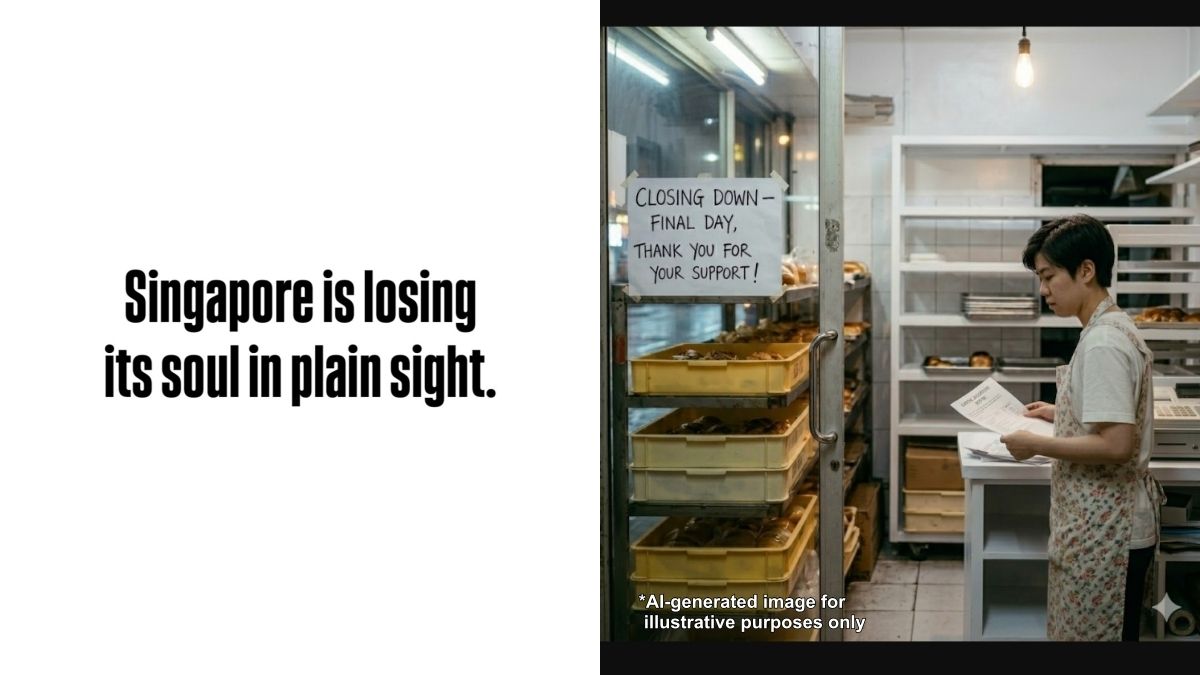
- Heidi Tan warned that rising rents are forcing independent Singapore businesses to close.
- She urged young people to question economic systems and pursue purpose-driven success.
- Online responses highlighted concerns over affordability, heritage loss, and economic structure.

On 6 May 2026, former Flor Patisserie founder Heidi Tan published a social media post expressing concern over the state of Singapore’s commercial landscape, warning that rising rents and structural economic pressures are eroding the viability of independent businesses.
In her post, Tan wrote that “Singapore is losing its soul in plain sight”, linking the closure of small enterprises not to declining passion or quality, but to escalating rental costs and what she described as a system prioritising property returns over community value.
Rising rents and pressure on independent businesses
Tan cited steep rental increases, including what she described as cases of up to a 57 per cent rent hike that led to her cakeshop closed down, arguing that such conditions make it increasingly difficult for small operators to survive.
She wrote that “REITs post record profits. Independent businesses fold. The government calls it market forces. I call it a choice,” framing the issue as a structural outcome of policy and market design rather than isolated commercial failure.
According to her post, the broader consequence is a gradual hollowing out of Singapore’s independent retail and food scene, particularly among small, locally rooted enterprises.
She also suggested that younger entrepreneurs are absorbing a message that sustainable independent business creation is increasingly unrealistic under current conditions.
Concerns over cultural and economic direction
Tan argued that rising costs are reshaping not only business viability but also cultural identity in the city-state. She said that the continued loss of independent shops risks diminishing what she described as Singapore’s “character”.
She wrote that “the finish line keeps moving no matter how fast you run”, suggesting that structural economic pressures may discourage long-term entrepreneurial ambition.
While acknowledging the difficulties, she urged a shift in mindset among younger Singaporeans, encouraging them to remain inquisitive and deliberate about their life choices.
Advice to younger generations
Beyond criticism of economic conditions, Tan directed part of her message towards young people, urging them to question established assumptions about success and productivity.
She said education systems often train individuals to follow instructions and provide correct answers, but argued that real-life economic and social questions rarely come with clear solutions.
“Be curious. Bravely, intelligently curious,” she wrote, encouraging readers to consider who the economy is built for and what kind of lives they wish to lead.
She also distinguished between “hunger” and being “driven”, stating that hunger implies desperation while being driven implies purpose. She encouraged young people to focus on meaningful work rather than purely financial targets.
“The most important questions you will ever face don’t have answer keys,” she added, urging reflection on long-term purpose over immediate achievement.
She concluded that individuals should avoid “optimising within broken systems” and instead consider how to build better ones, adding that Singapore still “has a soul” sustained by those who continue to care about its direction.
View this post on Instagram
Public responses and online discussion
Tan’s remarks prompted wide discussion in her IG post and also in a Reddit thread, where many commenters expressed agreement with her concerns about rising costs and shifting economic priorities.
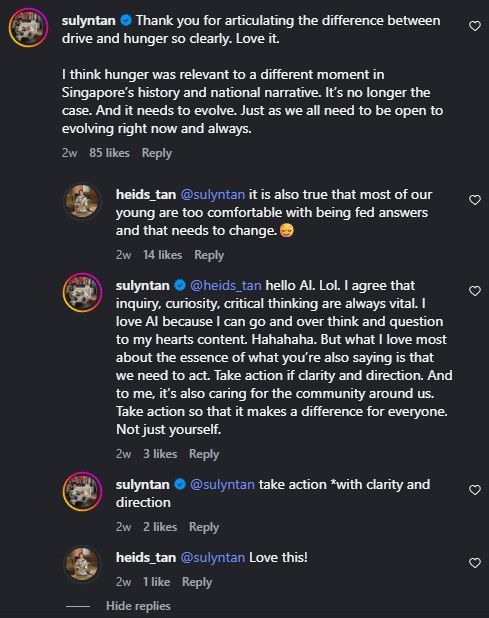
Some highlighted the difficulties faced by small business owners, noting that increasing rents, operating expenses and competitive pressures have made it harder to sustain culturally significant or independent ventures.

Others focused on broader concerns about affordability and living costs, arguing that housing prices and economic volatility have increased pressure on younger generations.

A number of responses called for more open discussion about economic direction and policy choices, with some suggesting that questioning these issues should not be interpreted as disloyalty.
However, others emphasised the importance of macroeconomic stability and cautioned that policy decisions may involve trade-offs that are not immediately visible at the individual business level.
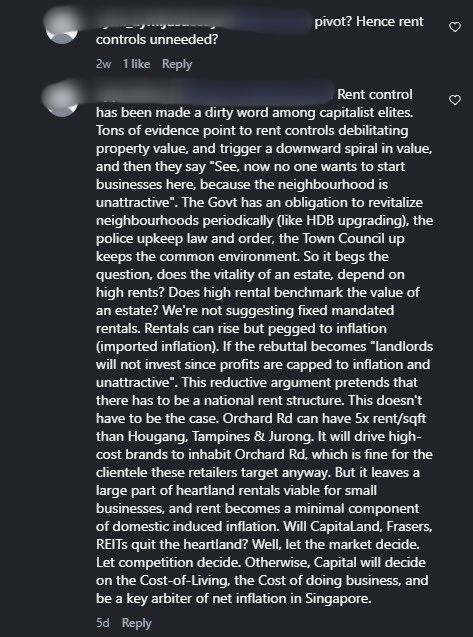
The discussion also touched on the idea of rent regulation, with some suggesting mechanisms tied to inflation to stabilise costs for small businesses.
Others warned that such interventions could affect investment incentives and property values.

Policy context and long-term framework
Singapore abolished rent control in 2001, following parliamentary arguments that market demand would better determine the survival of businesses and preservation of trades.
At the time, then-Minister for National Development Mah Bow Tan stated that viable businesses in heritage districts would continue if sufficient consumer demand existed, and that market mechanisms were the most effective way to preserve commercial identity.
More than two decades later, concerns continue to emerge over whether this framework has achieved a balance between efficiency and cultural preservation.
Media reports have documented cases of significant rent increases in heritage areas such as Chinatown and surrounding districts, in some instances rising from around $8,000 to as high as $18,000 per month, placing strain on long-established businesses.
Syed Harun earlier defends Warong Nasi Pariaman closure was not due to high rents
Government representatives have pushed back against attributing closures solely to rental pressures.
In February 2026, Senior Parliamentary Secretary for National Development Dr Syed Harun Alhabsyi told Parliament that the closure of Warong Nasi Pariaman was not caused by high rents, cautioning against such assumptions.
Citing Urban Redevelopment Authority data, he said median rents in heritage districts rose moderately over the past two years, broadly in line with other central retail areas and below nominal GDP growth.
He assured the government will continue supporting heritage businesses through inter-agency measures, including assistance under the SG Heritage Business Scheme.
Responding to questions from Denise Phua and supplementary questions from Fadli Fawzi, Syed Harun said the Government has no plans to introduce new taxes on commercial heritage properties but will continue inter-agency support for heritage businesses.
URA defends Kampong Glam shophouse sales slump as locals dominate buyers amid foreign ownership concerns
On 6 April, URA addressed claims that rents in Haji Lane had nearly doubled, stating that median rents in the area had increased by about 2 per cent annually, comparable to other heritage districts.
The authority also noted that shophouse transactions in Kampong Gelam had declined significantly, with annual transactions falling by about 60 per cent between 2020–2022 and 2023–2025.
According to official data, local buyers accounted for approximately three-quarters of transactions between 2020 and 2025.
Only one shophouse was sold to a foreign buyer in 2024, with none recorded in 2025.
URA also outlined regulatory measures aimed at maintaining a balanced business mix, including restrictions on certain types of outlets such as souvenir shops, bars and Western fast-food establishments.
82% of closed food outlets registered under five years never made a profit
According to data from the Ministry of Trade and Industry and the Accounting and Corporate Regulatory Authority, 2,431 retail food establishments ceased operations between 1 January and 23 October 2025, while 3,357 new ones were registered.
Among businesses that closed within five years of registration, 82 per cent had never recorded a profit, underscoring the sector’s structural fragility.
Closures have continued into 2026, including well-known chains such as Hooters, Open Farm Community, Pizza Express and Kith Café, the latter two now operating only two outlets each.