Indonesia AG searches nutrition agency after Prabowo sacks leaders amid scrutiny of meals programme
Indonesia’s Attorney General’s Office searched the National Nutrition Agency one day after President Prabowo Subianto removed its top leadership, intensifying scrutiny of the agency behind the Free Nutritious Meals programme.

- The Attorney General’s Office searched the National Nutrition Agency on 3 June 2026.
- President Prabowo replaced the agency’s leadership one day before the search.
- The Free Nutritious Meals programme faces governance, safety and funding scrutiny.

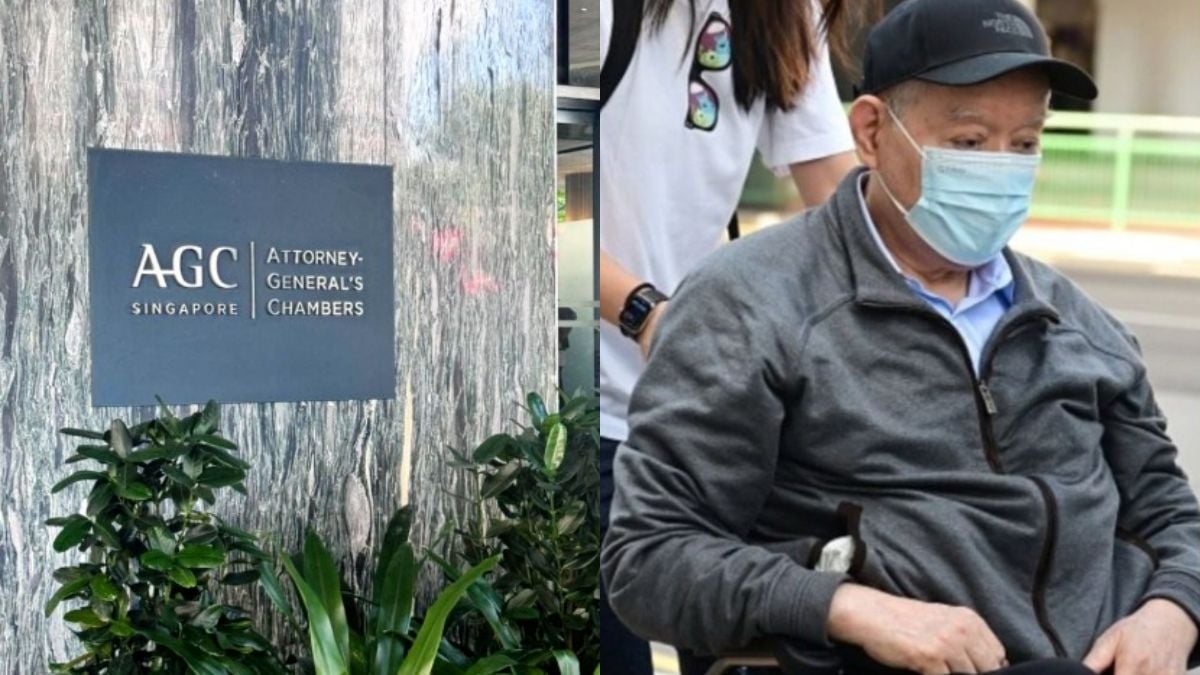
Indonesia’s Attorney General’s Office has confirmed that it searched the office of the National Nutrition Agency in Jakarta, one day after President Prabowo Subianto removed the agency’s head and two deputy heads.
The National Nutrition Agency, known locally as BGN, oversees the government’s Free Nutritious Meals programme, or Makan Bergizi Gratis (MBG), one of President Prabowo’s flagship social policies.
Acting Head of the Attorney General’s Office Legal Information Centre, Mochamad Jeffry, confirmed the search on Wednesday, 3 June.
“Special crimes investigators of the Attorney General’s Office did indeed carry out a search at the BGN office,” Mr Jeffry told reporters.
The Attorney General’s Office has not yet explained the reason for the search.
The operation took place a day after President Prabowo dismissed BGN Head Dadan Hindayana from his post. Two deputy heads of the agency, Police Brigadier General Sony Sonjaya and retired Major General Lodewyk Pusung, were also removed.
Minister of State Secretary Prasetyo Hadi said Mr Dadan’s removal was linked, among other things, to “disciplinary issues in implementing SOPs”.
He also said there were matters related to discipline in governance, including maintaining food quality standards that should have been set by the National Nutrition Agency.
President Prabowo appointed Nanik S Deyang, who previously served as Deputy Head of BGN, as the new head of the agency. Agustina Arumsari and Major General Trenggono were appointed as deputy heads.
Mr Prasetyo said the leadership change was expected to strengthen organisational governance, accelerate the implementation of priority programmes, and ensure that the MBG programme and other public nutrition agendas run more effectively, are better targeted and are accountable.
“After approximately almost one and a half years of monitoring and evaluation, today, Tuesday, 2 June 2026, the President has decided to change the leadership of the National Nutrition Agency,” Mr Prasetyo said at the Presidential Palace Complex in Jakarta.
The government expressed appreciation and gratitude for the dismissed officials’ dedication, work and contribution in building the agency’s institutional foundations since its establishment.
The leadership change follows months of public scrutiny over the implementation of the MBG programme. During Mr Dadan’s tenure, the agency faced criticism over public statements, food safety incidents, procurement issues and staffing policy.
Mr Dadan once said that his two sons grew tall because they regularly drank two litres of milk a day from childhood until their second year of senior high school. Speaking in East Java in May 2025, he said height was not only determined by genetics, but also by sufficient and balanced nutrition.
He also drew criticism after linking the nutritional quality of Indonesian footballers to their performance. In March 2025, he said it was difficult for the national football association, PSSI, to win because many footballers lacked good nutrition and came from villages.
The statement was criticised by Deputy Chair of Commission X of the House of Representatives, Lalu Hadrian Irfani, who said the BGN head should not excessively link PSSI with nutritious food.
Another controversy followed Mr Dadan’s statement that insects, including sago grubs, could be included in MBG menus in areas where they were commonly consumed.
He said BGN did not set a single national menu, but nutritional composition standards, and that protein sources should reflect local resources and community preferences.
The MBG programme has also faced attention over food poisoning cases in several regions. Critics said Mr Dadan’s response to the incidents was insensitive after he described the affected pupils as only a small proportion of those receiving meals.
Irwan Aldrin, a member of the Jakarta Education Watch Coalition, criticised the remarks and said they were irresponsible in the context of parental concerns about food quality.
According to data cited from the Ministry of Health, 37,693 people were recorded as having suffered poisoning in 446 cases related to the MBG programme. The Indonesian Education Monitoring Network, JPPI, recorded more than 30,000 pupil victims across several regions since the programme began.
Another controversy involved the procurement of motorcycles bearing the BGN logo. Mr Dadan said the procurement was part of 2025 budget planning to support MBG operations, especially for heads of Nutrition Fulfilment Service Units, known as SPPG.
By the end of the supplier’s opportunity period on 20 March 2026, the supplier had reportedly completed 21,801 of 25,644 units under contract, or 85.01 per cent.
Mr Dadan also drew attention after saying SPPG heads, nutritionists and accountants could later be appointed as state civil apparatus under the government employee with work agreement scheme, known as ASN PPPK.
The search of BGN’s office also comes as the MBG programme faces a constitutional challenge over its funding structure.
A coalition of Indonesian civil society organisations, teachers and activists has filed a judicial review with the Constitutional Court challenging the 2026 State Budget Law. The petition questions the inclusion of MBG funding within the national education budget.
The Save Indonesian Education Coalition, or KOSPI, together with teachers and civil society groups, argues that the programme’s allocation reduces funds intended for the administration of education.
The 2026 State Budget allocates Rp335 trillion, approximately US$19.8 billion, to the Free Nutritious Meals programme. The figure marks a sharp rise from about Rp71 trillion, or around US$4.2 billion, in the previous year.
The conversions are approximate and use the exchange rate implied in the reported budget figures, around Rp16,900 to US$1.
Of the Rp769.1 trillion allocated to the education sector in 2026 — about US$45.5 billion — around Rp223 trillion, or approximately US$13.2 billion, is channelled to MBG. That represents nearly 30 per cent of education spending.
By comparison, scholarship programmes for school and university students receive Rp57.7 trillion, or about US$3.41 billion. Funding for non-civil servant teachers, regional civil servants and lecturers totals Rp91.4 trillion, or around US$5.4 billion.
Government data cited by critics show that 83.4 per cent of MBG funding is sourced from the education sector, while 9.2 per cent comes from health spending and 7.4 per cent from economic programmes.
Nearly all programme funds, about Rp261 trillion, or approximately US$15.4 billion, are classified as goods expenditure, mainly for food procurement. Personnel and capital spending account for less than three per cent.
Officials at BGN have acknowledged budget absorption challenges. The agency has reported Rp9.1 trillion, around US$538 million, in unused funds, while also projecting additional funding needs of Rp50 trillion, about US$2.96 billion, and relying on Rp100 trillion, around US$5.91 billion, in standby funds set aside by the President.
Daniel Winarta of the Jakarta Legal Aid Institute said the coalition’s petition challenges Article 22 paragraph 3 and its explanatory section in the 2026 State Budget Law.
Under the law, the education budget exceeds Rp769 trillion, representing 20 per cent of the total state budget. Article 22 paragraph 3 includes the Free Nutritious Meals programme as part of education operational funding.
Mr Winarta said Presidential Regulation No. 118 of 2025 counts Rp223 trillion allocated to BGN as part of the education budget. He argued that this deviates from the intended purpose of education spending because programmes not directly related to educational administration are included within the allocation.
According to him, the effective education budget falls from 20 per cent to around 14.2 per cent once MBG is excluded.
Teacher representatives involved in the petition have also raised concerns over welfare. Reza Sudrajat, an honorary teacher and petitioner, said the allocation should be questioned because the teaching profession remains uncertain while hundreds of trillions of rupiah are being prepared for the meal programme.
He said some teachers under the PPPK contract scheme had seen monthly salaries fall from Rp2 million to Rp1 million, equivalent to a decline from about US$118 to about US$59 per month. Some teachers, he said, received as little as Rp100,000, or around US$6, while others earned about Rp400,000, or around US$24 per month.
Iman Zanatul Haeri of the Education and Teachers Association said the implementation of the education budget had affected transfers to more than 500 regional governments. He said this had worsened teachers’ welfare, particularly for PPPK and part-time PPPK teachers who receive low salaries and lack benefits such as holiday allowances.
He also said the programme had added administrative responsibilities for teachers, disrupted teaching activities and reduced pupils’ learning hours.
Indonesia Corruption Watch has raised governance concerns over MBG implementation, including indications that political affiliates or campaign teams may be involved in managing meal preparation facilities in several regions.
Eva Nurcahyani of Indonesia Corruption Watch said procurement processes could become less transparent because the programme has been classified as a national strategic project, allowing some tenders to be conducted through direct appointments.
Former Corruption Eradication Commission chairman Busyro Muqoddas, who is also a petitioner, said the judicial review was filed because the governance of the programme had become increasingly uncontrolled.
“As a result, the MBG project is harming and burdening the public on a wide scale,” he said.
The coalition has called on the public, civil society organisations and the media to monitor the Constitutional Court review to ensure that education funds are used for the administration of national education.
Indonesia Corruption Watch has also opened a constitutional complaint channel for teachers to monitor education funding, particularly in relation to teachers’ welfare, with the information expected to support advocacy around the case.