Germany loses UN Security Council seat bid, with Israel stance cited as factor
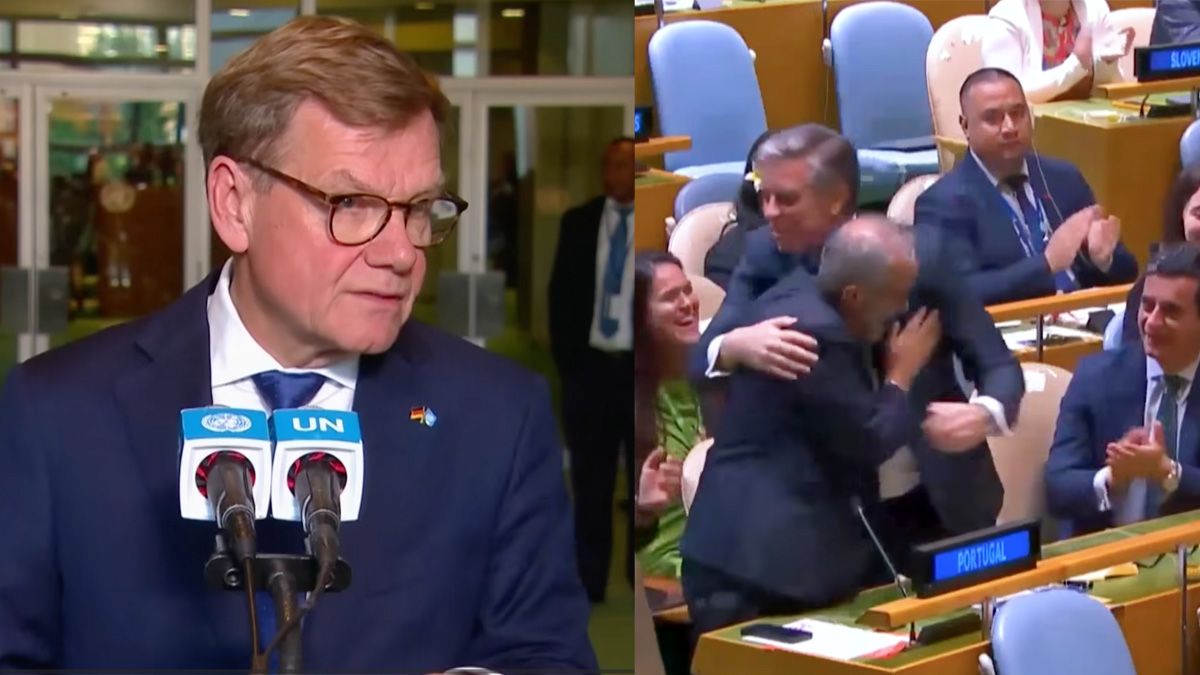
Germany has failed to secure a temporary seat on the UN Security Council, losing out to Austria and Portugal. Foreign Minister Johann Wadephul attributed the defeat to Berlin's positions on Ukraine and Israel.
- Germany secured 104 votes, falling short of the two-thirds majority required for election.
- Foreign Minister Wadephul cited support for Ukraine and Israel as possible factors in the loss.
- Analysts and critics point primarily to Germany's backing of Israel over Gaza as the decisive issue.

Germany has failed to secure a temporary seat on the United Nations Security Council (UNSC) for the first time in modern diplomatic memory, losing out to Austria and Portugal in a vote held at the UN General Assembly in New York on Wednesday, 4 June 2025.
Foreign Minister Johann Wadephul, who had personally lobbied member states in New York ahead of the ballot, described the outcome as a "bitter defeat" and acknowledged that Germany's foreign policy positions — particularly on Israel and Ukraine — may have cost it crucial votes.
Portugal received 134 votes and Austria 131, both comfortably clearing the two-thirds majority required for election. Germany secured only 104 votes, falling 23 short of the threshold. The two seats were allocated to the "Western Europe and Others" group on the 15-member council.
The result is the first time Germany has failed to win a rotating Security Council seat after decades of securing one of the Western European positions roughly every eight years. Germany last served on the council in 2019 and 2020.
Also elected to the Security Council on Wednesday were Kyrgyzstan, which won out against the Philippines, and Trinidad and Tobago and Zimbabwe, each elected unopposed to seats reserved for their respective regions.
Wadephul points to Ukraine and Israel positions
Speaking to reporters after the vote, Wadephul said Germany had "always taken a clear stance on certain issues" that not all member states shared. He identified two in particular.
"There is our firm support for Ukraine — the fact that Russia does not want such a voice at the Security Council," he said, adding that it was "no secret" Russia had worked to generate opposition to Germany's candidacy.
He also acknowledged a second potential factor. "The fact that Germany must always assume a special responsibility for Israel in the Middle East conflict may also have cost votes," Wadephul said, referring to Germany's historically rooted backing of Israel in the shadow of the Nazi Holocaust.
Wadephul additionally conceded that Germany's comparatively late entry into the race for the two-year Security Council term had been a disadvantage.
Analysts dispute Ukraine framing, point to Gaza
Some analysts have pushed back against the suggestion that Germany's support for Ukraine was a significant factor in the defeat. Trita Parsi, executive vice president of the Quincy Institute for Responsible Statecraft, argued the Ukraine framing did not hold up.
"Germany's support for Ukraine had nothing to do with it. Portugal and Austria — who beat Germany — are no less supportive of Ukraine," Parsi said. He attributed the loss instead to Germany's backing of Israel's military campaign in Gaza, which human rights groups and UN bodies have described as genocidal.
"Germany's blind support for Israeli crimes cost Germany its seat on the UNSC. As it should," Parsi said, adding that the result should "prompt some serious rethinking in Berlin," despite Germany being the second-largest financial contributor to the UN.
Craig Mokhiber, former director of the New York office of the Office of the UN High Commissioner for Human Rights (OHCHR), similarly linked the defeat to Germany's stance on the Israel-Palestine conflict and its domestic crackdown on pro-Palestinian activism.
"In a rare moment of justice at the UN General Assembly today, Germany lost its bid for a UN Security Council seat," Mokhiber said. He cited Germany's "support for genocide in Palestine," its actions against pro-Palestinian human rights defenders within Germany, and its position on Iran as factors.
Germany's record on Gaza
Since Israel launched its military campaign in Gaza in October 2023, Germany's conduct at the UN General Assembly has drawn significant international scrutiny. Germany abstained on four of at least seven resolutions related to Gaza and Palestine, including two 2023 resolutions calling for a humanitarian truce or ceasefire.
Berlin abstained on a vote supporting Palestine's bid for enhanced UN membership and on a resolution demanding Israel end its presence in occupied Palestinian territory. It subsequently voted in favour of later ceasefire resolutions in 2024 and 2025. By that time, the death toll in Gaza had surpassed 70,000, according to figures tracked by human rights organisations.
Since the ceasefire last October, Chancellor Friedrich Merz visited Israel and met Prime Minister Benjamin Netanyahu, despite the International Criminal Court (ICC) having issued an arrest warrant for Netanyahu in 2024. The International Court of Justice (ICJ) ordered Israel to refrain from genocidal acts the same year, as it continues to hear South Africa's genocide case. Several other states have since joined South Africa's legal action.
During his December visit to Israel, Merz stated Germany had no plans to recognise a Palestinian state "in the foreseeable future." The trip came days after Germany lifted a three-month suspension on arms export approvals for weapons potentially usable in Gaza. An Al Jazeera investigation found German-origin weapons continued to flow to Israel during the period of restrictions.
Germany has also faced criticism over its domestic handling of pro-Palestinian protest, with video footage showing police deploying heavy-handed measures against demonstrators.
Why Austria and Portugal prevailed
Observers note that factors beyond Germany's Israel position also contributed to the outcome. Portugal entered the race with strong diplomatic ties across the Portuguese and Spanish-speaking world. Its international profile has also been bolstered by the prominence of Portuguese nationals in key multilateral roles:
António Costa as President of the European Council and António Guterres as UN Secretary-General. This has reinforced Portugal's reputation as a relatively neutral diplomatic actor with broad appeal, particularly in the Global South.
Austria's constitutionally mandated military neutrality — and its status outside NATO — may have made it more attractive to non-aligned countries in Africa, Asia and Latin America. Vienna's standing as a major UN hub has further reinforced Austria's credentials as a committed multilateral actor.
Crucially, Austria began campaigning for the 2027–2028 Security Council term several years before Germany entered the race, giving it a significant head start in building diplomatic support.
Analysts noted that one senior Austrian diplomat reportedly pitched undecided countries during the campaign with a pointed formulation: vote for Austria "precisely because we're not the Germans."
German political reaction
The defeat was immediately seized upon by opposition figures in Germany. Alice Weidel, co-leader of the far-right Alternative for Germany (AfD), described the result as an "embarrassment."
Adis Ahmetovic, foreign policy spokesman for the Social Democratic Party's parliamentary group, said the vote was "a gauge of how Germany is perceived internationally."
Jürgen Hardt, foreign policy spokesperson for the CDU/CSU parliamentary group in the Bundestag, called it "regrettable." The Greens went further, blaming Wadephul and Merz directly and pointing to the German government's reductions in development aid and insufficient action on climate protection as additional factors.
Merz acknowledged the result without disputing the verdict. "We applied with conviction. We did not achieve our goal," he said. "This result does not alter the tasks we face at the United Nations. Germany remains a reliable pillar of the multilateral system."
Merz had entered office promising to restore Germany's influence in Europe and on the world stage. The UNSC defeat represents a significant early setback to that agenda.
The UN Security Council is the only body within the United Nations whose resolutions are legally binding, with authority to impose sanctions and authorise the use of force. It comprises five permanent members — China, France, Russia, the United Kingdom, and the United States — and ten elected members serving two-year terms.