連城計 and 豬一般的隊友 — why an opposition alliance in Singapore is a trap, not a strategy
連城計 warns about structural risk. 不怕神一般的敵人只怕豬一般的隊友 warns about personnel risk. Two opposition coalitions collapsed before GE2025. The Tampines and Sembawang results proved the warnings correct.
- Two separate opposition coalitions collapsed before GE2025 over constituency allocation disputes driven by unverified territorial claims, with results in Tampines and Sembawang validating every concern the dissenting members had raised.
- Political leverage should flow from demonstrated voter support, not from participation in coordination meetings — verification should come before leverage, not after it.
- GE2025 evidence suggests voters are more capable of sorting opposition contenders than opposition leaders negotiating in backrooms are — in both Tampines and Sembawang, voters consolidated around the strongest credible alternative without any pre-arranged coordination framework.

Two sayings from entirely different eras and contexts have been on my mind since the GE2025 results came in, and more acutely since Goh Meng Seng published his post urging Workers' Party cadres to remove Pritam Singh ahead of the 28 June special cadres conference.
They are not variations of the same idea. They warn against different things. But together they cover the full anatomy of why ill-conceived political alliances fail in high-stakes environments — and why the calls for opposition unity that surface before every general election in Singapore reflect a misunderstanding of both the structural and the human dimensions of the problem.
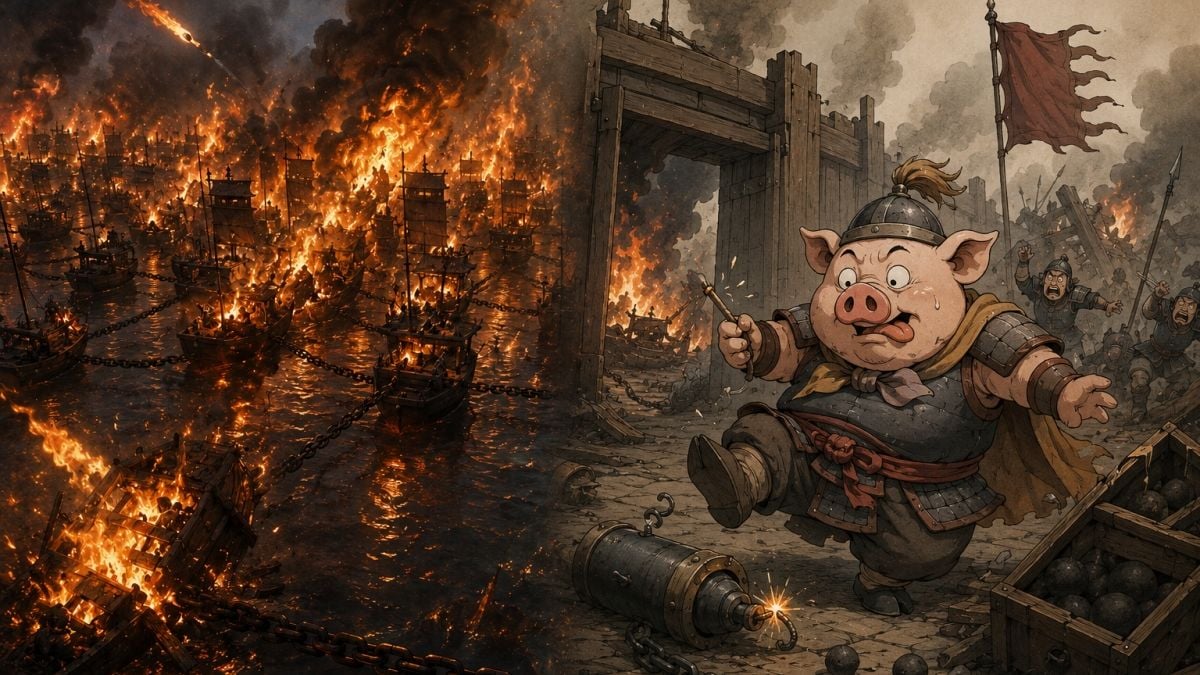
The first is 連城計 — the Chained Ships Strategy from the Battle of Red Cliffs, one of the most famous episodes in the Romance of the Three Kingdoms. Cao Cao, commanding a vast northern fleet against the allied forces of Liu Bei and Sun Quan, faced a tactical problem: his northern troops were unaccustomed to fighting on water and suffered badly from seasickness.
His solution was to chain his ships together, creating a stable platform that his troops could fight from with the same footing they had on land. It was an elegant solution to a real problem. What it created was a configuration whose failure mode Cao Cao had not adequately considered before committing to it. When Zhou Yu sent fire ships into the chained fleet, no individual vessel could manoeuvre to escape. The chains that had made the fleet stable made it combustible. The entire armada burned.
The episode is associated in classical Chinese military literature with the stratagem 連環計 — the chaining of ships as a deliberate tactical device. What this piece draws from it is not the stratagem itself but the structural condition it created: a configuration of interconnected vessels in which a fire anywhere becomes a fire everywhere. It is that condition — 連城計, the state of chained interconnection — that serves as the analytical framework for what follows.
The second is 不怕神一般的敵人只怕豬一般的隊友 — a saying that emerged from Chinese online gaming culture, particularly from multiplayer games where the strength of your teammates matters as much as your own skill. Translated directly: you are not afraid of a godlike enemy, you are afraid of a pig-like teammate. A formidable opponent can be prepared for, studied, and countered. A reckless or incompetent teammate introduces unpredictable failure from inside the formation, where your defences are not pointed and your preparations do not apply.
Fifteen centuries and several cultural registers separate these two sayings. They are not connected. But together they describe exactly what a political alliance in Singapore's opposition landscape would create — and why the unity advocates who appear before every election have not thought through either warning carefully enough.
The structural problem: 連城計
Cao Cao's error was not that he chained the ships. His error was that he did not adequately consider what the configuration would look like when conditions changed and the chains became a liability rather than an asset.
This is the warning 連城計 carries for opposition alliances. An alliance between the Workers' Party (WP) and smaller parties does not just pool resources and coordinate strategy. It chains the ships. Whatever fire an allied party brings — a controversial public statement, a candidate who embarrasses the coalition, a policy position that alienates middle ground voters, a forfeited deposit that signals organisational weakness — travels directly to the WP through the chain of association.
The WP has spent fifteen years building a specific institutional identity. It is the party of sober, credible, responsible opposition. It manages town councils. It produces MPs who do their homework. It contests elections only where it has built genuine ground presence and genuine candidate quality. Every one of those decisions was, among other things, a damage control decision — ensuring that a fire in one part of the organisation does not spread to the whole.
An alliance undoes that work structurally. The WP does not need to endorse an allied party candidate's statement or approve their conduct for the association to carry reputational cost. It needs only to be chained to them in a publicly recognised coalition arrangement.
The PAP's communications operation is sophisticated enough to exploit exactly those connections. A single inflammatory statement by an allied party candidate in one constituency can be amplified nationally to undermine WP's carefully cultivated image. The PAP does not need to attack the WP directly. It needs only to let the allied party burn and allow the chains to do the rest.
It is worth being precise about what the chained ships analogy does and does not claim about the PAP's role in this dynamic.
The warning of 連城計 is not that the enemy created the chains. It is that the enemy recognised the vulnerability created by the chains. In the original battle, Zhou Yu did not design Cao Cao's configuration. Cao Cao did that himself, solving his own tactical problem without adequately considering the failure mode he was creating. Zhou Yu merely recognised the vulnerability and sent the fire ships into a configuration his opponent had voluntarily constructed.
This is the more accurate frame for understanding the PAP's relationship to opposition alliance dynamics. The PAP does not need to orchestrate opposition disunity or create alliance liabilities for its opponents. Opposition parties create those liabilities themselves, through their own strategic choices.
What the PAP does — and given six decades of continuous electoral competition it would be surprising if it did not — is recognise those vulnerabilities when they appear and exploit them with the sophistication of an organisation that has studied electoral politics longer and more seriously than any other actor in Singapore's political landscape.
The Electoral Boundaries Review Committee (EBRC) boundary redrawing that I wrote about ahead of GE2025 already creates artificial pressure toward alliance formation — disrupting established opposition groundwork, forcing parties into electoral dilemmas, and generating conditions in which horse-trading seems like the rational response. An alliance structure would amplify rather than resolve that pressure by adding reputational chains to the existing structural ones.
The WP has long been criticised for refusing to participate in opposition horse-trading meetings and coordination discussions. That criticism is understandable on its face — a party that declines to negotiate with potential allies can appear arrogant, isolationist, or indifferent to the broader opposition cause.
But the structural risks documented in this piece offer a more sympathetic reading of that decision. Turning up at the negotiation table does not give you control over what your putative allies stand for, how their candidates behave, or what their leaders say publicly in the days before a critical internal vote. It gives you proximity to those risks without the ability to manage them.
Given that the alliance structure creates reputational chains the WP cannot control once formed, non-participation is not arrogance. It is a defensible risk management decision made by a party that has spent fifteen years building an institutional identity it cannot afford to have burned by allies it cannot govern.
The personnel problem: 不怕神一般的敵人只怕豬一般的隊友
The structural vulnerability of the chained ships is only half the problem. The other half is human nature, and this is what 不怕神一般的敵人只怕豬一般的隊友 captures.
The chained ships strategy only works as intended if every captain on every ship exercises the same discipline and is willing, when necessary, to scuttle their own vessel to protect the fleet. In a voluntary political alliance of independent parties with different leaders, different egos, different electoral pressures, and different assessments of their own importance, that level of coordinated self-sacrifice is essentially impossible to sustain.
Every opposition party leader who has endured years of electoral defeat, financial loss, and public criticism has done so sustained by a sincere conviction that their presence matters and that their analysis is correct. That conviction is structurally necessary for them to keep going. No one absorbs that kind of sustained personal cost without genuinely believing they are contributing something.
But that same conviction is precisely what makes self-sacrifice psychologically impossible when the fleet needs it. The captain who sincerely believes his ship is contributing cannot bring himself to scuttle it, even when the objective evidence suggests the ship is on fire and the chains are doing the rest.
The dangerous ally in this framework is not the calculating actor who seeks to damage the WP deliberately. A calculating adversary can be identified, anticipated, and managed. The dangerous ally is the sincere one — the actor whose genuine conviction insulates them from self-correction, who cannot be reasoned out of a position they were not reasoned into, and whose fire burns just as hot regardless of their intentions.
Goh Meng Seng's post ahead of the 28 June cadres conference illustrates this dynamic — not as a personal attack but as an observable example of the personnel problem in action. Whether or not the intervention was intended to cause damage, its practical effect was to create precisely the type of alliance liability this piece describes — a fire starting inside the opposition formation in the days before a critical internal moment, requiring the WP to spend attention and energy managing a narrative it did not generate and cannot easily contain. The intentions of the actor are secondary. The structural consequence is what matters.
Two coalitions, two collapses: the GE2025 case study
The theoretical framework described above is not hypothetical. Singapore's opposition landscape provided not one but two complete real-world illustrations of both dynamics operating simultaneously in the period leading up to GE2025. The two episodes involved different parties, different configurations, and different constituencies. They collapsed for structurally identical reasons.
The first coalition was the People's Alliance for Reform (PAR), officially registered on 7 December 2023 after nearly a year of negotiations among four opposition parties — People's Voice (PV), the Reform Party (RP), the Democratic Progressive Party (DPP), and the People's Power Party (PPP). Unlike previous loose coordination arrangements, PAR aimed to function as a genuine coalition, contesting GE2025 under a single banner with a common manifesto covering cost of living, public housing, job security, and immigration. Constituency allocations had been agreed. The coalition had a strategic rationale and a registered structure.
On 22 February 2025, PPP announced its withdrawal from PAR, citing irreconcilable strategic differences. PV chief and PAR secretary-general Lim Tean explained publicly that the central point of breakdown was PPP's insistence on contesting Tampines GRC — a move explicitly opposed by the other three alliance members.
Tampines GRC was a constituency where the WP was widely expected to enter for the first time, where the National Solidarity Party (NSP) had an existing presence, and where a multi-cornered fight would divide the non-PAP vote in ways the other alliance members considered strategically damaging.
Despite the explicit objections of the other alliance members, PPP maintained the demand to contest Tampines. The coalition collapsed before polling day. PPP contested Tampines under its own banner and received 0.43 per cent of the valid votes cast. NSP, contesting independently in the same constituency, received 0.18 per cent. WP received 47.37 per cent. Both PPP and NSP forfeited their election deposits. Subsequent electoral results validated every concern the other PAR members had raised.
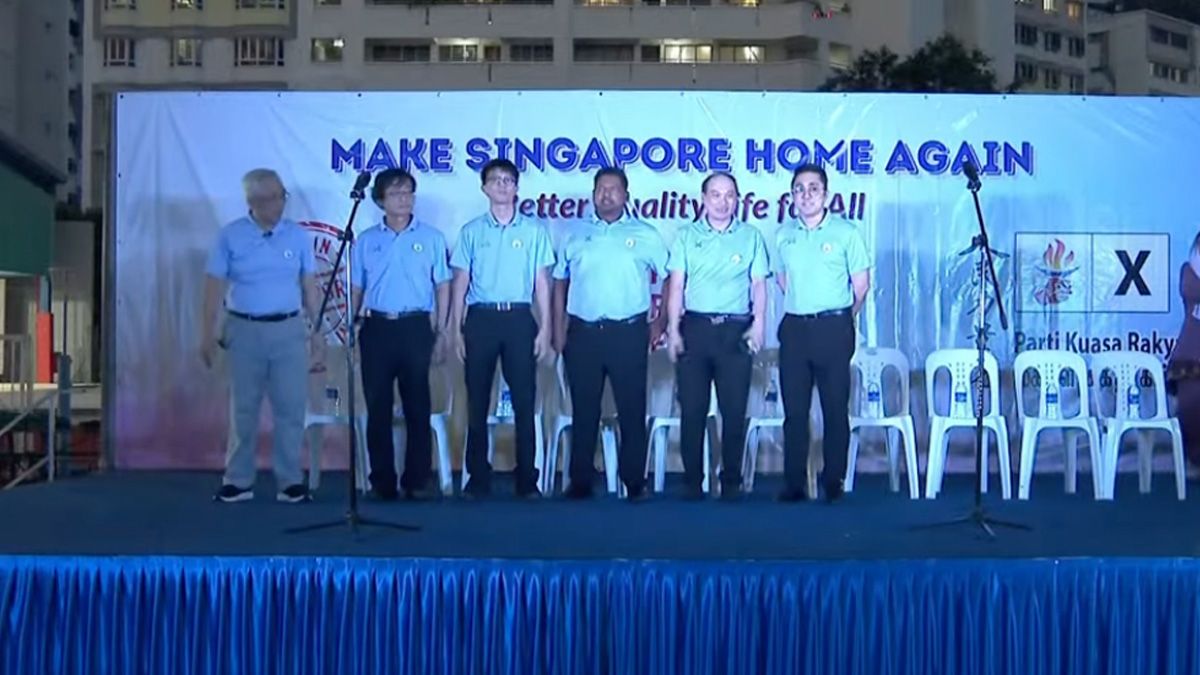
The second coalition comprised Red Dot United (RDU), NSP, the Singapore United Party (SUP), and the Singapore People's Party (SPP), established to avoid overlapping candidacies and promote unity among smaller parties. It collapsed in April 2025 when NSP insisted on contesting Sembawang GRC despite the Singapore Democratic Party (SDP) having an established presence there.
RDU secretary-general Ravi Philemon, in withdrawing from the coalition, articulated the strategic logic precisely: the strongest candidate with ground support, resources, and resonance with voters should be given a clean opportunity to challenge the PAP directly. Multi-cornered contests often benefit the incumbent. NSP's presence in Sembawang, on that analysis, undermined the broader opposition cause.
NSP secretary-general Spencer Ng rejected SDP's proposal to shift its contest to Holland-Bukit Timah GRC, comparing the suggestion to exchanging wives and describing it as a compromise of his party's longstanding engagement in Sembawang. NSP contested Sembawang GRC anyway, alongside SDP and the PAP in a three-cornered fight.
The PAP won Sembawang GRC with 67.75 per cent. SDP received 29.93 per cent. NSP received 2.32 per cent — a collapse from the 32.71 per cent NSP had received in the same constituency at GE2020. NSP forfeited its election deposits. Every concern Philemon had raised was validated by the result.
The Sembawang result adds a dimension the Tampines result alone could not provide. In Tampines, NSP's collapse from 33.59 per cent in 2020 to 0.18 per cent in 2025 could be attributed to WP's entry drawing away displaced protest votes.
In Sembawang there was no WP entry. The three-cornered fight was PAP, SDP, and NSP. NSP's vote collapsed from 32.71 per cent to 2.32 per cent against SDP rather than WP. The mechanism is structurally identical — voters consolidating around the strongest credible alternative — but the Sembawang result demonstrates it operates independently of WP's specific presence. It is a general structural phenomenon, not a WP-specific one.
Two coalitions. Two collapses. Two sets of parties that explicitly warned against the strategic decisions that destroyed each arrangement. Two sets of results that validated every concern that had been raised. Both episodes happened in the same pre-GE2025 period. The pattern is not coincidental. It is the predictable consequence of the structural and human dynamics this piece has been describing.
The pre-election negotiation failure at its most direct
Both coalition collapses also illustrate the sequencing problem in its most concrete form: the negotiation happened before anyone had won anything.
PAR spent nearly a year negotiating constituency allocations based on unverified claims about what each party could deliver. The second coalition spent months on similar arrangements. Those claims were never tested against electoral reality before commitments were made and disputes arose.
Had the negotiations happened after GE2025, with actual results on the table, the conversations would have been very short. A party that received 0.43 per cent in Tampines has no credible territorial claim in that constituency. A party that received 2.32 per cent in Sembawang, collapsing from 32.71 per cent in a single electoral cycle, has no credible case for the integrity of its longstanding engagement there.
The eggs had not hatched. The chickens were being counted anyway. Both coalitions collapsed under the weight of claims that the voters subsequently rendered worthless.
The alliance adds nothing: why the arithmetic does not work
There is a further dimension to the alliance argument that its advocates rarely address directly: what does an opposition alliance actually consolidate?
The PAP's structural advantages in Singapore's electoral environment derive from sources that no opposition alliance can replicate or neutralise. The People's Association (PA) grassroots network, the town council incumbency, the access to state communications infrastructure, and the financial resources that flow through party-linked organisations — none of these are affected by whether the WP coordinates with PPP or NSP. An alliance does not pool those resources. It pools only votes — and as the Tampines and Sembawang results demonstrate, those votes were already going to the strongest available opposition contestant regardless of whether a formal coordination arrangement existed.
What an alliance does produce is the appearance of a united front. And that appearance, paradoxically, hands the PAP exactly the narrative it needs.
At a rally in Sembawang GRC during GE2015, then-PAP chairman Khaw Boon Wan — speaking on behalf of a party that would go on to win 69.9 per cent of the vote — warned the crowd that there was no guarantee the PAP would form the next government and that Singapore could end up with a weak government unable to get things done.
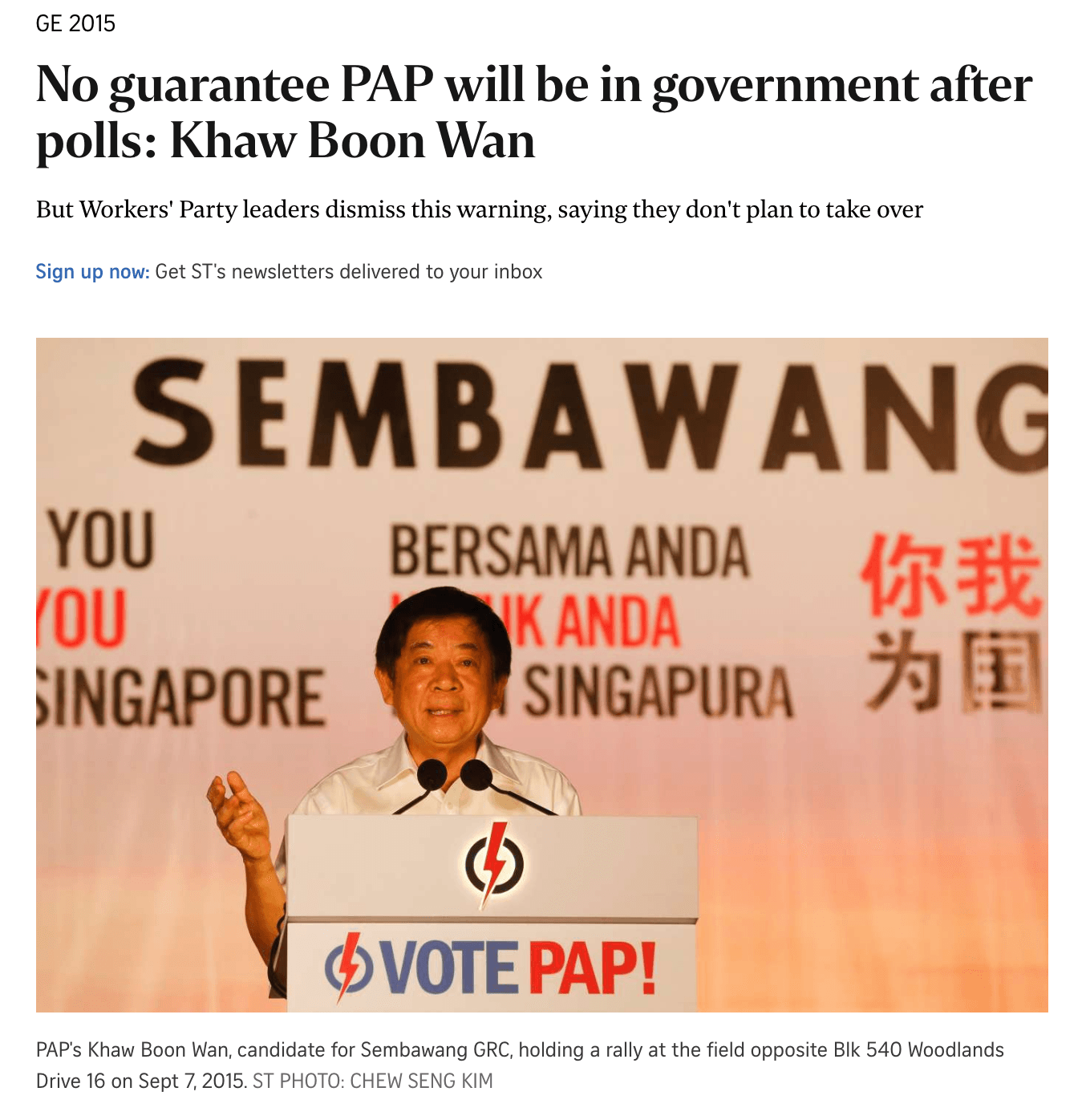
That was not a genuine fear. It was a deliberate rhetorical strategy, and it worked precisely because the opposition had been talking up its coordination in the lead-up to the election, giving the PAP the material it needed to paint itself as the underdog and drive its own supporters to the polls through fear of a freak result.
An opposition that goes about its work quietly — contesting where it has built genuine strength, not announcing grand alliances, not inflating its collective position — gives the PAP much less to work with. The freak result narrative requires an opposition that looks organised enough to be threatening on a national scale. A disciplined party contesting a limited number of carefully chosen seats is not that target. A coalition holding coordination press conferences is.
It is worth pausing on an irony. 連環計 — the chaining of ships as a deliberate stratagem — is associated in classical military literature with the side that exploits the configuration, not the side that creates it. Cao Cao chained his own ships. Zhou Yu sent the fire ships. The opposition parties that form pre-election alliances, chain their ships together, and then watch the configuration burn are performing both roles simultaneously — creating the vulnerability and providing the kindling.
Whether the PAP, as an experienced competitor with six decades of electoral knowledge, understands exactly what pre-election alliance formation does to its opponents and quietly encourages the conditions that produce it, is a question the evidence cannot definitively answer. What the evidence can answer is that the outcome serves the PAP's interests whether it was engineered or merely exploited. That is what makes 連環計 — as a description of what may be happening to the opposition rather than what the opposition is doing — worth keeping in mind.
The multi-front intellectual advantage of independent parties
There is a further argument for multiple strong independent parties that the unity advocates have entirely missed — and it has nothing to do with vote arithmetic.
The PAP's political communications apparatus is built for a binary contest. It has refined over decades a set of responses to any single opposition position on public housing, the Central Provident Fund, healthcare costs, or labour policy. It knows how to frame a single challenger as inexperienced, as a risk, as good for opposition but not for government. Those responses are effective precisely because they only need to work in one direction at a time.
Multiple strong independent parties with distinct policy positions create a fundamentally different problem. When the WP takes one position on public housing supply and the SDP takes a different position on the same issue, the PAP cannot deploy the same counter-argument against both simultaneously. It has to explain why its policy is better than a moderate alternative and better than a more interventionist alternative at the same time — defending itself on two different intellectual fronts against two different coherent challenges. That is a categorically harder communications task than responding to a single unified opposition position.
This is what a healthy multi-party democracy produces without any formal coordination required. The debate becomes three-dimensional. The ruling party cannot position itself as the responsible centre against one challenger. It has to justify its position against multiple credible alternatives, each grounded in evidence and each appealing to different segments of the electorate for different reasons.
A coordinated coalition that takes a single unified position gives the PAP one target and one counter-argument. Two independent parties with distinct well-developed policy positions give the PAP two targets that cannot be countered with the same framing. The intellectual pressure on the ruling party is greater, not lesser, when the alternatives are independent and distinct.
This is not coordination. It is competition — the kind that produces better policy debate, harder questions for the government, and a richer democratic conversation than any pre-election alliance could generate.
Do not count the chickens before the eggs are hatched
The sequencing problem that destroyed both GE2025 coalitions is not incidental. It is structural. Pre-election horse-trading treats unverified claims of voter support as currency. A party that received 32.71 per cent in Sembawang in 2020 arrives at the negotiating table claiming that constituency as leverage — not knowing, and unable to verify, that the 2020 result reflected displaced protest votes that would evaporate the moment a more credible alternative appeared. The currency is imaginary. The costs of the arrangements it produces are real.
In mature parliamentary democracies, meaningful political coalitions form after elections, not before them. Parties that have each independently demonstrated they can win voter trust come together to form governing arrangements with negotiating positions determined by what the voters actually gave them. The bargaining chips are real because they are verified seats, not pre-election promises about votes that may or may not materialise.
Post-election coordination would serve the opposition cause in Singapore far more effectively than pre-election horse-trading. If smaller parties want to discuss coordination with the WP, the appropriate moment is after an election in which each party's actual voter support has been independently verified. At that point the negotiating positions are honest, the leverage is real, and any arrangement that follows reflects electoral reality rather than inflated claims. The party with verified seats holds the leverage. The party with forfeited deposits does not.
NSP historically hosted these coordination meetings at its own headquarters, positioning itself as a convenor and gatekeeper of opposition coordination despite having no demonstrated capacity to win seats independently. The arrangement benefited NSP structurally regardless of electoral outcomes. The GE2025 results in both Tampines and Sembawang have now quantified exactly what NSP's claimed support bases were actually worth without a borrowed political wave or the absence of a stronger contestant: 0.18 per cent and 2.32 per cent respectively.
Proving yourself first: the threshold question
There is a further question the unity advocates have consistently failed to answer, and it is the most practically significant one.
On what basis does a newly formed party earn a seat at the coordination table?
Under the pre-election unity model, a party established yesterday, which has never contested an election, never run a town council, never fielded candidates under electoral scrutiny, and never demonstrated any measurable voter support, can arrive at a coordination meeting and claim constituencies, seek strategic concessions, and demand recognition as a meaningful stakeholder — on the basis of assertions about ground support that no one can verify until polling day.
That is not a minor procedural question. It is a fundamental question about where political legitimacy comes from.
The WP was not handed credibility. It contested Hougang for years, lost Aljunied across five successive elections, and built its institutional depth through decades of unglamorous work before the voters of Aljunied decided in 2011 that it had earned their trust. The SDP spent years developing policy positions and rebuilding its public standing through successive electoral cycles. The Progress Singapore Party (PSP) had to go through elections and let voters evaluate it before anyone could assess what it actually represented in Singapore's political landscape.
Why should a newly registered party be exempt from that same process?
If the answer is that every opposition party deserves a seat at the table regardless of demonstrated support, then the incentive structure becomes completely inverted. Political leverage flows not from winning voters but from attending coordination meetings. The path to influence runs through the negotiating room rather than through the ballot box. And the parties that have spent years earning genuine electoral credibility are expected to treat unverified claims as equivalent currency.
That is precisely what the GE2025 coalition collapses illustrated in practice. Parties negotiated based on what they claimed they could deliver. The election revealed what they could actually deliver. The gap between the claimed value and the revealed value — between 32.71 per cent in Sembawang 2020 and 2.32 per cent in Sembawang 2025, between the 2011 Tampines wave and 0.43 per cent in 2025 — was the cost paid by everyone who accepted those claims at face value before the votes were counted.
The unity advocates have never specified a threshold. At what point does a party earn the right to a seat at the coordination table? One election contested? One per cent vote share? Five per cent? A parliamentary seat? The threshold question is never answered because answering it would immediately exclude most of the parties whose participation the unity advocates are arguing for.
The principle this piece is advancing is not that new parties should be excluded. It is that new parties should prove themselves first. Cooperation should be based on demonstrated electoral value rather than asserted electoral value.
Verification should come before leverage, not after it. That is not arrogance toward smaller parties. It is the basic standard of accountability that Singapore's voters apply to every party that asks for their trust — and there is no principled reason why opposition parties negotiating with each other should apply a lower standard than the voters do.
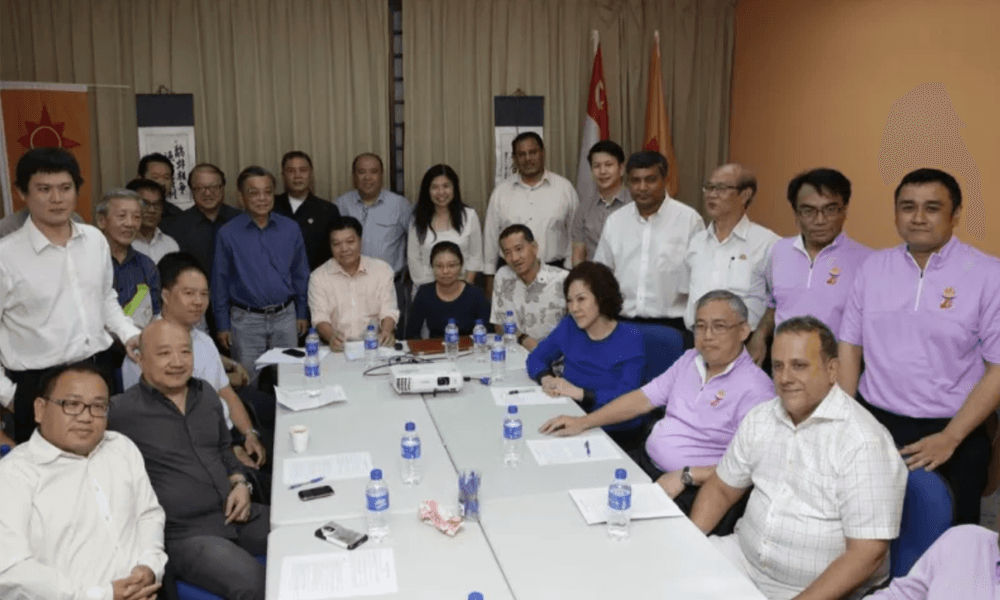
Horse-trading does not serve voters — it limits their choices
The horse-trading that NSP and other smaller parties have historically championed carries a democratic cost that is rarely acknowledged by its proponents.
When parties negotiate before polling day to divide constituencies and withdraw from contests, the voters in those constituencies lose the ability to choose between all available options. The ballot they receive reflects the outcome of backroom negotiations rather than the full competitive field that would exist if parties contested wherever they had the will and the resources to do so. The parties have pre-determined, among themselves, who voters are permitted to choose between.
That is not a minor procedural matter. It is a fundamental limitation on democratic choice, justified in the name of strategic efficiency but functioning in practice as a form of electoral pre-determination by the parties themselves.
The irony is sharpest when you consider which parties have been most insistent on this arrangement. NSP, which received 0.18 per cent in Tampines and 2.32 per cent in Sembawang at GE2025, was at the centre of both coalition disputes. Its claimed right to contest those constituencies — a right it was willing to destroy two coalitions to protect — was never validated by voters. It was asserted by the party and defended through coordination negotiations whose purpose, had they succeeded, would have been to prevent voters from being offered a genuine competitive choice.
If NSP had simply contested wherever it wished and allowed voters to decide freely, the result in both constituencies would have been identical. Voters would have assessed NSP against every available alternative and expressed their preferences. The 0.18 per cent and 2.32 per cent results would have followed regardless. The only difference is that voters would have arrived at those judgments through a genuinely open competitive process rather than a managed one.
Pre-election horse-trading does not protect voters from fragmented choices. It protects weaker parties from the verdict that competitive elections would produce. When the parties doing the horse-trading have the weakest demonstrated voter support, that protection comes directly at the expense of the voters who would, if given the full range of options, simply consolidate around the strongest available alternative — as they did in Tampines and Sembawang the moment the coordination arrangements collapsed and they were finally permitted to choose freely.
What the GE2025 results actually show
Ahead of GE2025, I wrote that multi-cornered fights are not inherently a disadvantage for strong opposition parties, that weak parties using seat claims as bargaining chips weaken stronger opposition parties, and that the WP should reject horse-trading meetings that lump it together with weaker parties.
The results in Tampines and Sembawang GRCs provided the most precise available post-publication validation of that argument — and from two independent data points rather than one.
In Tampines, four teams contested simultaneously. The PAP received 52.02 per cent. The WP received 47.37 per cent. PPP received 0.43 per cent. NSP received 0.18 per cent. Both forfeited deposits. Between PAP and WP, the two parties with genuine institutional depth, 99.39 per cent of the vote was concentrated.
In Sembawang, three teams contested. The PAP received 67.75 per cent. SDP received 29.93 per cent. NSP received 2.32 per cent and forfeited its deposits.
In both constituencies, voters consolidated around the strongest credible alternative to the PAP regardless of how many other parties were on the ballot. In both constituencies, parties that had previously recorded significant vote shares found those shares evaporate the moment a stronger opponent entered the field.
The mechanism is structural and consistent. It is not WP-specific. It operates wherever a genuinely credible opposition contestant competes against parties whose prior results reflected borrowed support rather than genuine institutional credibility.
Historical precedent supports the same conclusion from an earlier era. In the 1963 Legislative Assembly Election, Barisan Sosialis candidate Ong Lian Teng won in Bukit Panjang with 46.5 per cent in a four-cornered fight despite Operation Coldstore having detained senior Barisan leaders weeks earlier.
In the 2013 Punggol East by-election, WP's Lee Li Lian won with 54.50 per cent against three other candidates, two of whom lost their deposits. Strong opposition parties have historically won multi-cornered fights when voters perceive them as the most credible available alternative. The number of candidates on the ballot is not the decisive variable. The institutional credibility of the strongest opposition contestant is.
The WP's trajectory from contesting two seats in 2001 to receiving approximately 50 per cent of the vote in every constituency it contests in 2025 was built without alliances, without grand coalitions, and without inflated claims of collective opposition strength. It was built slowly, constituency by constituency, through the unglamorous work of ground presence, candidate development, and demonstrated competence. That trajectory is the argument.
Unity of what — and trust the voters
The calls for opposition unity that surface before every general election in Singapore are not made in bad faith. They reflect a genuine desire to see PAP dominance challenged more effectively. But they are asking the wrong question.
The question is not: how do we get more opposition parties coordinating together before the election?
The question is: what produces genuine electoral credibility in Singapore's specific political environment, and how do we build more of it?
The next time the call for opposition unity is made, the question should not be whether unity sounds desirable. The question should be: unity of what?
Unity of institutions with demonstrated electoral credibility, each having independently won voter trust, coming together after elections with verified mandates to negotiate from positions of genuine strength? That is a conversation worth having.
Unity of parties that cannot agree among themselves before polling day, cannot verify their claimed support bases, cannot discipline their own strategic impulses when those impulses conflict with collective strategy, and cannot hold a registered coalition together for more than sixteen months without it collapsing over constituency allocation disputes?
That is not unity. That is the appearance of unity dressed over a competition for leverage among parties whose electoral claims the voters have already assessed and found wanting.
There is one further dimension to this argument that goes beyond party strategy and speaks directly to democratic principle.
The unity advocates present their position as pro-voter — as wanting to give voters a cleaner, more coordinated choice against the PAP. But examined carefully, the pre-election coordination model does something quite different. It asks parties with demonstrated voter support to honour the territorial claims of parties that voters have already assessed and found wanting — before the next election gives voters another opportunity to render their judgment.
When a party contests an election and forfeits its deposit, the voters have spoken. They have evaluated the candidates, the ground work, and the institutional character of the party, and decided it does not yet merit their trust at that level. That is a democratic verdict, not a procedural outcome. It is the electorate exercising exactly the judgment that democratic systems exist to produce.
A coordination framework that shields the same party from competition in the next election — by asking stronger parties to vacate constituencies rather than contest them — asks those stronger parties to override that democratic verdict on the party's behalf. It substitutes the assertion of territorial claim for the verification of voter trust. It protects parties from the electoral accountability that is the only legitimate source of political standing in a democracy.
But perhaps the most powerful rebuttal to the unity argument is not about what alliances cost. It is about what they assume.
The conventional unity narrative rests on an implicit assumption that voters cannot be trusted to sort the field themselves. The logic runs: if multiple opposition parties contest the same constituency, voters will scatter their support across all of them, the opposition vote will fragment, and the PAP will win with a lower share than it deserves. Therefore parties must pre-arrange the field before polling day to give voters a clean choice.
That assumption is the foundation on which the entire horse-trading model rests. The GE2025 results suggest it is wrong.
In Tampines, voters were given maximum choice. Four teams, all fielding full five-member slates, all on the ballot simultaneously. The result was not fragmentation. It was consolidation. 99.39 per cent of the vote concentrated in the two parties with demonstrated institutional credibility. Voters did not need parties to pre-arrange the outcome. They produced the outcome that the pre-arrangement was supposedly designed to achieve — and they did it more cleanly and more accurately than any coordination meeting could have.
In Sembawang, without WP present, the same mechanism operated independently. Three teams contested. Voters identified SDP as the strongest credible challenger and consolidated around it. NSP received 2.32 per cent. The voters sorted the field themselves, without any coordination framework, and arrived at exactly the result that RDU had argued for when it withdrew from the coalition — a clean contest between the PAP and the strongest available opposition challenger.
The voters did not make a mess of it. They were not confused by the number of options. They assessed the available alternatives and concentrated their support on the most credible one. In both constituencies. Through different mechanisms. With different parties involved. The result was structurally identical.
This is the strongest argument against pre-election horse-trading — not that it is strategically unsound, though it is, and not that it is structurally dangerous, though it is, but that it is unnecessary. The voters already know how to identify the strongest available alternative. They do not need opposition leaders to decide on their behalf which party deserves which constituency. They need the parties to be credible enough to deserve their votes, and they will sort the rest themselves.
The unity advocates' implicit proposition is: we must coordinate beforehand because otherwise voters will make a mess of it. The GE2025 evidence points in the opposite direction: voters are more capable of sorting opposition contenders than opposition leaders negotiating in backrooms are.
And unlike the backroom negotiation — which relies on unverified claims, produces disputed outcomes, collapses over constituency allocation disputes, and limits voter choice — the electoral competition mechanism is self-correcting, transparent, and produces verified results that everyone can see.
Two coalitions formed before GE2025. Both collapsed before polling day. Both collapsed over constituency allocation disputes driven by unverified territorial claims. Both produced results that validated every concern the dissenting members had raised. The parties that maintained strategic discipline — contesting where they had genuine strength, refusing to chain their ships to vessels they could not govern — produced results that the parties inside the collapsed coalitions could not approach.
The hypothesis this piece advances is not theoretical. It happened. It is documented. Whether future opposition parties choose to learn from that experience is a question the next election cycle will answer.
But the deeper challenge the evidence poses is not to any specific party. It is to the unity advocates themselves. Before demanding that stronger parties assume the structural and reputational risks of coalition arrangements, the advocates should be required to answer a simple question: what, precisely, is being offered in exchange?
Not the promise of votes that borrowed political waves once generated and the voters have since reclaimed. Not territorial claims over constituencies where forfeited deposits have now established the actual value of the claim. Not the principle of unity as its own justification, severed from any honest accounting of what the arrangement produces and who bears the cost when it fails.
Trust the voters. Let electoral competition determine which parties have genuine support. Let the field be sorted by the people whose judgment the democratic system exists to express. That is not a counsel of fragmentation. It is a counsel of confidence — in the voters, in the process, and in the proposition that genuine institutional credibility, built over time through demonstrated service, will be recognised and rewarded without any help from coordination meetings that have twice now collapsed before a single vote was cast.
The formidable enemy sharpens you. The foolish ally burns you. The chain that connects you to the foolish ally means their fire becomes yours. And the negotiating table set before a single egg has hatched is a table where the weakest parties hold the most leverage and the strongest party has the most to lose.
Build the ships. Make them seaworthy. Sail them into the fight on their own terms. Win the seats. Then negotiate from what the voters actually gave you.
That is not a lack of solidarity. That is the only version of opposition strategy in Singapore that the evidence — including the evidence GE2025 has now provided in abundance — suggests actually works.
And it is the only version that respects what the voters of Tampines and Sembawang have already demonstrated they are capable of: identifying the strongest available alternative, without any help from backroom negotiations that limit who they are permitted to choose between, and delivering a verdict that no coordination meeting could have produced more cleanly or more honestly.