Pentagon adds Alibaba, Baidu and BYD to Chinese military firms list, expanding scrutiny of Beijing-linked companies
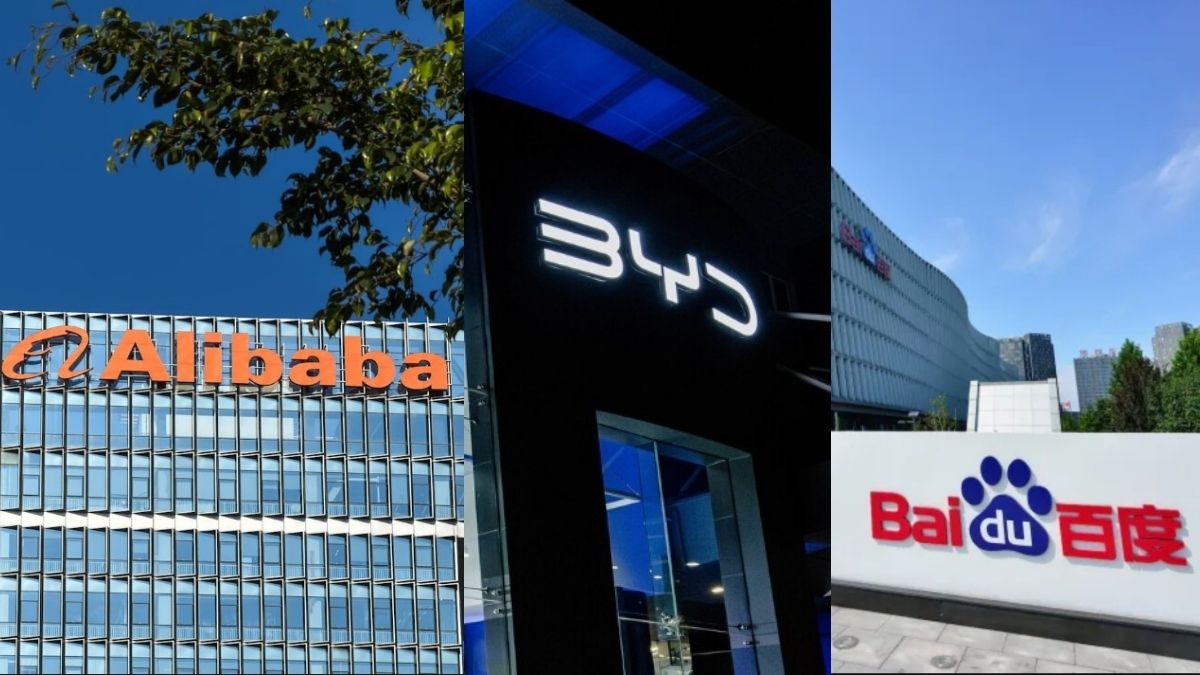
The Pentagon has added Alibaba, Baidu, BYD and more than 20 other firms to its Chinese military companies list, bringing the total to 188 entities. The move broadens US restrictions on companies Washington says support China's military-industrial ambitions.
- The Pentagon added Alibaba, Baidu, BYD and more than 20 firms to its Chinese military companies list.
- The designation expands future US procurement restrictions and heightens scrutiny of Chinese technology companies.
- China and several affected firms, including WuXi AppTec, rejected the allegations and denied military affiliations.

The United States Department of War (DOW) has expanded its list of Chinese military companies operating in the United States, adding major technology and industrial groups including Alibaba Group Holding, Baidu and electric vehicle manufacturer BYD in a move likely to further strain relations between Washington and Beijing.
The updated designation list, released on 8 June 2026 under Section 1260H of the William M. Thornberry National Defense Authorization Act for Fiscal Year 2021, identifies 188 entities that the Pentagon says meet statutory criteria for inclusion as Chinese military companies operating directly or indirectly in the United States.
The update replaces the previous list published in early 2025 and arrives less than a month after President Donald Trump met Chinese President Xi Jinping in Beijing, where both sides sought to preserve a fragile truce in their prolonged trade dispute.
According to the Pentagon filing, Alibaba was designated because it is "indirectly affiliated" with China's State-owned Assets Supervision and Administration Commission (SASAC) and is considered a military-civil fusion contributor through an affiliation with China's Ministry of Industry and Information Technology (MIIT).
Similar rationales were cited for Baidu and BYD.
Broader technology focus
The latest list reflects Washington's growing concern that China's leading commercial technology firms may contribute to military modernisation through Beijing's military-civil fusion strategy.
Among the newly added entities are memory chip manufacturers ChangXin Memory Technologies (CXMT) and Yangtze Memory Technologies Co. (YMTC), both strategically important players in China's semiconductor ambitions.
The Pentagon also added biotechnology company WuXi AppTec, autonomous robotics developer RoboSense Technology, and Hangzhou Yushu Technology, better known as Unitree, a manufacturer of humanoid and quadruped robots.
The inclusion of Unitree comes shortly after US artificial intelligence chipmaker Nvidia announced on 1 June that it planned to work with the company on robotics development for researchers.
The filing states that Unitree is indirectly owned by and affiliated with SASAC and was designated as a military-civil fusion contributor through government-supported industrial programmes.
Another notable addition is telecommunications equipment maker Baicells, which was reportedly under investigation by the FBI and the US Department of Commerce during 2025.
According to the Pentagon filing, Baicells is indirectly affiliated with both SASAC and MIIT and received support through Chinese industrial initiatives, including designation as a national "Little Giant" enterprise.
February withdrawal revisited
The updated version closely resembles a list briefly published and then withdrawn by the Pentagon in February 2026.
That withdrawal generated criticism from several lawmakers and China-focused policy advocates because CXMT and YMTC had been omitted without explanation.
Their reappearance in the June update suggests the Defence Department completed additional review procedures before finalising the latest designations.
The Pentagon said it conducted due diligence before determining that all 188 entities satisfied statutory requirements for inclusion.
Companies removed and added
While the list expanded significantly, several entities were removed.
Among them were CNOOC China Ltd and CNOOC International Trading, both subsidiaries of state-owned energy giant China National Offshore Oil Corporation (CNOOC).
However, another subsidiary, China BlueChemical Limited, was added.
The Pentagon noted that CNOOC remains directly owned and controlled by the Chinese government through SASAC.
Officials noted that removal from the list does not necessarily indicate a determination that a company lacks military ties.
Entities may be removed if they no longer operate in the United States or if corporate names have changed.
Political reactions
House Select Committee on the Chinese Communist Party Chairman John Moolenaar welcomed the update.
"The updated list is a warning to American businesses, all levels of government, and the American people. These Chinese companies are working with the Chinese military against our national interests," Moolenaar said.
The statement reflects a broader bipartisan consensus in Washington that commercial and military development in China have become increasingly intertwined.
China's embassy in Washington strongly criticised the move.
"The US should stop its wrong practice and create a fair, just and non-discriminatory environment for Chinese companies," an embassy spokesperson said in a statement.
The embassy said Beijing opposed what it described as discriminatory lists targeting Chinese companies and maintained that Chinese firms comply with local laws and regulations wherever they operate.
WuXi AppTec rejects designation
Among the companies responding publicly, WuXi AppTec issued one of the strongest rebuttals.
In an open letter published on 9 June, the company rejected its inclusion on the Pentagon list and argued that the designation was not supported by objective facts or the statutory requirements governing Section 1260H.
The company stated: "We are not owned or controlled by or affiliated with any government or military organisation; we do not provide services to the PRC military; and we are not associated with any defence industrial base or military-civil fusion programmes in any country."
WuXi AppTec said it operates as an independent publicly listed company with a diverse shareholder base and global operations.
The company also highlighted its regulatory compliance record, noting that it has undergone numerous international inspections and customer audits.
Implications for affected firms
The designation does not automatically impose sanctions or prohibit companies from conducting business in the United States.
However, recent legislation gives the list increasing practical significance.
Beginning later this month, the Pentagon will be prohibited from contracting directly with companies on the list.
From 2027, restrictions will expand to prohibit the Defence Department from procuring products or services from listed entities through third-party intermediaries.
Industry analysts have warned that the measures could create material commercial costs for affected firms and their business partners.
Beyond procurement restrictions, inclusion on the list also serves as a powerful signal to defence contractors, federal agencies and investors regarding the US government's assessment of a company's relationship with China's military establishment.
Several previously designated firms have challenged their inclusion in US courts, arguing that the government's determinations were unsupported or procedurally flawed.