Jury fails to reach verdict in trial of four activists over Wolverhampton arms factory raid
A jury at Birmingham Crown Court has been discharged after failing to reach verdicts over four pro-Palestine activists accused of criminal damage at the Moog factory near Wolverhampton. The Crown Prosecution Service will decide whether to seek a retrial.
- Jury discharged after 17 hours of deliberation without reaching verdicts on four activists.
- Defendants admitted occupying Moog factory roof to halt production they deemed criminal.
- Crown Prosecution Service to decide on possible retrial by 3 July 2026.

A jury at Birmingham Crown Court has been discharged after failing to reach verdicts over whether four pro-Palestine activists committed criminal damage at an arms factory near Wolverhampton.
The panel deliberated for more than 17 hours over four days before indicating to the judge that there was no prospect of reaching majority verdicts, even with further time.
The four defendants were Iain Evans, 33, of Saltaire in Shipley, West Yorkshire; Hisham Alkhamesi, 23, of Burbage, near Hinckley, Leicestershire; Hana Yun-Stevens, 24, of London; and Frank Sherman, also known as Bea Sherman, 23, of Ditchling, East Sussex.
Each was accused of criminal damage at a factory owned by Moog, a United States aerospace firm, in the Pendeford area near Wolverhampton.
High Court judge Mr Justice Wall discharged the jury of seven women and five men, thanking them for their service. He remarked that juries do not reach verdicts in every case and that such outcomes occur.
All four defendants admitted breaking into the factory in August but argued that their actions were not unlawful. They were granted bail until a further hearing on 3 July 2026.
The Crown Prosecution Service asked the court for time to reflect on whether to seek a retrial and is expected to indicate its decision in the coming weeks.
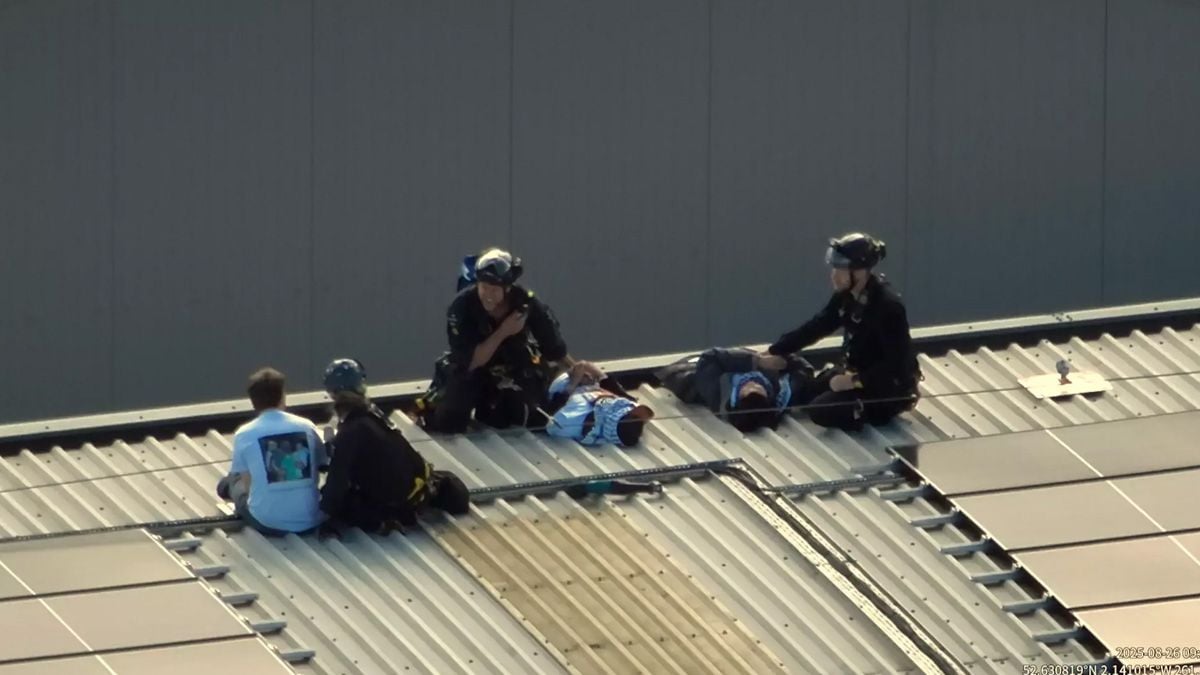
During the trial, the jury saw footage from helicopters and closed-circuit television cameras showing the defendants crashing through the site’s front gate and damaging solar panels on its roof.
The court heard that sections of roof were cut away using power tools, exposing machinery to potential rain damage. Windows and hundreds of solar panels were also smashed.
Prosecutors presented the matter as a straightforward case, given that the defendants admitted in court to occupying the roof in order to shut down the factory’s production line.
They told jurors the trial was not about Israel or Palestine, but simply about whether the defendants had unlawfully damaged property. The prosecution alleged the activists had no lawful excuse to act as they did.
Jurors were instructed to consider whether each defendant played a part in causing damage to the factory and whether they intended to damage the property.
The defence presented the activists’ motivation as central to the case. The jury was shown a social media post indicating their goal was to disrupt the supply of British-made fighter jet components to Israel.
In that post, the four defendants wore T-shirts bearing the names of Palestinians killed by Israeli airstrikes, including the author Refaat Alareer.
Defence counsel Mira Hammad told the court there was no mystery about why the defendants were there, stating it was set out on their T-shirts and in the social media post discussing military aircraft parts being supplied to Israel.
The jury also heard from the defendants directly. Alkhamesi told the court the main intention of the action was to occupy the roof, because the factory could not operate while they remained there.
Evans, who previously worked in the aerospace sector, said the defendants believed the longer they stayed on the roof, the longer the factory would be shut down, and the more lives they would save.
Yun-Stevens described the concept of direct action and noted that a full arms embargo had still not been imposed on Israel.
Sherman, who dismissed their own legal representation to deliver a closing statement, declared they would always know in their heart that using care and intention to disarm the factory was not criminal.
Sherman added that the group had intended to disrupt shipments and production, and had disrupted only what they deemed to be criminal.
Shortly after the discharge was announced, Yun-Stevens and Sherman addressed around 20 supporters gathered outside the courthouse. Yun-Stevens led chants of “Free Palestine”, while Sherman thanked those who had offered encouragement.
Evans, wearing a keffiyeh, said he felt relieved by the outcome. A one-minute silence was held outside the courthouse for Palestinians killed in Gaza.
The decision on whether to pursue a retrial now rests with the Crown Prosecution Service, with the next hearing scheduled for 3 July 2026.