China defends ethnic unity law's overseas reach as critics warn of transnational repression
China's new Ethnic Unity and Progress Promotion Law, taking effect 1 July 2026, draws international scrutiny over a clause asserting jurisdiction over individuals abroad deemed to undermine ethnic unity, with Beijing defending the provision as standard sovereign practice.
- China's ethnic unity law takes effect 1 July, embedding Xi Jinping's national community doctrine into statute.
- Extraterritorial clause threatens liability for overseas individuals who "undermine ethnic unity or promote ethnic separatism."
- Beijing rejects criticism, dismissing forced labour and assimilation allegations as baseless interference in internal affairs.

China's new law on ethnic unity takes effect on 1 July 2026, codifying policy directives that have shaped Beijing's management of minority populations for years.
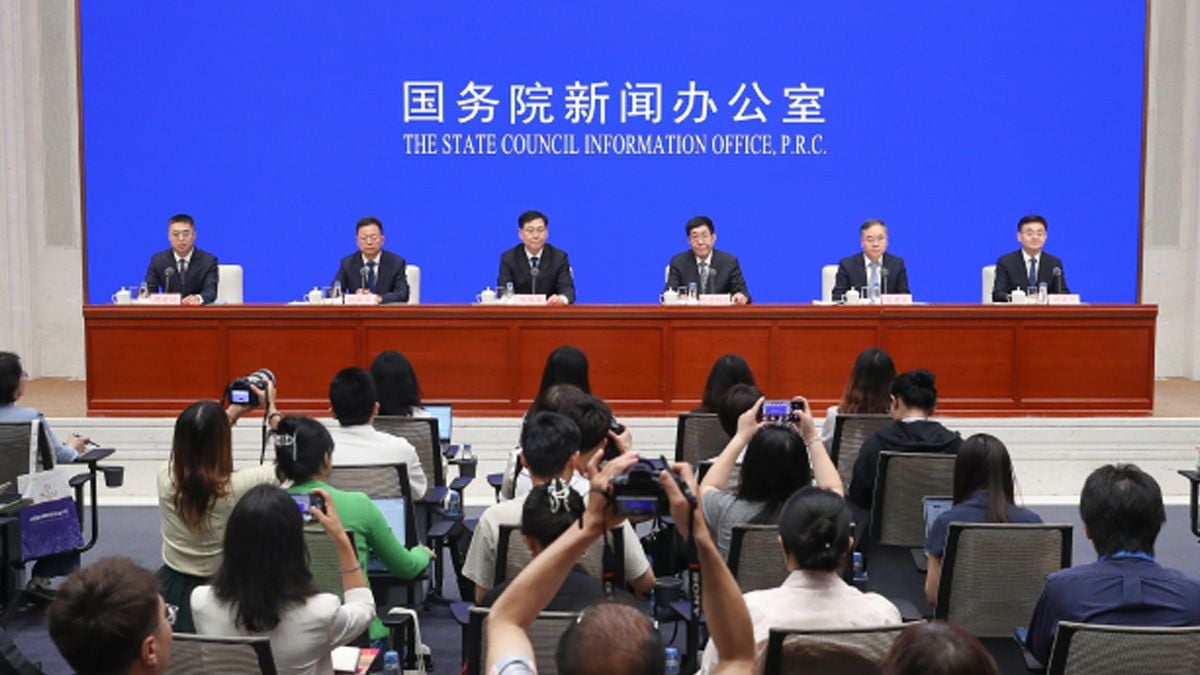
At a State Council press briefing in Beijing on 24 June 2026, senior officials defended the legislation against mounting international criticism, whilst rejecting allegations of forced labour in Xinjiang, cultural assimilation in Tibet, and linguistic suppression across minority regions.
The Ethnic Unity and Progress Promotion Law (民族团结进步促进法) was passed by the National People's Congress (NPC) in March 2026 and promulgated under Presidential Order No. 71, signed by President Xi Jinping.
Officials described it as the first law of its kind enacted since the 18th Party Congress and the first new legislation in more than three decades to include a standalone preamble.
Extraterritorial clause draws international alarm
Article 63 of the law states that organisations and individuals outside the People's Republic of China who engage in acts that "undermine ethnic unity and progress or promote ethnic separatism" may be held legally liable.
The provision has drawn sharp concern from rights groups, Taiwanese government bodies, and academics, who warn it may provide Beijing with new legal justification for pursuing overseas advocates for ethnic minorities.
Vice Justice Minister Hu Weilie, speaking at the briefing, rejected the characterisation. He said the provision was "grounded in national realities, conforms to legal principles, and is consistent with international practice," adding that sovereign states routinely legislate against separatist activities through domestic law. He said the clause targeted only "illegal acts" and would not affect academic exchanges, people-to-people engagement, or trade cooperation.
Human Rights Watch had previously stated in a submission that the law could "facilitate intensifying ideological controls" and "foster control beyond China's borders." Hu accused unnamed Western outlets of "smearing" the provision by framing it as extraterritorial or long-arm jurisdiction.
Taiwan's Mainland Affairs Council Deputy Minister Shen Yu-chung had stated after the law's adoption that whilst the legislation appeared directed at ethnic minorities within China, its extraterritorial provisions and references to ethnic unity and national unification could extend its reach into cross-strait affairs.
A Taiwanese national security official, speaking anonymously to the Central News Agency, said academics arguing that Taiwan is not part of China, foreign journalists reporting on Xinjiang, and foreign politicians supporting Taiwan's international participation could all be unilaterally deemed to have violated the law.
Tunghai University researcher Hung Pu-chao said on 24 June that the law could result in entry bans, sanctions, public naming, and business pressure on Taiwanese — particularly those who travel across the strait or maintain professional, commercial, or family ties with mainland China.
Taiwan Alliance, a coalition of pro-Taiwan civic groups, described the legislation as "a tool for transnational repression."
Officials rebut forced labour and assimilation claims
The sole foreign broadcaster permitted to pose questions at the briefing was Dubai-based China Arab Television. Questions touching on international criticism of Xinjiang, Tibet, and minority language policy were routed through mainland Chinese outlets and Phoenix Television.
State Ethnic Affairs Commission Chairman Chen Ruifeng said Article 25 of the law protects the lawful rights of citizens engaged in cross-regional employment and is premised on the principle of "complete voluntariness, two-way selection, legal compliance, and freedom of movement." He said all Xinjiang workers who seek employment elsewhere do so on the basis of personal choice aimed at improving household incomes and skills.
Chen said there was "absolutely no such thing" as forced relocation or forced labour, dismissing the allegations as "absurd and laughable." He cited official figures indicating that urban employment in Xinjiang grew by a cumulative 2.392 million over five years, that agricultural workers undertook 16.1 million inter-regional work transfers, and that per capita disposable income grew at annual rates of 5.3 per cent in urban areas and 8.1 per cent in rural areas.
On Tibet, United Front Work Department Vice Minister Duan Yijun said reports from certain foreign media claiming that Tibetan boarding schools involved forced assimilation or militarised management were "completely inconsistent with objective facts."
He said boarding schools in the Tibet Autonomous Region operate on a voluntary basis, students return home on weekends and during holidays, and parents may visit at any time. He attributed the prevalence of boarding arrangements to the region's dispersed population across a large geographic area.
Language law and minority linguistic rights
Questions were also raised about Article 15 of the law, which mandates the full promotion and popularisation of Putonghua as the national common language, requires schools to use it as the primary medium of instruction, and prohibits any organisation or individual from impeding citizens' access to Putonghua education.
Lei Jianbin, deputy director of the NPC Standing Committee's Legislative Affairs Commission, said the provision complemented the revised National Common Language and Script Law amended in December 2025.
He rejected the view that the promotion of Putonghua was incompatible with minority language protection, noting that Article 15 also commits the state to "respecting and protecting the learning and use of minority languages and scripts" and supporting their standardisation and digital development.
Lei noted that the NPC's draft of the law had been circulated in seven minority language versions — including Mongolian, Tibetan, Uyghur, Kazakh, Korean, Yi, and Zhuang — to ensure minority deputies could participate in deliberations. He said both Putonghua promotion and minority language protection carried equal constitutional standing and should not be set in opposition.
NPC Ethnic Affairs Committee Chairman Bayannaoer, responding to questions about international calls for human rights sanctions over the law, said that foreign organisations which issued such statements were "ignorant of and biased against China" and guilty of "gross interference in China's internal affairs."
Law's legislative history and positioning
Bayannaoer outlined the law's legislative trajectory: drafting commenced in November 2023; Xi Jinping chaired a Politburo session in August 2025 to review the draft, described as the first time in more than three decades that the Politburo had examined a specific piece of legislation; and the NPC passed it by a large majority at its fourth session of the 14th legislature in March 2026.
Chen described the law as a vehicle for converting Xi's concept of "forging a strong sense of community for the Chinese nation" (铸牢中华民族共同体意识) into state will. He said it was the only legislation enacted since the 18th Party Congress to carry a standalone preamble, and described it as a "programmatic basic law" governing ethnic affairs across the entire country.
The National Ethnic Affairs Commission said it was preparing a 15th Five-Year Plan for ethnic unity and progress, with the law's provisions as its organising framework.