14-year-old detained under Singapore’s ISA after planning school stabbing, citing bullying and academic stress
A 14-year-old Singaporean student was detained under the Internal Security Act after allegedly preparing a mass-casualty stabbing attack at his secondary school, while two other youths were detained over separate violent extremist plots.
- A 14-year-old student was detained after preparing a mass-casualty stabbing attack at his secondary school.
- Two other youths were detained separately over ISIS-inspired plans involving attacks in Singapore and overseas.
- Authorities warned that online extremist material can accelerate youth radicalisation and urged early reporting of warning signs.

A 14-year-old Singaporean Secondary Two student was detained under the Internal Security Act (ISA) after allegedly preparing to carry out a mass-casualty stabbing attack at his secondary school during the June 2026 school holidays.
The Internal Security Department (ISD) said on 27 July 2026 that the youth had been arrested in May, a month before his intended attack.
The student was the youngest person to be detained under the ISA, according to the ISD.
His case was one of three separate cases involving self-radicalised male Singaporean youths who were issued Orders of Detention in April, May and June 2026.
The three cases were not related, but the ISD said all involved youths who had become radicalised online by violent extremist ideologies and had made preparations to conduct attacks in Singapore.
The 14-year-old had been exposed to violent and extremist material online, including ISIS propaganda, far-right extremist content and material glorifying mass shootings.
The ISD said his radicalisation was also linked to personal grievances over bullying by schoolmates and academic pressure from teachers.
The youth allegedly drafted a 21-page manifesto in January 2026 detailing his planned attack, including his intended weapons and a list of targets comprising non-Muslim teachers and students at his school.
He reportedly intended to publish the manifesto on social media one day before the attack.
The manifesto, titled “A Call to Action”, included neo-Nazi and far-right symbols and glorified mass shooters whom he idolised.
According to the ISD, the youth said he would have carried out the attack had he not been arrested.
Radicalisation through violent online content
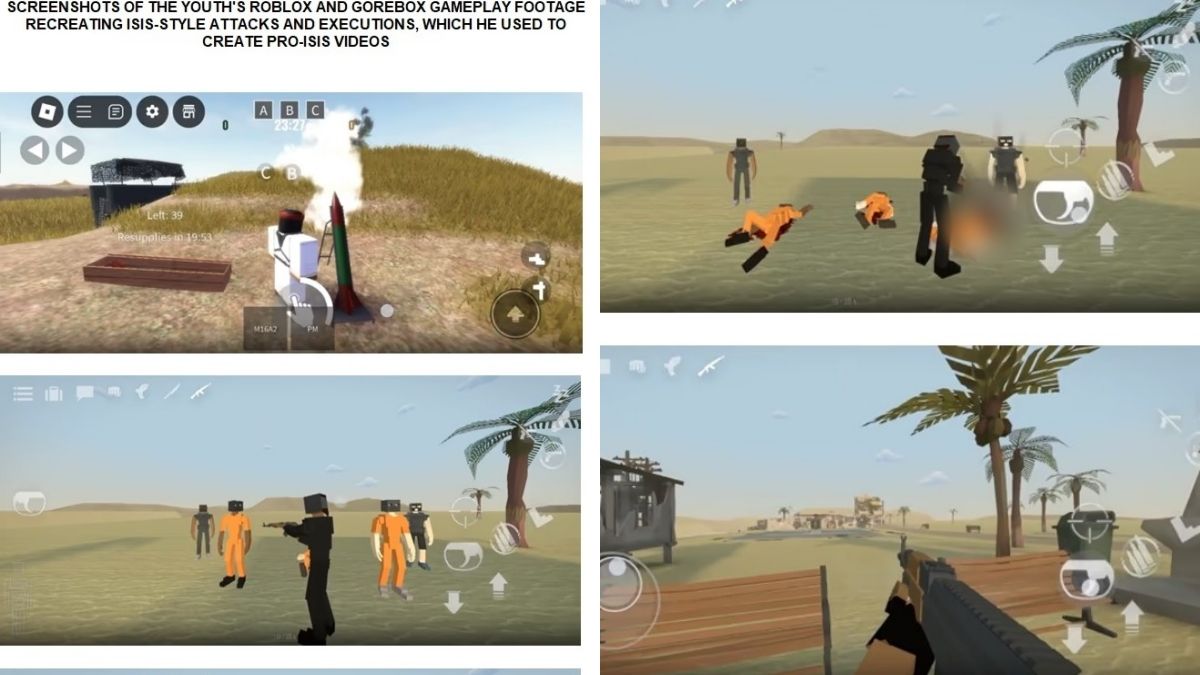
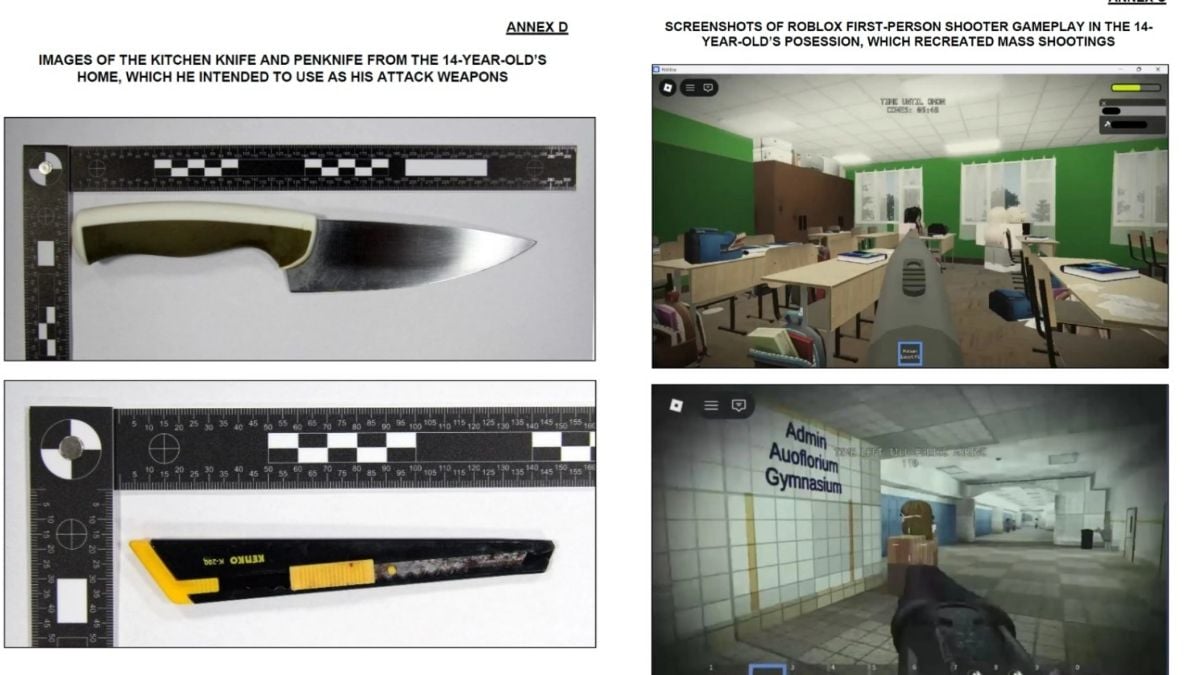
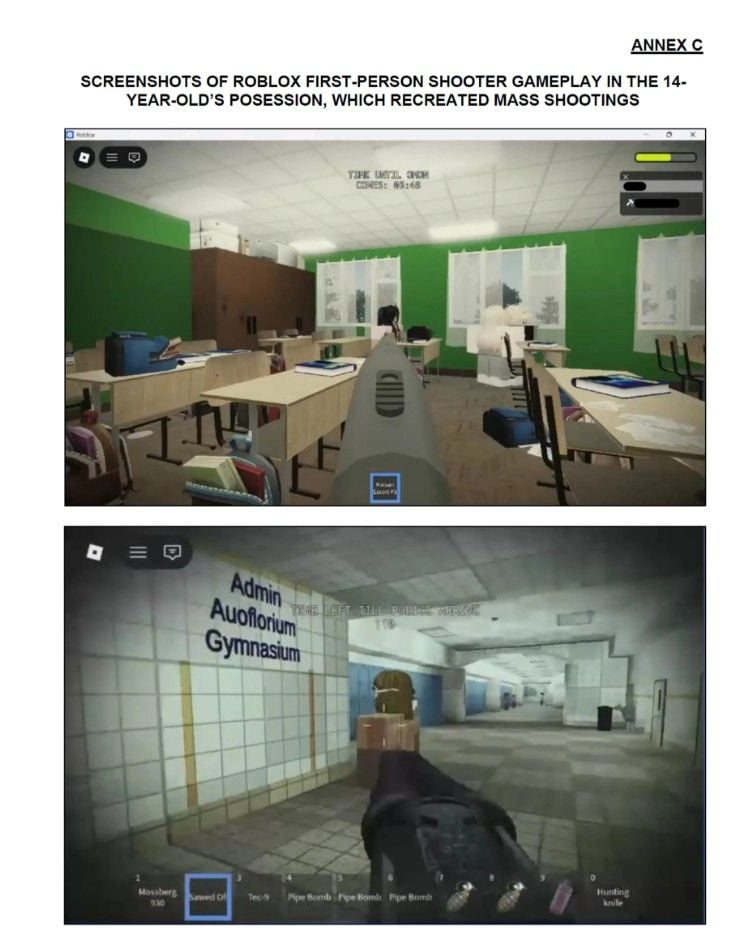
The youth first encountered First-Person Shooter games on Roblox in 2024, when he was 12.
Some of the games recreated real-life school shootings, including the 1999 Columbine High School shooting.
After becoming curious about the incidents, he searched online for further information and learned that some mass shooters had reportedly experienced bullying.
He came to identify with the shooters, saying he had also been bullied, while consuming violent gore and mass-shooting material recommended through social media algorithms and channels associated with the True Crime Community.
The ISD said the youth imagined his own bullies as victims or non-player characters in games and violent videos, while imagining himself as the perpetrator.
In 2024, he also encountered online material about Omar Mateen, the attacker responsible for the 2016 mass shooting at a gay nightclub in Florida.
The youth reportedly idolised Mateen, partly because he related to his experience of bullying, and admired the number of people killed in the attack.
He also developed the belief that killing gay people was justified because he considered homosexuality to be haram, or forbidden in Islam.
The youth subsequently consumed more ISIS material and came to support the group's killing of non-Muslims, whom he referred to as kuffar.
He was reportedly willing to attack non-Muslims if instructed by ISIS and had considered travelling to Syria to join the group, but did not pursue the plan because he lacked the necessary resources.
The ISD said the youth had also shared ISIS-related videos with friends, including schoolmates, to demonstrate his support for the group and promote its ideology. None of those schoolmates was radicalised as a result, according to the agency.
Far-right beliefs and planned attack
The youth's exposure to mass-shooting content also introduced him to far-right extremist material, including anti-Semitic and neo-Nazi narratives.
The ISD said he developed anti-Semitic views and supported Adolf Hitler's killing of Jews, which he associated with his perceptions of the Israeli-Palestinian conflict.
He also subscribed to the accelerationist beliefs of the neo-Nazi Atomwaffen Division and supported white supremacist ideas.
The youth reportedly considered people with fairer skin to be superior to those with darker skin, and viewed himself as more “White” because he considered his own skin to be fair.
By late 2025, the ISD said, his personal grievances over bullying and academic stress had contributed to his plans for a mass-casualty attack against non-Muslim teachers and schoolmates.
He intended to carry out the attack during the June 2026 school holidays, believing fewer teachers would be present to intervene.
He had also identified specific days when he and his intended targets were expected to be at school for co-curricular activities.
The youth initially wanted to use firearms but abandoned the idea because of Singapore's strict gun laws.
He subsequently researched homemade explosives but gave up the plan because he lacked sufficient money to obtain the materials and did not have a suitable place to construct and test them.
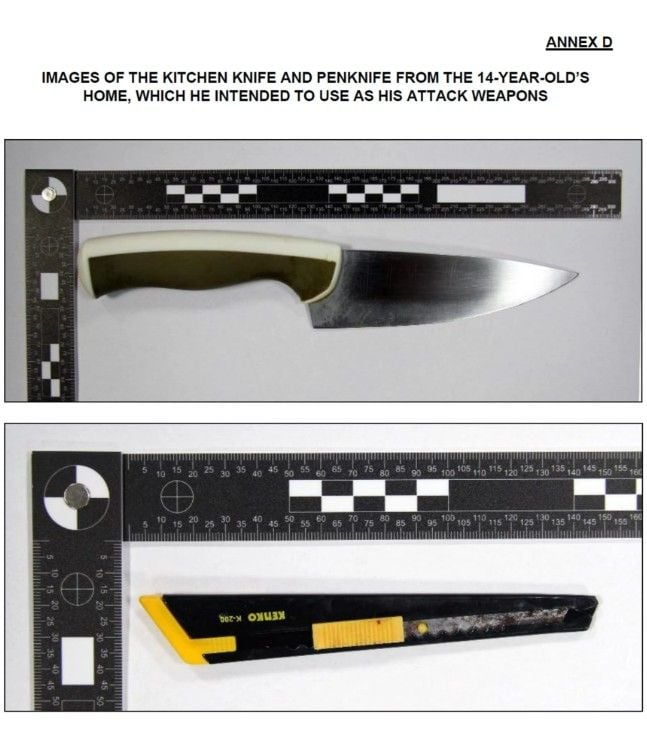
He instead selected a knife, identifying a kitchen knife and penknife at home as potential weapons.
The ISD said he had gained confidence in carrying out a stabbing attack after repeatedly viewing ISIS execution and stabbing tutorial videos online.
The youth also intended to livestream the attack, drawing inspiration from far-right terrorists Brenton Tarrant and Stephan Balliet and other mass shooters.
He reportedly idolised Tarrant despite disagreeing with his Islamophobic views and searched an e-commerce platform for tactical clothing to imitate the outfit worn by Columbine shooter Dylan Klebold.
The youth viewed his planned attack as a form of jihad and intended to pledge allegiance to ISIS during the attack, before killing himself and becoming a martyr.
A school-based warning eventually led to his arrest, with the ISD saying someone at his school had noticed signs of radicalisation and alerted the authorities.
15-year-old planned ISIS-inspired attack
The first of the three cases involved a 15-year-old Secondary Four student who was self-radicalised online by ISIS ideology.
The ISD said he had supported militant groups fighting against Israel, including HAMAS, Hizbollah and the Houthis.
His radicalisation was triggered by the 7 October 2023 attacks by HAMAS against Israel and his subsequent exposure to online content depicting Palestinian suffering.
He joined online groups to learn more about Islam and encountered violent extremist material encouraging support for terrorist groups.
The youth subsequently developed hatred towards Israelis, the Israel Defense Forces and Zionists, and viewed violence by groups fighting Israel as a form of jihad.
In 2024, he briefly considered travelling to Gaza to join HAMAS in fighting the IDF and conducted preliminary online research into possible routes.
He later became interested in historical Islamic caliphates and ISIS, eventually aspiring to establish an Islamic caliphate across Muslim-majority parts of Southeast Asia.
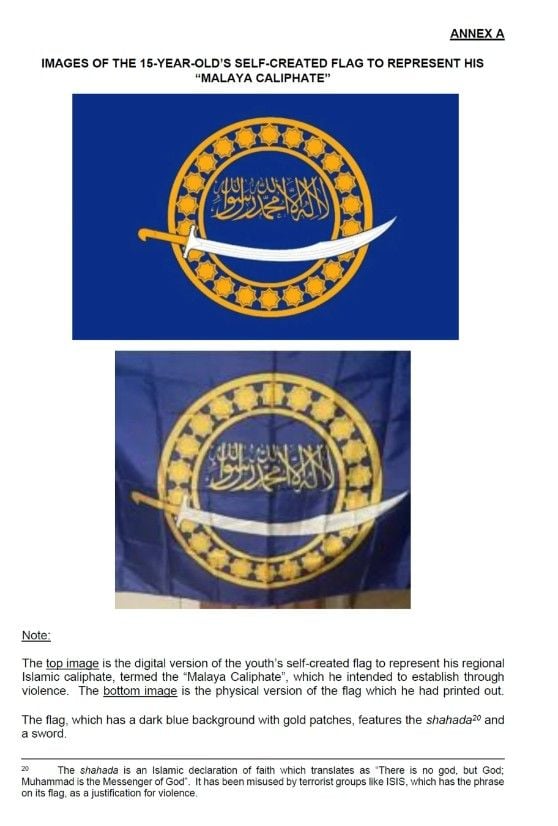
He referred to this proposed entity as the “Malaya Caliphate”, comprising Indonesia, Malaysia and Brunei.
He considered starting the project in Indonesia's Aceh province and researched homemade explosives. He also created social-media chat groups, added contacts including friends and family members, and shared pro-ISIS content.
By late 2025, he had publicly pledged allegiance to ISIS and considered himself a member of the group.
He searched for flights to Syria and overseas shooting ranges, while viewing future National Service as a possible opportunity to acquire firearms training, physical fitness and mental resilience.
The youth also considered attacks in Singapore, including the use of homemade “pressure cooker” bombs.
At the time of his arrest, however, the ISD said his planning remained at an early stage and he had not settled on a timeline, location or target.
19-year-old planned local and overseas violence
The second case involved 19-year-old student Tan Jun Jie, described by the ISD as a staunch ISIS supporter.
Tan had planned to engage in armed violence locally and overseas, including attacks against Singapore Armed Forces personnel at Sembawang Air Base and LGBTQ students at his school.
He also attempted DDoS cyberattacks against websites operated by Muslim organisations he considered deviant.
Tan became interested in Islam in 2022 after encountering religious content on social media and was later exposed to extremist teachings and rigid religious beliefs online.
By late 2025, he believed armed violence was permissible against those he categorised as kuffar, including non-Muslims, Shi'ite Muslims and people serving secular governments.
He planned to travel overseas for armed jihad, initially considering Gaza before deciding that it was not feasible.
He subsequently planned to travel to Somalia to fight alongside an ISIS affiliate and researched flights and bomb-making techniques.
Locally, Tan formulated plans to attack SAF personnel at Sembawang Air Base and LGBTQ students at his school.
He researched knife techniques and identified a knife with a 10-centimetre blade that he intended to purchase from a hardware shop in a local shopping mall.
Tan was reported to the authorities by acquaintances who were concerned about his extremist views and intention to commit violence.
The ISD said he also admitted carrying out DDoS attacks in mid-2025 against several local and foreign Muslim organisations.
The Singapore Police Force is separately investigating Tan for potential offences under the Computer Misuse Act.
Authorities warn of youth radicalisation
The ISD said the three cases demonstrated the severity of the youth radicalisation threat in Singapore.
More than half of the 23 youths dealt with under the ISA over roughly the past decade, including the three latest cases, had intended to mount attacks in Singapore, according to the agency.
The ISD said the cases also demonstrated the accessibility of violent extremist material and information about weapons and explosives online.
It warned that repeated exposure to violent games, gore and material recreating terrorist attacks and mass shootings could normalise violence and make young people more receptive to extremist narratives.
The agency also highlighted the growing cyber dimension of extremism, noting that Tan was the first self-radicalised individual dealt with under the ISA to have attempted cyberattacks in furtherance of radical beliefs.
All three youths will undergo a holistic rehabilitation programme addressing religious or ideological misconceptions and psychological and social vulnerabilities.
The ISD said it would work with their families and schools to facilitate their continued education while they are detained.
The agency also urged members of the public to remain alert to possible signs of radicalisation, including fascination with extreme violence, gore and weapons, expressions of support for terrorist groups, sharing extremist content, promoting hatred against other communities and expressing intentions to participate in violence.