Gan Kim Yong defends forest clearance at Jurong Innovation District as necessary for national development
Deputy Prime Minister Gan Kim Yong defended the clearance of 52ha of forest for the Jurong Innovation District, citing long-term national planning, job creation, and industrial synergies, in response to parliamentary concerns over ecological impacts and alternative site considerations.
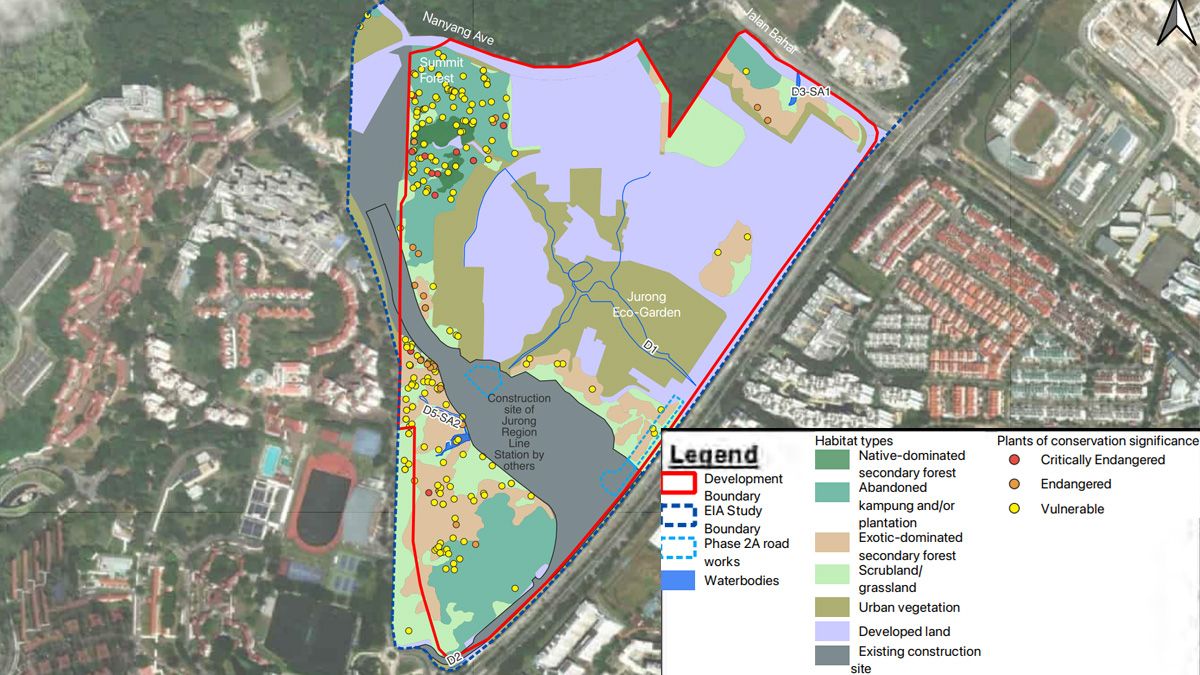
- 52ha of forest to be cleared for CleanTech Park and Bahar precincts in Jurong Innovation District.
- Minister Gan Kim Yong stated site selection considered industrial synergies and proximity to NTU.
- Environmental concerns raised; mitigation includes retaining 14.5ha of greenery and wildlife plans.

In response to a parliamentary question tabled by Non-Constituency Member of Parliament Andre Low Wu Yang of the Workers’ Party, Deputy Prime Minister and Minister for Trade and Industry Gan Kim Yong on 3 February 2026 defended the Government’s decision to proceed with clearing 52 hectares of forest for the expansion of the Jurong Innovation District (JID).
Low's question sought clarity on whether alternative sites had been considered for the CleanTech Park and Bahar precincts to preserve the area's ecological corridor.
He further queried why such alternatives were not pursued, and whether more robust mitigation efforts would be considered beyond the proposed 14.5 hectares of retained green space.
In a written response, Minister Gan stated that land use planning in Singapore requires balancing competing demands, given the city-state’s limited land resources.
He explained that various locations were assessed based on factors including proximity to existing developments, transport infrastructure, and potential synergies with industry and academia.
Gan said that the CleanTech Park and Bahar precincts were chosen for their adjacency to existing industrial zones such as Bulim and the upcoming Tengah Industrial Estate. This integration supports the long-term vision of JID as a hub for advanced manufacturing, encompassing sectors such as robotics, medical technology, and smart logistics.
He also highlighted the proximity of the development to Nanyang Technological University (NTU), which is intended to strengthen collaboration between academia and industry.
According to the Ministry, the Jurong Innovation District is projected to generate approximately 95,000 jobs, offering employment opportunities particularly for residents in the western region of Singapore.
Addressing ecological concerns, Gan noted that an Environmental Impact Assessment (EIA) was commissioned by JTC Corporation, the lead developer of JID. The EIA outlined several mitigation strategies to limit environmental damage, including the conservation of ecologically valuable forest patches, translocation of sensitive plant species, and the implementation of wildlife management and rescue protocols.
Gan said these measures were refined in consultation with nature groups. JTC would integrate the retained forest areas with newly planned green spaces. He cited the example of Potter’s Garden, a 5-hectare green sanctuary within CleanTech Park that preserves part of Jurong’s natural and cultural heritage.
Nevertheless, conservationists have voiced strong concerns over the environmental trade-offs of the development. The 116-hectare project site lies within a key ecological corridor connecting the Western Catchment area with the Tengah forest.
The forested zone in question is home to at least 56 conservation-significant species, including the Sunda pangolin and the harlequin butterfly—both of which face significant habitat disruption from the proposed works. The forest also contains rare freshwater streams, which are not easily replicable.
The EIA, prepared by Aecom Singapore and released for public consultation in December 2025, concluded that even with mitigation, over 40 per cent of natural habitats and food sources in the area would be lost.
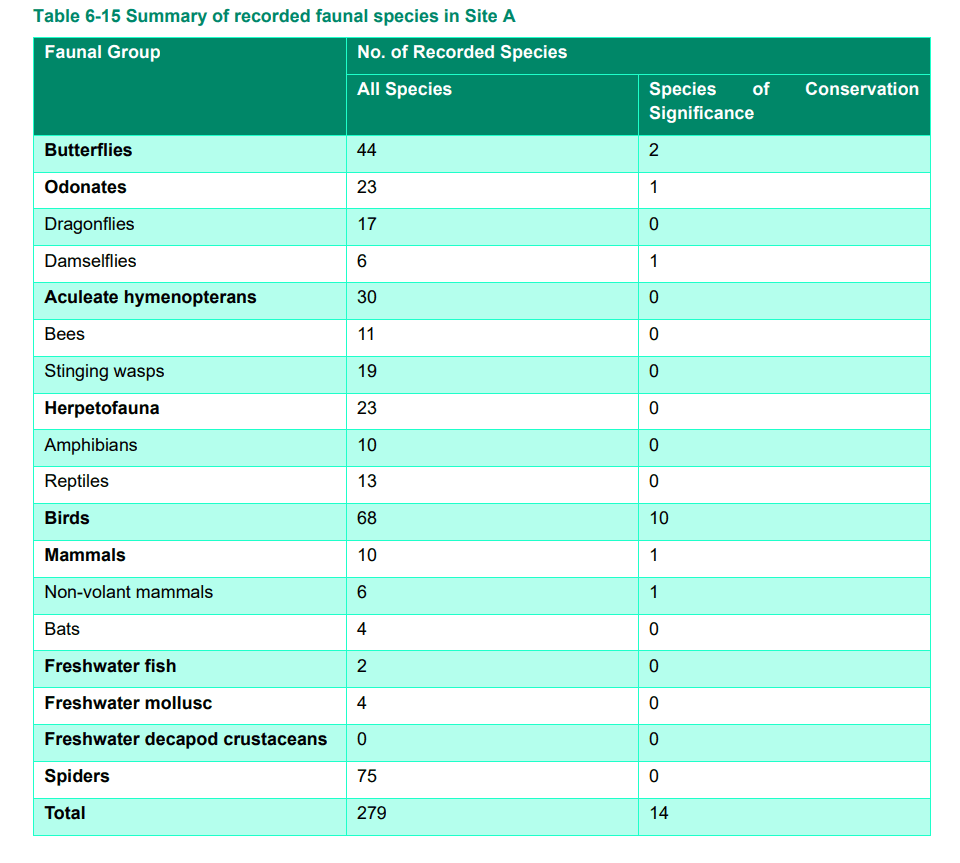
Responding to these findings, nature advocates urged that the retained 14.5 hectares be managed with minimal public access to better protect biodiversity.
Butterfly expert Khew Sin Khoon warned that turning sensitive habitats into parks with man-made amenities could undermine conservation efforts, citing past experience with the Dover Forest.
While some success has been seen in relocating species like the harlequin butterfly to other green spaces such as the Sungei Buloh Wetland Reserve, long-term ecological integrity remains uncertain.
Scientists from the Singapore Pangolin Working Group also called for better safeguards, including safe wildlife passageways and road closures to reduce pangolin fatalities.
Sankar Ananthanarayanan, a conservation researcher from the National University of Singapore, welcomed JTC’s commitment to study vegetation rehabilitation but cautioned that confining displaced wildlife to smaller patches may further strain fragile ecosystems.
JTC has said that site clearance will be phased and will only proceed after reviewing public feedback and finalising development plans. Non-invasive preparatory works, including soil investigations, are set to begin in the first quarter of 2026.
In the meantime, the EIA remains accessible for public viewing and feedback until 28 December 2025 at the JTC website.