Foreign laws may override contracts protecting Singapore government data, Parliament told
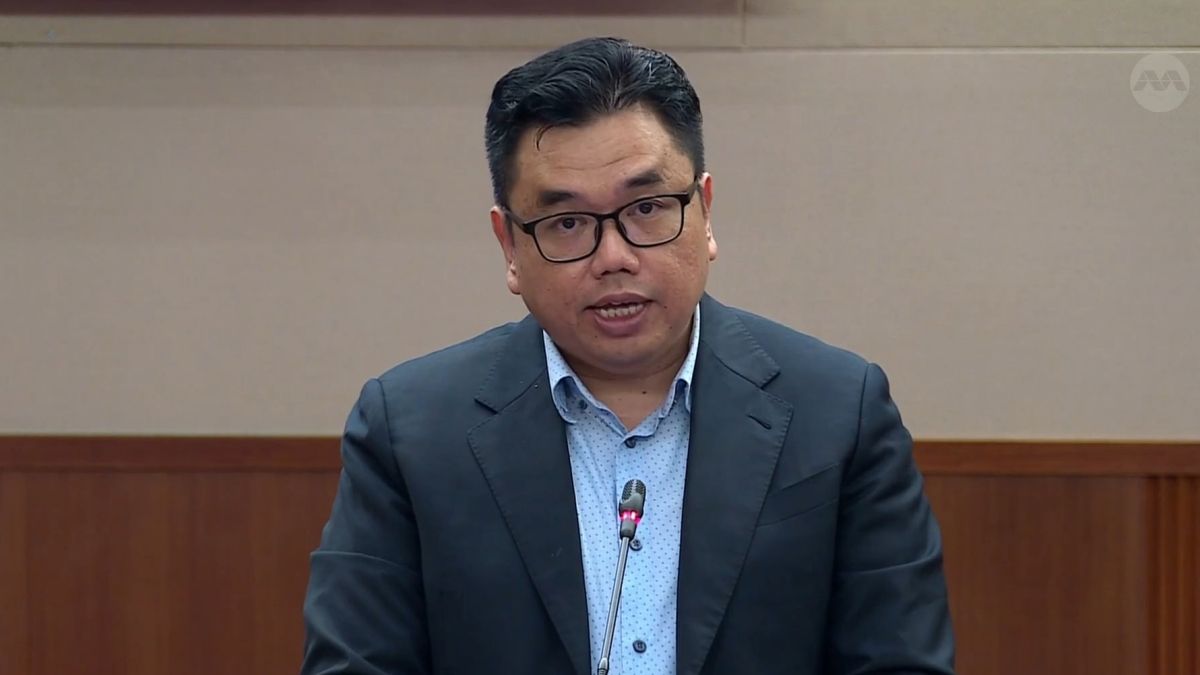
Minister of State Jasmin Lau has acknowledged in Parliament that foreign legislation with extra-territorial reach could compel companies to disclose Singapore government data, even where contractual safeguards are in place.

- Jasmin Lau said foreign laws may override contracts and compel disclosure of Singapore data.
- Andre Low questioned safeguards and raised concerns about the US Cloud Act and foreign vendors.
- Government uses technical, legal, and governance measures to mitigate disclosure risks.

Laws in certain foreign jurisdictions could compel companies to hand over Singapore government data, even where contractual protections are in place, Minister of State for Digital Development and Information Jasmin Lau said in Parliament on 7 April 2026.
Lau was responding to a parliamentary question from Workers' Party Non-Constituency Member of Parliament Andre Low, who asked whether Singapore's data architecture permits foreign-headquartered vendors to process citizen data, and what safeguards exist against foreign legal demands.
The exchange brought into focus a structural vulnerability in how governments worldwide procure digital services: when a vendor is headquartered in a foreign jurisdiction, that country's domestic laws may reach beyond its borders and override any contractual agreement the vendor has signed with a client government.
Extra-territorial reach of foreign legislation
Lau acknowledged directly that some foreign legislation carries extra-territorial powers capable of overriding contractual obligations.
She pointed to the United States as an example of a jurisdiction where government agencies hold statutory authority to require companies to produce certain information.
"This could include Singapore government data, and such legislation… can override contractual obligations," she said.
Low had specifically raised the United States Cloud Act in a supplementary question.
The Cloud Act allows United States law enforcement agencies to demand data held by American technology companies, regardless of where that data is physically stored.
He also cited global technology firm Palantir Technologies as an example of a major government data solutions provider, though no specific contracts with the Singapore government were discussed during the exchange.
The concern Low raised is not hypothetical.
Several democratic governments have grappled with the same tension: public sector data processed through foreign-owned platforms may be subject to compelled disclosure under the vendor's home country laws, with limited recourse for the procuring government.
Government's risk-based approach
Lau said the Government does use international vendors to deliver digital services, but applies a risk-based framework rather than relying solely on contractual assurances.
"The Government uses best-in-class technology solutions, including those from international vendors, to deliver effective digital services," she said.
Under this framework, data access is tightly controlled.
Lau described a principle of least privilege, under which vendors are granted access only to the specific data required for their function.
Vendors must implement technical protections including encryption and identity and access management systems.
They are also required to adhere to data non-retention policies, meaning that data processed for a specific purpose must not be retained beyond the scope of that task.
"Data residency may also be required, depending on the sensitivity of the data," Lau added, indicating that for certain categories of information, the Government may mandate that data be stored and processed within Singapore's borders rather than on overseas servers.
Governance frameworks and why contracts are not enough
Beyond technical controls, Lau stressed that governance frameworks are central to the Government's data protection strategy. These frameworks set out what types of information may be shared with external platforms, and for what purposes.
"This is coupled with proper governance frameworks and contractual agreements on how the data can be accessed, used, stored and retained," she said.
However, she was explicit that contracts are not a sufficient safeguard on their own in an international environment where multiple jurisdictions may assert competing legal authority over a vendor.
"This is why the Government's approach is to rely not solely on contractual provisions, but also on other risk mitigation measures," she said.
The acknowledgement is significant. It reflects an understanding that a vendor operating under United States or European Union law remains subject to those legal systems regardless of what a contract with the Singapore government specifies.
Contractual protections may be enforceable between the two parties, but they cannot bind a foreign government that issues a statutory demand.
Ongoing oversight and assessment
Lau said the Government maintains continuous oversight of its vendors to ensure they remain compliant with its standards, and that this oversight is not a one-time exercise at the point of procurement.
"We continuously monitor vendor compliance, conduct regular security assessments, and update our frameworks to address emerging risks," she said.
She described the Government's overall approach as multi-layered, combining legal, technical, and operational safeguards.
"Our approach combines global expertise, technical safeguards, legal protections, and ongoing oversight to ensure citizen data remains secure," she said.
The parliamentary exchange did not produce any disclosure of which specific vendors currently hold contracts to process Singapore government citizen data, nor did it result in any commitment to publish such a list.