PSP rejects Govt's defence of non-mandatory retrenchment benefits, urges stronger worker protections
The Progress Singapore Party rejected Dr Koh Poh Koon’s defence of non-mandatory retrenchment benefits, arguing that workers face growing risks amid AI-driven change. PSP called for mandatory payouts and backed proposals for differentiated rules for larger firms.

- PSP criticised Dr Koh Poh Koon’s stance that non-mandatory retrenchment benefits better balance business flexibility and worker protection.
- The party argued that AI-driven workplace changes have weakened workers’ bargaining power and increased the risk of profit-driven retrenchments.
- PSP reiterated its call for mandatory retrenchment benefits and supported differentiated rules for larger companies, as suggested by Pritam Singh.

SINGAPORE: The Progress Singapore Party (PSP) said it strongly disagreed with Senior Minister of State for Manpower Dr Koh Poh Koon’s assertion that non-mandatory retrenchment benefits produce better outcomes by providing business flexibility while protecting workers.
In a statement issued on 5 February 2026, the opposition party argued that as artificial intelligence increasingly disrupts the nature of work, the balance of power is steadily shifting away from workers and towards employers.
PSP said there have been instances in Singapore and overseas where companies retrenched workers not due to financial distress, but as a means to improve profitability.
The party stressed that there is an urgent need to better protect workers’ interests by mandating retrenchment benefits of at least two weeks’ salary per year of service, a proposal included in its GE2025 manifesto.
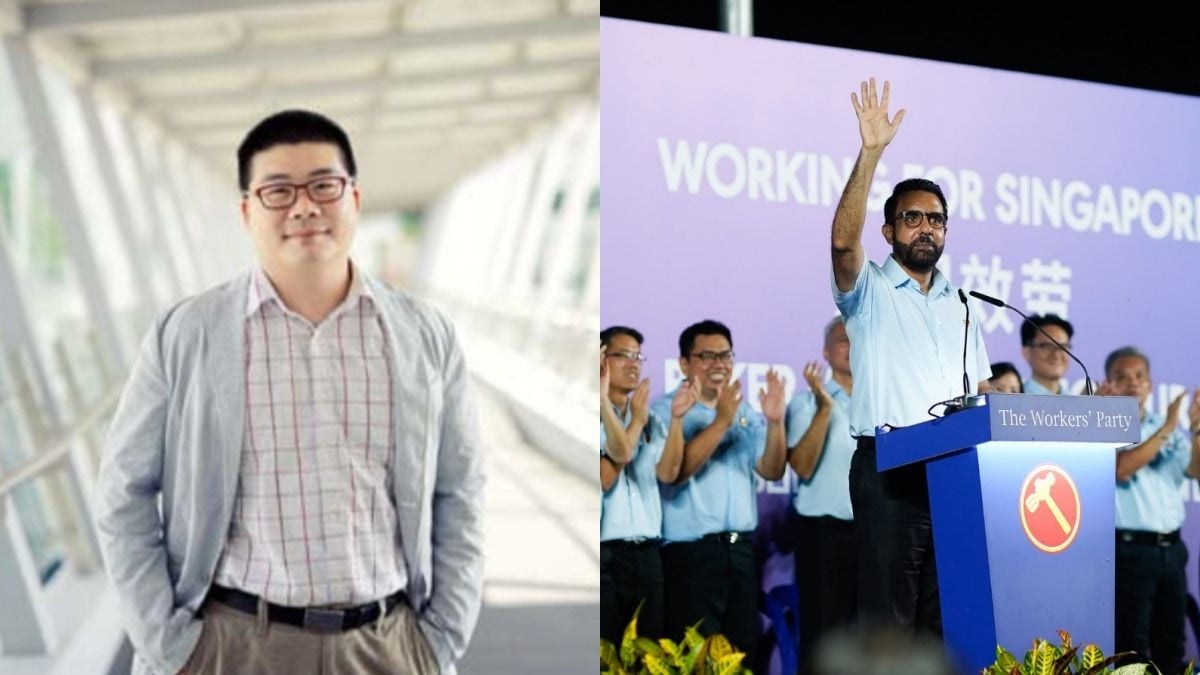
PSP also echoed comments by Workers’ Party secretary-general and Aljunied GRC MP Pritam Singh, saying he had made a constructive suggestion in Parliament for differentiated retrenchment guidelines for larger companies.
“The price of flexibility for businesses is often paid by workers,” PSP said, adding that Singapore should do more to safeguard workers’ interests amid uncertain economic conditions.
Pritam Singh calls for stricter retrenchment rules for larger firms; Dr Koh defends current framework
During the parliamentary sitting on 4 February, Singh asked the Ministry of Manpower (MOM) to provide data, for each year from 2020 to 2025, on how many companies with more than 25 employees paid retrenchment benefits above and below prevailing tripartite guidelines.
In response, Dr Koh said about nine in 10 eligible employees received retrenchment benefits over that period, with around eight in 10 receiving at least two weeks’ salary per year of service.
In supplementary questions, Singh referred to a “raft of reports” in late 2025.
He cited a case where a unionised company failed to notify the ministry in advance of a retrenchment exercise, leaving workers unprepared.
He also highlighted reports of another company including clauses in severance agreements that discouraged retrenched employees from approaching unions, statutory bodies, or government agencies.
Singh was referring to Agoda’s retrenchment exercise in September 2025, for which the company later apologised and acknowledged that such clauses were inappropriate.
He asked whether the Government would mandate that all retrenchments be reported before they are carried out, regardless of company size.
He also questioned whether firms that include punitive or unreasonable clauses in retrenchment agreements should face stronger penalties, including the possible revocation of work pass privileges.
MOM defends scale-based reporting approach
Responding, Dr Koh said there was “no real right or wrong answer” on whether retrenchment notification requirements should be tied to company size.
He explained that current regulations require companies to notify MOM when retrenching 10 or more workers, regardless of the firm’s overall size. This, he said, allows the ministry to intervene early and provide support to workers affected by significant retrenchment exercises.
Requiring notification for every retrenchment, including cases involving a single worker, would impose excessive administrative burdens on companies, Dr Koh added.
Proposal to differentiate benefits by company size
Singh also pressed the Government on whether retrenchment benefits should be differentiated by company size.
He noted that the recently enacted Workplace Fairness Act adopts a differentiated framework based on whether firms employ more than 25 workers. Larger companies are deemed to have greater resources to comply, while smaller firms are exempt from certain requirements, though they are still expected to uphold the spirit of the law.
Singh asked whether a similar approach could be applied to retrenchment benefits, requiring companies with more than 25 employees to provide higher payouts than smaller firms.
Government rejects mandatory or tiered benefits
Dr Koh rejected the idea of mandating retrenchment benefits or legislating minimum payout levels, regardless of company size.
He said tripartite partners had extensively deliberated on whether retrenchment benefits should be made mandatory and whether minimum amounts should be set in law.
“We concluded that a balanced approach to protect workers while at the same time providing business flexibility would achieve better outcomes for both workers and businesses,” Dr Koh said.
He argued that legally mandating retrenchment benefits could exacerbate financial strain for companies already facing difficulties, potentially leading to further job losses.
Dr Koh also said mandatory minimum payouts could discourage employers from offering long-term or permanent contracts. Setting a legal minimum, he warned, could result in that amount becoming the default norm, even for companies capable of paying more.