Student-led survey finds 1 in 3 FDW employers do not regularly provide weekly rest days
A student-led survey of FDW employers in Singapore found significant gaps between awareness of rest day entitlements and actual practice, despite broad support for FDW well-being.
- A survey of 105 FDW employers in Singapore found one in three do not regularly provide weekly rest days.
- The findings were released by student-led initiative Maid of Honour, launched by NTU undergraduates.
- Despite positive attitudes towards FDW well-being, gaps persist between awareness and practice.

SINGAPORE: A survey of 105 current foreign domestic worker (FDW) employers in Singapore has found that one in three employers do not regularly provide their FDWs with a weekly rest day.
The survey also revealed that around one in two FDWs worked more than nine hours a day, raising concerns about working conditions and work-life balance in live-in domestic employment.
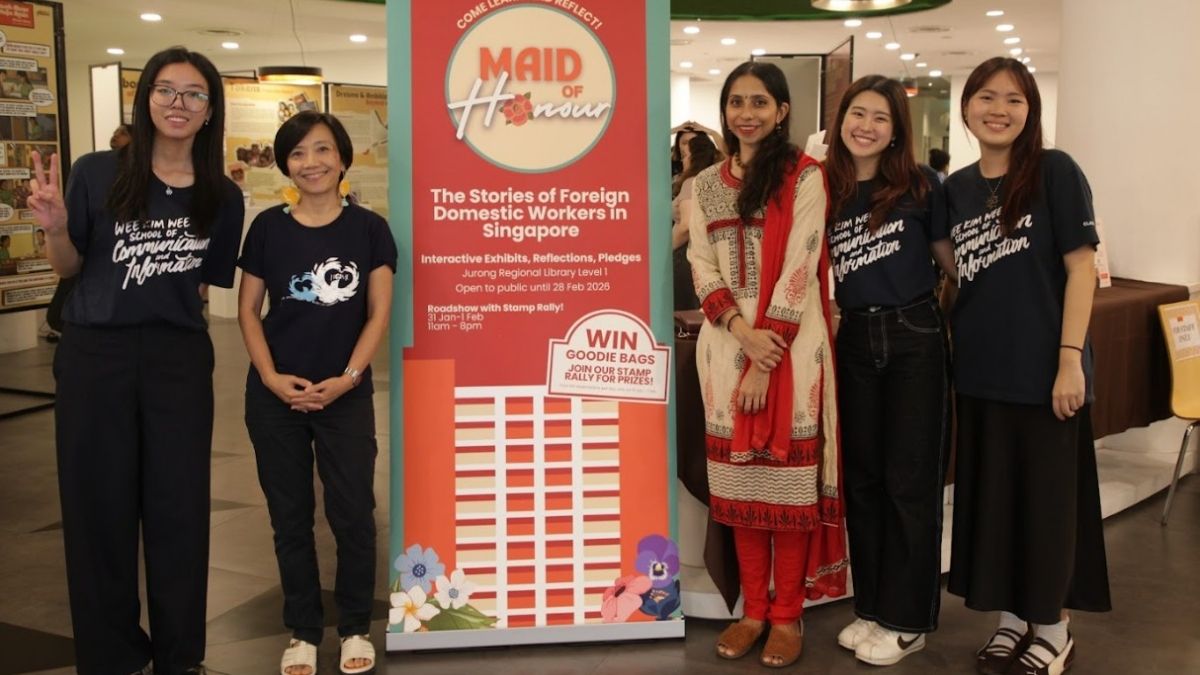
The findings were released by Maid of Honour, a student-led initiative launched by four final-year undergraduates from Nanyang Technological University (NTU).
Student initiative focuses on fair employment practices
Maid of Honour aims to promote fair employment practices and improve the well-being of FDWs in Singapore through public awareness and dialogue.
The initiative complements national efforts by the Ministry of Manpower (MOM), which emphasise that FDWs are entitled to one rest day per week and at least one mandatory rest day per month.
Organisers said the project was designed to encourage reflection on everyday employer practices rather than focus solely on policy.
Positive attitudes not always reflected in practice
Despite the survey findings, employers surveyed largely acknowledged the importance of FDW well-being.
According to the results, 81.9 per cent of respondents agreed that weekly rest days are important for the mental and physical health of FDWs.
In addition, 76 per cent agreed that FDWs should have privacy for sleep and personal time.
However, these views were not consistently reflected in practice, pointing to gaps between awareness of MOM guidelines and daily household behaviour.
Advocates stress dignity and long-term reliance on FDWs
Stephanie Chok, Executive Director of the Humanitarian Organisation for Migration Economics (HOME), said the issue must be understood within a broader social context.
“There are more than 300,000 live-in migrant domestic workers in Singapore, providing essential yet often undervalued caregiving and domestic labour in our homes,” she said.
As Singapore’s population ages, she added, reliance on migrant domestic workers will continue to grow.
“It is therefore critical that migrant domestic workers are treated fairly and with dignity, and accorded the same basic rights and protections as other workers,” Ms Chok said.
Public roadshow brings findings to the community
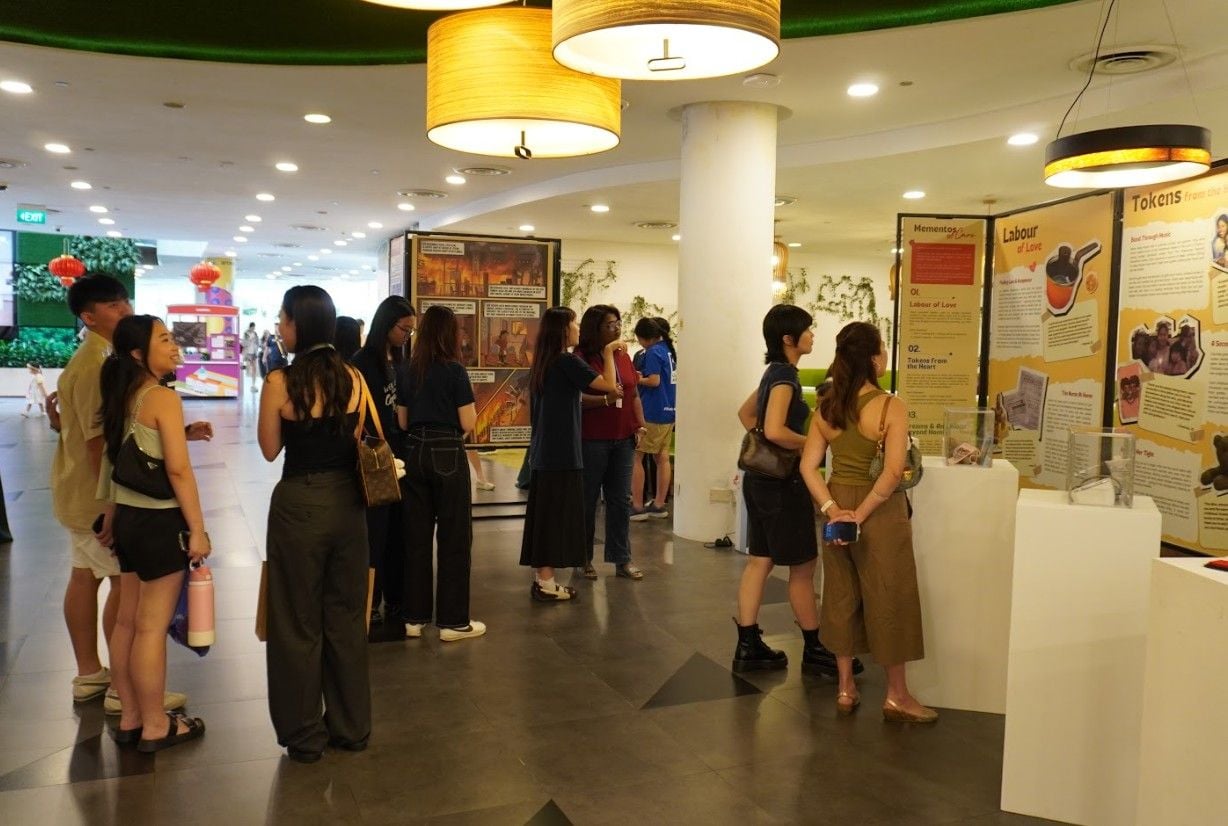
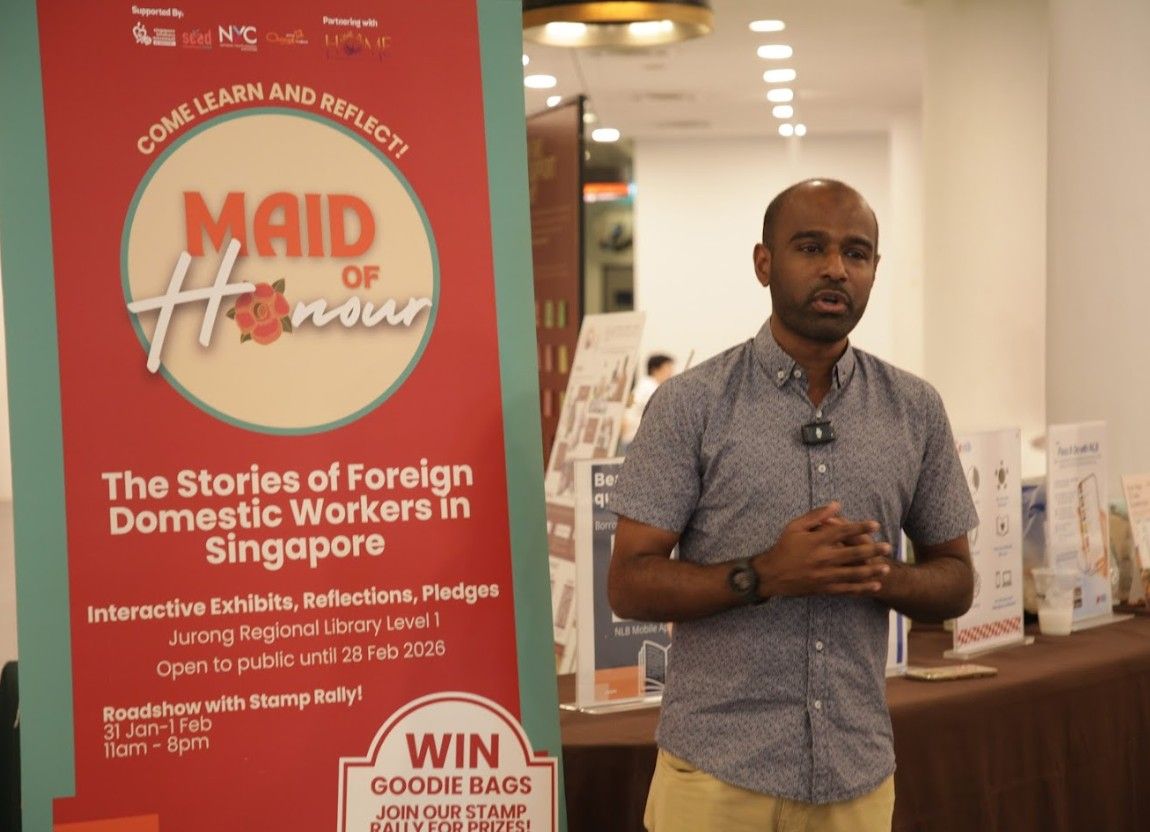
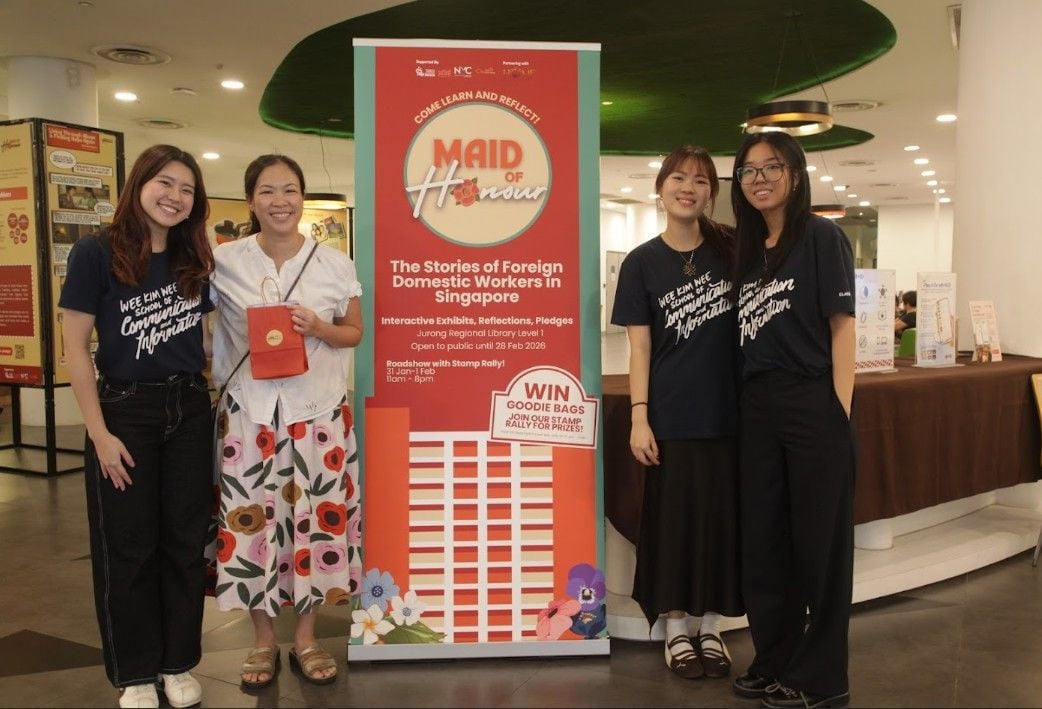
In partnership with HOME, Maid of Honour launched a public roadshow at Jurong Regional Library from 31 January 2026 to 1 February 2026.
The official opening address was delivered at 3 p.m. on 31 January by Dr Hamid Razak, Member of Parliament for West Coast–Jurong West GRC.
The exhibition will remain open to the public until 28 February 2026, allowing visitors to engage with research findings and personal stories.
MPs highlight human stories behind statistics
In his speech, Dr Hamid noted that Singapore has about 308,000 foreign domestic workers, meaning one in five households depends on their labour to support daily life.
He highlighted that studies, including those conducted by students and groups involved in the exhibition, show that one in nine employers do not provide the mandatory rest day.
Dr Hamid stressed that behind every statistic are real human stories that should prompt reflection beyond regulatory compliance.
He said dignity and care are daily personal choices that cannot be legislated, but can be cultivated through conversations that shift social norms.
He extended this reflection to low-wage and migrant workers more broadly, urging society to consider its consumer choices and engage in difficult but necessary discussions.
Support from public figures and community leaders
Several public figures attended the event, includingMs He Ting Ru, The Workers' Party MP for Sengkang GRC, MP Mr Xie Yao Quan, and Dr Stephanie Chok.
Describing it as a thoughtful and intentional project by final-year NTU students, Ms He said it highlights the many women who leave their homes and families to keep households functioning.
She added that she hopes the conversations sparked by the initiative will continue beyond the exhibition and ripple through communities.
View this post on Instagram
Building respect through awareness and dialogue
Maid of Honour was initiated by four final-year communication students from NTU’s Wee Kim Wee School of Communication and Information.
The initiative is supported by the Singapore Kindness Movement and the National Youth Council’s Young ChangeMakers programme.
Its stated aim is to improve respect and well-being for FDWs by raising awareness of fair employment practices and promoting respectful employer–FDW relationships.
Organisers said the exhibition and survey findings are intended to encourage incremental but meaningful change within households.