Singapore will not turn schools into ‘garrisons’ after three youths detained over planned attacks: Shanmugam
Singapore will not turn schools into heavily fortified compounds following the detention of three youths under the Internal Security Act, Senior Minister K Shanmugam said, stressing the need to balance security with open campuses and community vigilance.
- Three youths detained under the Internal Security Act had planned attacks in Singapore, including two plans targeting schools.
- Authorities are strengthening vigilance, education and emergency preparedness while rejecting blanket school security measures.
- Leaders urged early reporting of radicalisation and warned against stigmatising Singapore’s Malay-Muslim community.

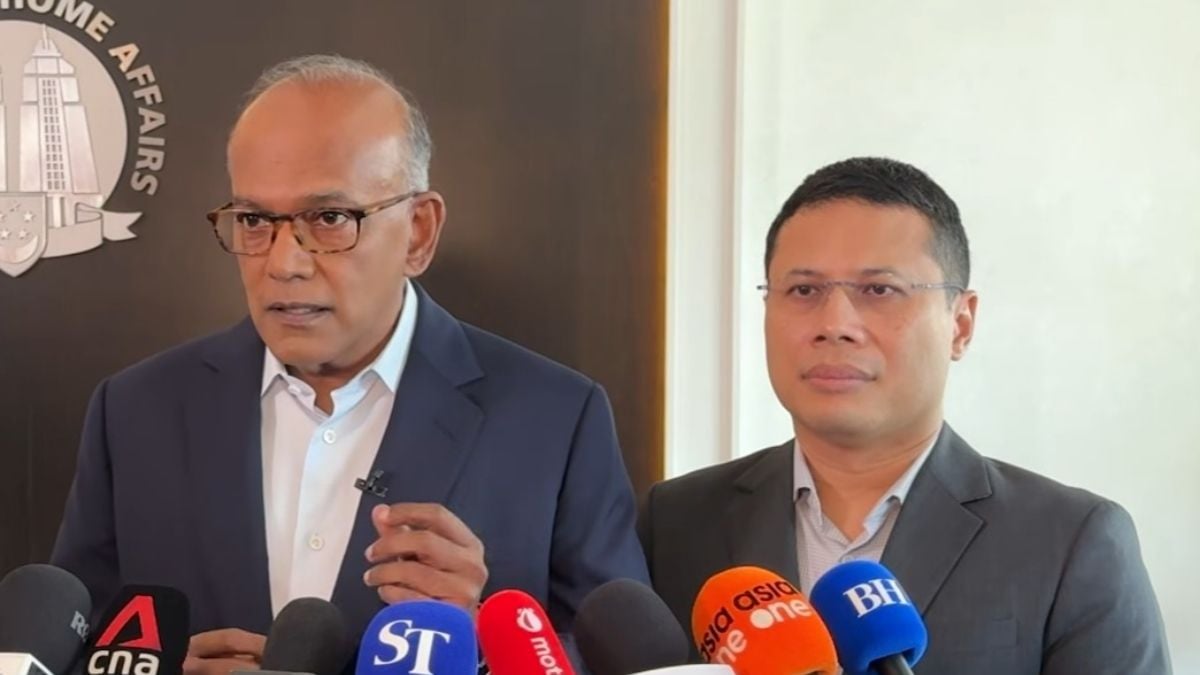
Singapore will not turn schools into heavily fortified compounds following the detention of three youths under the Internal Security Act (ISA), Senior Minister K Shanmugam said on 27 July 2026.
The three cases involved different forms of radicalisation, but authorities said all three youths had planned attacks in Singapore.
One of the youths, a 15-year-old Secondary Four student, had planned a mass-casualty attack in support of ISIS, according to K Shanmugam, who is also coordinating minister for national security and home affairs minister.
According to the Internal Security Department (ISD), the boy had consumed extremist material, researched homemade explosives, formed online chat groups and attempted to recruit others, the Senior Minister said.
The second case involved 19-year-old Tan Jun Jie, who had been exposed to extremist content from foreign preachers over several years.
K Shanmugam said Tan began consuming such material four years ago and had read pro-ISIS and other radical content.
By the start of 2026, Tan considered himself a member of ISIS, according to the Senior Minister.
He had developed two attack plans, one targeting Singapore Armed Forces officers at Sembawang Air Base and another targeting LGBTQ students at his school.
He had also attempted cyberattacks against websites belonging to Muslim organisations that he considered deviant, K Shanmugam said.
The third case involved a 14-year-old Secondary Two student who was radicalised through what authorities described as Composite Violent Extremism (CoVE).
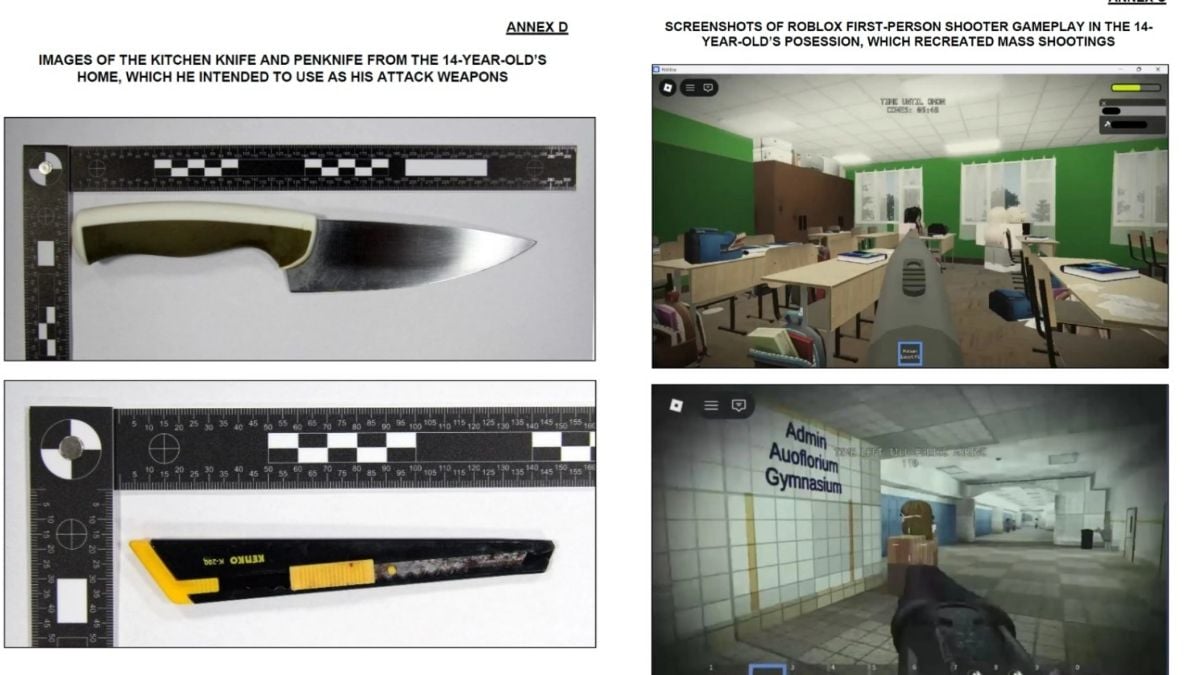
The boy was exposed to violent content through online first-person shooter games on Roblox and other material consumed online.
He planned a mass-casualty stabbing attack at his secondary school using a knife from home, K Shanmugam said.
The boy had written a 21-page manifesto setting out his planned attack, including his choice of weapons and targets.
The manifesto identified non-Muslim teachers and students at his school as intended targets, according to the Senior Minister.
He had also planned to livestream the attack, pledge allegiance to ISIS and then take his own life.
K Shanmugam said the 14-year-old was arrested just weeks before the June school holidays, when he had planned to carry out the attack.
He said the boy had come close to executing his plans.
“It is worrying, but every case is worrying,” K Shanmugam said, adding that the authorities had to succeed in preventing attacks every time, while a would-be attacker only needed to succeed once.
The MHA had previously described the intervention as a “close shave” after someone from the boy’s school noticed signs of radicalisation and alerted the authorities.
K Shanmugam said the case demonstrated the importance of early intervention, particularly as young people could become radicalised more quickly.
Since 2015, 23 people aged 20 or below have been dealt with by the ISD, he said.
He pointed to similar developments overseas, including the case of a 13-year-old boy charged in Australia last month over an alleged plan for a mass attack at a primary school.
He also referred to a school shooting in the Philippines involving two young people aged 14 and 15, in which three students were killed.
K Shanmugam said Singapore had strict laws against guns and explosives, which were effectively enforced, but noted that knives were simple and easy to obtain.
Security balanced with open schools
The recent cases have raised questions about whether schools should introduce stronger physical security measures.
K Shanmugam rejected the idea of turning schools into heavily fortified environments, saying schools were intended to remain open spaces.
“Schools are open spaces,” he said. “You can't turn every school into a garrison or a cantonment. Then it won't feel like a school.”
He said Singapore needed to balance security with free movement so people could feel comfortable and confident without facing excessive restrictions.
The same principle, he said, applied to public buildings more broadly.
“You can't turn Singapore into a garrison. You can't turn schools into a garrison. You can't turn public buildings into garrisons,” he said.
K Shanmugam said physical security could only go so far, with the ISD, Police and the wider public all having roles in identifying concerning behaviour.
He said people also needed to be trained to remain alert and understand security risks.
Education Minister Desmond Lee said it was understandable that people might instinctively call for tighter physical controls after incidents involving planned attacks.
However, he said perimeter fencing, universal checks, bag inspections and metal detectors could not be the main approach.
Schools already have multiple layers of vigilance, training and contingency planning, he said.
These include closed-circuit television cameras, trained security staff and the ability to conduct selective bag checks and other checks where necessary.
Security arrangements also apply to institutes of higher learning (IHLs), some of which operate open campuses where people can enter and leave freely.
“But schools are places where people learn. They spark the joy of learning. There are places where people must feel comfortable learning,” Mr Lee said.
He said the objective was to strike the right balance by increasing awareness of warning signs and strengthening a wider community of vigilance.
Education, prevention and emergency response
MOE said its response to youth radicalisation would continue to focus on education, prevention and emergency preparedness.
Character and Citizenship Education (CCE) already includes content intended to help students identify and reject harmful online material, including extremist ideologies.
The ministry said it would examine how those efforts could be strengthened further.
On prevention, MOE works with ISD on counter-radicalisation outreach activities, workshops and exercises involving school principals, teachers, school counsellors and student welfare officers.
The programmes are intended to help school personnel recognise warning signs and respond quickly.
Peer Support Leaders also play a role in looking out for fellow students.
Students are encouraged to approach a trusted adult, teacher or school leader if they are concerned about a friend or classmate.
Mr Lee said the reporting of the 14-year-old's case by someone in the school demonstrated the value of these efforts.
He said educators, counsellors, peer support leaders and students needed to remain alert to signs that someone might be falling under the influence of extremist ideologies.
MOE also said schools block harmful content on students' Personal Learning Devices.
Authorities separately block access to terrorist websites, while theMHA and Ministry of Digital Development and Information (MDDI) work on broader measures to address harmful online content.
MOE said it would continue working with MHA, community partners and parents to identify vulnerable young people and provide support.
The ministry also said it would support the education of the three detained youths while they were in detention.
It said it would work with relevant agencies to help them recover and move forward positively and purposefully.
Schools and IHLs also conduct workshops, drills and exercises to prepare for potential threats originating inside or outside educational settings.
MOE said emergency response arrangements would continue to be enhanced as threats evolve.
Early reporting urged
K Shanmugam said authorities, families and communities all had a role in responding to online radicalisation.
MHA works with MDDI and other agencies to block extremist websites and harmful content, but he said it was impossible to block everything.
Families and friends, he said, were often best placed to identify possible radicalisation among people close to them.
In all three cases, the youths had shared extremist views with people around them, according to K Shanmugam.
One had added family members and friends to chat groups where pro-ISIS content was distributed.
Another had shared ISIS videos with friends and schoolmates.
K Shanmugam urged members of the public and parents to remain vigilant and report harmful extremist content or signs of radicalisation at an early stage.
He said early intervention could allow authorities to help individuals before detention became necessary.
In some cases, he said, counselling could be arranged without arrest or detention.
He warned that the time taken for a person to become radicalised and decide to commit violence was becoming shorter.
Online content and social media concerns
The latest cases have also renewed questions about the role of social media, online gaming and recommendation algorithms in youth radicalisation.
The 14-year-old had “avidly consumed” violent gore and mass-shooting content encountered through social media recommendations and online channels linked to the True Crime Community.
K Shanmugam said another youth had been radicalised through Roblox and violent gaming content before consuming other material.
Asked whether banning social media would address the problem, he said several countries had pursued different approaches with varying results.
Australia has imposed social media restrictions, while the United Kingdom has discussed such measures and France's parliament has examined the issue, he said.
K Shanmugam said MDDI had been speaking publicly about protecting young people from extremist content and the broader harmful effects of social media on their psychological and brain development.
He said the ministry was considering how best to address the issue, including whether a ban or another approach would be most effective.
Harmful extremist content is blocked when authorities identify it, but K Shanmugam said it was not possible to prevent access to everything online.
Community cohesion after detentions
K Shanmugam also addressed concerns about the potential impact of the cases on Singapore's Malay-Muslim community.
He urged Singaporeans not to view the wider community with suspicion because of the actions of a small number of radicalised individuals.
He referred to the period since the 9/11 attacks in 2001, saying some countries had seen Muslim populations subjected to fear and suspicion.
K Shanmugam questioned whether such approaches had made those societies safer or better.
Singapore's approach, he said, had been to emphasise that those seeking to cause harm represented “a very small extremist minority”.
“The majority are law-abiding Singaporeans. They are the same as us, and you don't draw artificial lines,” he said.
He warned that treating people differently based on race, religion or skin colour could create further divisions.
K Shanmugam said Singapore had spent years strengthening ties between communities and ensuring Malay-Muslim Singaporeans felt part of society in every aspect of life.
He called on Singaporeans of all races and religions to recognise that they belonged to one community.
“If we go down that route of looking at somebody else with suspicion based on skin colour or religion or race, we are asking for trouble,” he said.
He said Singapore was a small country whose security and stability depended on people living together as one society.
K Shanmugam urged Singaporeans not to allow a small number of radicalised individuals to “poison the whole atmosphere”.
He also called on the wider community to ensure that Malay-Muslim Singaporeans continued to feel included and fully part of Singapore's broader social fabric.