Jamus Lim renews call for smaller class sizes ahead of Budget 2026
Jamus Lim renewed his push for smaller class sizes, arguing AI increases the need for human teacher attention. MOE says it tailors class sizes to student needs. Supportive commenters, including parents and educators, cited stronger engagement and more responsive teaching.

- Jamus Lim renewed the Workers’ Party’s call for smaller class sizes, arguing AI cannot replace human teachers.
- Education ministers Desmond Lee and Chan Chun Sing emphasised resource constraints and targeted support.
- The debate centres on whether reducing class sizes or improving teacher quality and deployment better serves students.

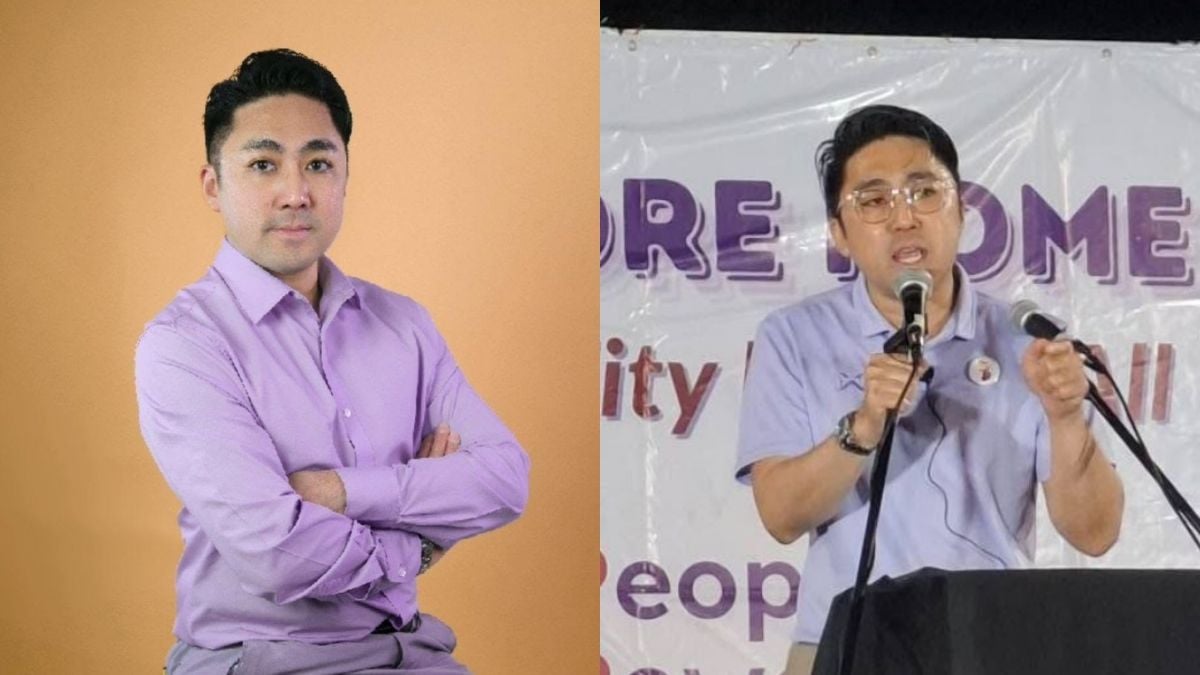
Associate Professor Jamus Lim has renewed his call for smaller class sizes, arguing that advances in artificial intelligence (AI) have heightened, rather than reduced, the need for human teachers in classrooms.
In a Facebook post on 14 February 2026, the Sengkang GRC MP said appropriately sized classes create stronger learning dynamics, not only between teacher and student but also among students themselves.
“As an educator… I can attest to how much more conducive classroom dynamics are for learning… when they are right-sized,” he wrote, drawing on experience teaching both large lectures and smaller groups.
Assoc Prof Lim, an associate professor of economics at ESSEC Business School, said AI has narrowed the advantage of simply memorising information and replicating known answers quickly.
He argued this makes it more important for students, especially in the early years, to receive “customised, human attention” that helps them build understanding, curiosity and confidence.
While AI tools may offer personalised learning, he said they should be complementary rather than substitutive.
He added that meaningful instruction depends on sufficient teacher attention, which he said requires smaller classes.
Video revisits “optimal scale” and critique of “industrial model”
A video accompanying the post featured Assoc Prof Lim referring to the economic concept of “optimal scale” and criticising what he described as an “industrial model” of placing 30 or 40 students in a classroom.
He said Singapore’s classroom design has historically prioritised efficiency over empathy, and argued that the country should move towards more “intimate” learning settings.
Assoc Prof Lim said this position has not always been popular, but described it as important and backed by evidence.
He framed the Workers’ Party’s advocacy as sustained over multiple election cycles, including as a key plank in its 2025 manifesto.
Former minister raises feasibility concerns
The video also included a clip of former education minister Chan Chun Sing, who questioned whether smaller classes are feasible given finite teaching manpower.
“With a finite teaching force and a certain number of students… do we mean we should employ more teachers, perhaps doubling our teaching force to halve all class sizes?” he asked.
Chan also questioned whether rapid expansion could be achieved without affecting teacher quality.
Assoc Prof Lim responded by rejecting what he called a false choice between prioritising teacher quality and reducing class sizes.
He offered an analogy that even a world-class chef faces limits when asked to serve 100 people rather than 10, arguing that scale affects outcomes even with strong talent.
Desmond Lee outlines MOE’s differentiated approach
The class size issue also featured in Parliament on 3 February 2026, when Assoc Prof Lim posed a supplementary question to Education Minister Desmond Lee.
In the video and related background, Minister Lee said MOE is guided by students’ learning needs, deploying smaller class sizes and additional teaching resources for those requiring more support.
He cited examples including Primary 1 and Primary 2 classes kept at around 30 students, and smaller TRANSIT classes for pupils with social and behavioural challenges.
At the secondary level, he said Full Subject-Based Banding results in subject class sizes ranging from 20 to 40 students.
Minister Lee also highlighted targeted small-group interventions such as the Learning Support Programme and dyslexia remediation classes.
He said MOE support extends beyond class size, pointing to growth in school counsellors and special educational needs officers from about 800 to 1,300 over the past decade.
On educational technology, he said tools such as AI features on the Student Learning Space can provide scaffolding and support in and outside class.
However, he emphasised that technology cannot replace teachers.
“There is no substitute for human-based teaching, for the human touch,” he said.
Lim suggests teaching aides as an interim step
Acknowledging resource constraints, Assoc Prof Lim has argued that interim measures could improve adult-to-student ratios even before broad nationwide reductions in class size.
He suggested increasing teaching aides in classrooms, and cited Allied Educators in Teaching and Learning as roles that directly support instruction.
He questioned MOE’s decision to scale back such roles, while noting the ministry has expanded specialised support such as counsellors and special needs officers.
Supportive comments highlight teacher bandwidth and student engagement
The Facebook post drew supportive comments from educators and parents who said smaller classes can improve student engagement and allow teaching to be more responsive to diverse learning needs.
One parent cited her child’s experience in the Learning Support Programme, saying the smaller group setting helped her child make progress and gain confidence.
Another commenter who identified as a performing arts educator, said teaching large classes often shifts time away from instruction towards discipline and crowd management.
Other supportive comments focused on the importance of teacher quality while still endorsing Lim’s broader concern about classroom conditions.
One wrote that quality teachers do more than deliver syllabus content, and argued that meaningful learning depends on teachers’ ability to identify gaps early and build confidence.
Another who identified as an educator, described the message as well explained and supported continuous improvement in students’ interests.
Several commenters also argued that education reform should reduce reliance on private tuition and give teachers more bandwidth to provide feedback and build relationships with students.
Looking ahead to Budget 2026, Assoc Prof Lim said he hopes for a breakthrough towards smaller class sizes and signalled that the Workers’ Party would support any shift that improves student outcomes.
He added that, in his view, credit is secondary to ensuring policies help children not merely cope within the system, but flourish.