Chinese Embassy in Singapore urges citizens to avoid gambling ahead of Lunar New Year
The Chinese Embassy in Singapore has warned citizens to avoid gambling after a Chinese national allegedly died following a casino visit. The embassy stressed that cross-border gambling is criminalised under Chinese law, even where casinos are legal.

- Chinese Embassy in Singapore warned citizens to refrain from gambling, citing a recent death linked to a casino visit.
- It stressed that cross-border gambling is criminalised under Chinese law, even where casinos operate legally.
- Authorities urged citizens to report suspected cross-border gambling activities through an official platform.

The Chinese Embassy in Singapore has urged Chinese nationals to stay away from gambling, citing a recent fatal incident involving a Chinese citizen and reiterating that cross-border gambling is a criminal offence under Chinese law.
In a notice issued on Saturday via its official WeChat account, the embassy said it was assisting the family of a Chinese national who allegedly gambled at Marina Bay Sands Casino before later jumping from a building. The individual subsequently died.
The embassy did not disclose further details about the case but said it was handling follow-up arrangements with the deceased’s family.
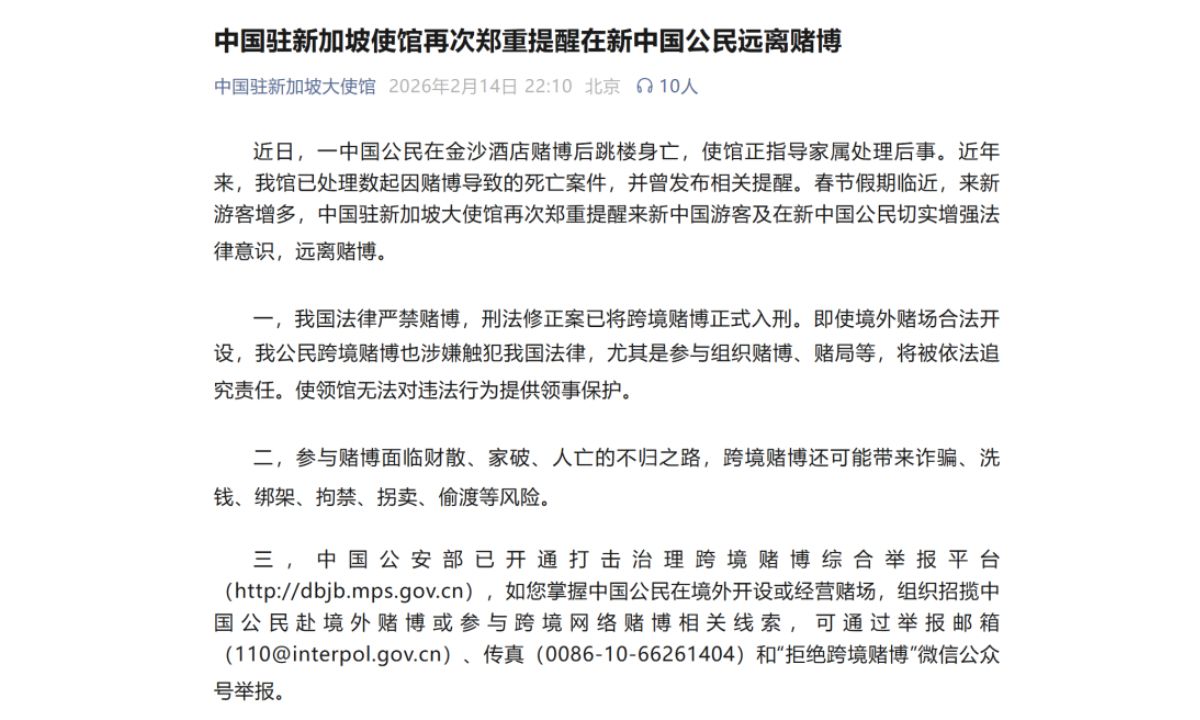
According to the notice, the embassy has dealt with several gambling-related deaths in recent years and has previously issued reminders to Chinese citizens about the risks associated with gambling overseas.
With the Chinese New Year holiday approaching and more tourists expected to travel to Singapore, the embassy reiterated the importance of legal awareness. It cautioned Chinese nationals to refrain from gambling activities while abroad.
The notice emphasised that gambling is strictly prohibited under Chinese law. It highlighted that amendments to China’s Criminal Law explicitly criminalise cross-border gambling.
The embassy said that even in countries where casinos operate legally, Chinese citizens who participate in gambling abroad may still be in violation of Chinese law. It added that organising or hosting gambling activities could result in prosecution.
Embassies and consulates, the notice stated, cannot provide protection for individuals engaged in illegal acts.
The embassy also warned of the potential personal and financial consequences of gambling, including financial ruin, family breakdown and even loss of life.
It further noted that cross-border gambling may expose individuals to risks such as fraud, money laundering, kidnapping, detention, human trafficking and involvement in illegal migration.
In its statement, the embassy said the Chinese Ministry of Public Security has established a comprehensive reporting platform to combat cross-border gambling.
Citizens who have information about Chinese nationals suspected of operating casinos abroad, organising gambling activities, or engaging in online cross-border gambling were encouraged to report such activities through the official platform.
The embassy’s latest warning underscores Beijing’s continued crackdown on cross-border gambling, which authorities have described in previous public statements as a threat to financial stability and social order.
Singapore permits regulated casino operations at integrated resorts such as Marina Bay Sands. However, China maintains a broad prohibition on gambling for its citizens, except in limited jurisdictions such as Macau.