Government reveals top five per cent of households hold one third of Singapore wealth
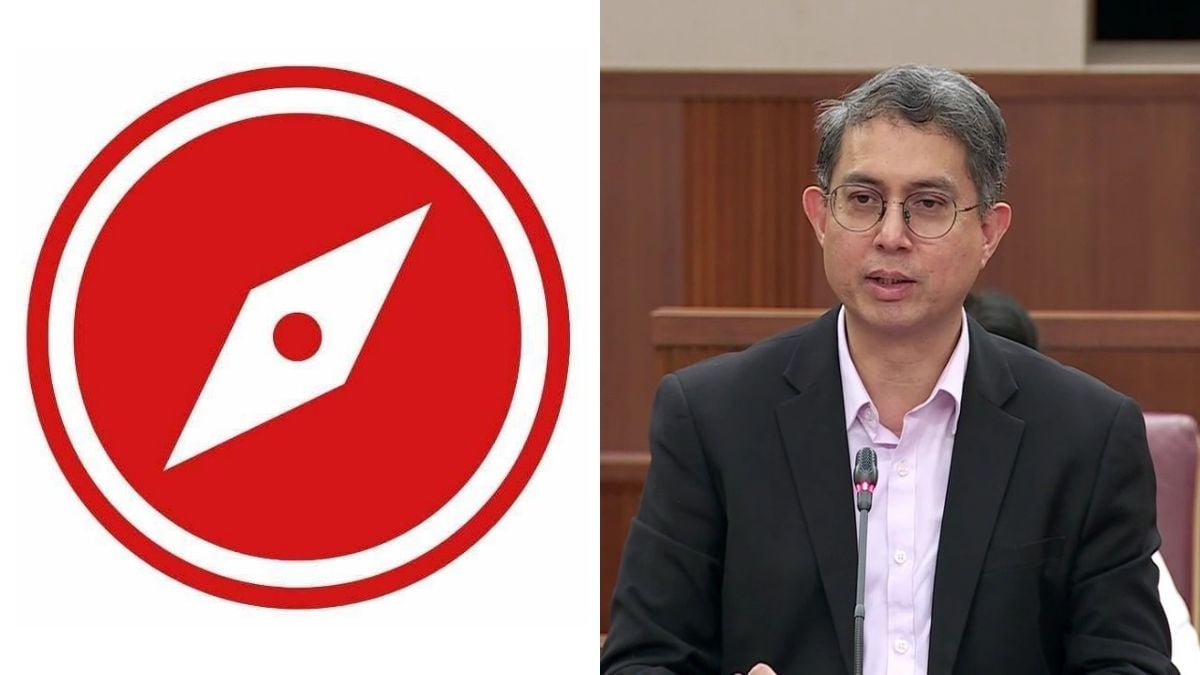
Acting Transport Minister Jeffrey Siow informed Parliament that the top 5 per cent of households hold 33 per cent of total wealth, as the government publishes its first wealth Gini coefficient.

- The top 1 per cent and 5 per cent of households hold 14 per cent and 33 per cent of total wealth respectively.
- Singapore is now home to 55 billionaires with a combined wealth of US$258.8 billion, a 66.4 per cent increase from 2024.
- The government has published its first wealth Gini coefficient of 0.55 but advises caution due to under-reporting at the distribution extremes.

The top 1 per cent of households in Singapore hold approximately 14 per cent of the total household wealth in the Republic. This figure was disclosed by Acting Transport Minister Jeffrey Siow during a parliamentary session on 25 February 2026.
Senior Minister of State for Finance Siow further noted that the top 5 per cent of households account for 33 per cent of total wealth. These disclosures followed a Ministry of Finance (MOF) paper released on 9 February 2024.
The MOF study represents the first time the government has published specific measures of wealth inequality. It found that the Gini coefficient for wealth is 0.55. This is notably higher than the 0.38 recorded for income after taxes.
In Parliament, Siow advised that wealth concentration data should be interpreted with caution. He cited limitations in sample sizes and potential under-reporting in survey responses at both ends of the wealth distribution spectrum.
The minister told the House that Singapore’s wealth concentration levels are broadly comparable to advanced economies. Wealth inequality is higher than income inequality in all advanced economies as wealth accumulates over the life cycle.
While wealth data is notoriously hard to measure, the Government made its best effort to do so. They combined survey data from the five-yearly Household Expenditure Survey with administrative data such as properties and CPF accounts.
Other data points included Singapore Savings Bonds and securities held in Central Depository (CDP) accounts. However, Siow confirmed there are no plans to seek additional legislative powers to require more granular asset disclosure.
As this was the first compilation of the wealth Gini coefficient, there is no historical series. However, the Government intends to track this measure over time and will consider additional indicators in the next survey due in 2028.
Nominated Member of Parliament (NMP) Kenneth Goh asked how the Government intends to use the statistic. He enquired if there is a threshold for wealth inequality that would warrant certain policy actions.
Siow replied that while the absolute figure provides a relative indication, the Government will look at the trend over time. This helps ensure that wealth inequality in Singapore is moving in the right direction.
The enhanced data and methodology used for both income and wealth inequality will improve understanding of the state of inequality. This will better help the government develop more evidence-based and targeted policies.
Member of Parliament (MP) Yip Hon Weng asked if there would be safeguards to ensure measures do not strain retirees. Some seniors may be asset-rich but have no income, creating cash flow pressures.
Siow replied that the current property tax system is progressive. Investment properties and higher-value properties are taxed more, while home owners with only one property are taxed less and receive property tax rebates.
For asset-rich but income-poor seniors, there are deferral mechanisms and interest-free instalment plans for property tax payments. These measures are designed to ease cash flow pressures for vulnerable individual property owners.
MP Gerald Giam asked if the Government was looking at shifting the tax burden away from work and towards wealth. This was suggested given that wealth inequality was significantly higher than income inequality.
Siow said the Government remains open to a broad approach to taxation. Singapore’s system has so far achieved real income growth and a decline in inequality through its existing progressive frameworks.
As the society ages and moves towards an older population where there is more asset owning, further wealth taxation is a consideration. However, Siow noted this must be done carefully to avoid social perturbation.
This concentration of wealth coincides with a period of rapid accumulation among the ultra-wealthy. The 2025 UBS Billionaire Ambitions report confirms that Singapore is now home to 55 billionaires. This represents an increase from 47 individuals in 2024.
This growth was bolstered by six newcomers and two billionaires who relocated to the city-state. The combined wealth of this billionaire cohort reached US$258.8 billion (S$335 billion) in 2025. This figure represents a 66.4 per cent increase from 2024.
Data from UBS indicates that 37 of these 55 billionaires are self-made individuals. This surge in billionaire wealth underscores the city-state's status as a preferred hub for global wealth management and capital preservation.
Public data highlights that Singapore’s tax regime remains a primary draw for the global elite. The Republic notably imposes no capital gains tax on investments. This allows for the tax-free accumulation of wealth over long periods.
Furthermore, Singapore has no inheritance or estate tax. This policy facilitates the seamless intergenerational transfer of assets. Families can pass down significant holdings without the depletion often seen in jurisdictions with high succession duties.