9,500 mothers paid higher tax after WMCR change, says Indranee Rajah
About 9,500 working mothers paid higher income tax in YA2025 after WMCR shifted to a fixed-dollar basis, said Indranee Rajah, adding that overall marriage and parenthood spending will far exceed any additional revenue.

- Around 9,500 working mothers paid higher income tax in YA2025 after WMCR shifted to a fixed-dollar basis.
- The Government cannot project additional tax revenue over the next decade due to multiple variables.
- Overall marriage and parenthood spending is expected to far exceed any extra revenue from the change.

Around 9,500 working mothers paid higher income tax in the Year of Assessment (YA) 2025 after the Working Mother’s Child Relief (WMCR) moved from a percentage-based to a fixed-dollar structure, Parliament heard on 13 February 2026.
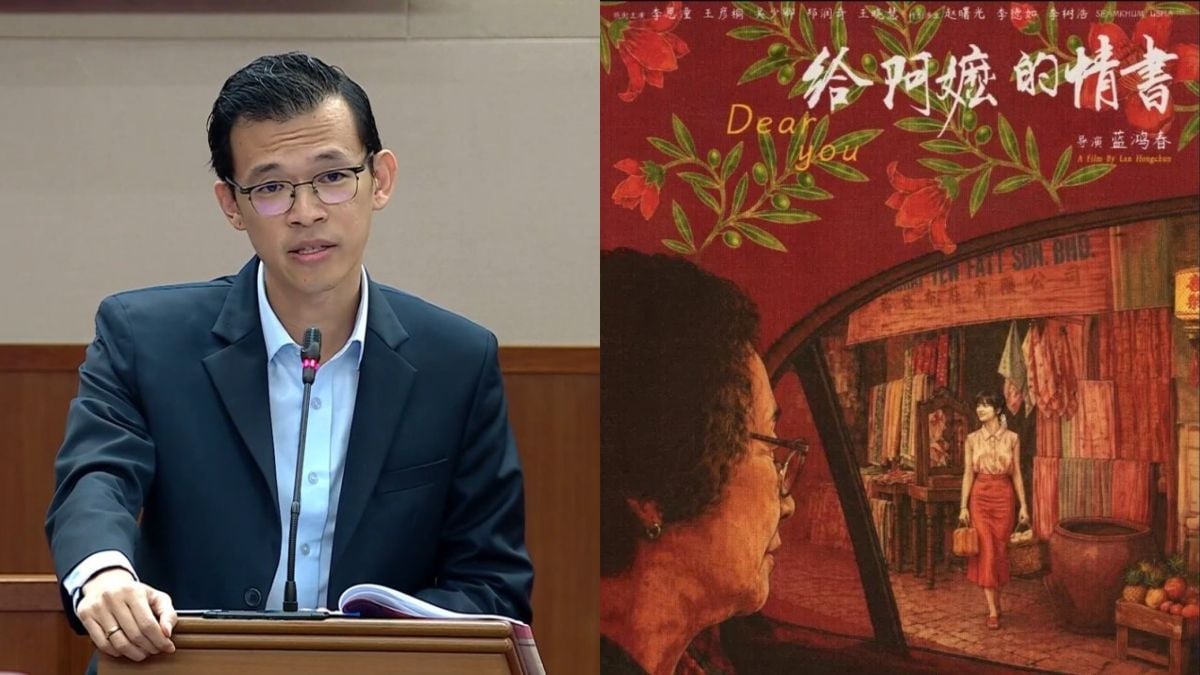
Minister in the Prime Minister’s Office Indranee Rajah disclosed the figure in a written reply to Workers’ Party MP Kenneth Tiong Boon Kiat, answering on behalf of the Prime Minister and Minister for Finance.
Mr Tiong had asked how many working mothers with children born from 2024 paid higher tax following the change, the projected additional revenue over the next decade, and whether this was consistent with the objective of encouraging higher-order births.
Ms Indranee said “about 9,500 working mothers paid higher income tax in YA2025 than they would have under the old WMCR basis”.
She stated that the change to a fixed-dollar relief was intended “to provide equal support for children of the same child order regardless of the mother’s income”, adding that this “improves the progressivity of our support”.
On projected revenue, Ms Indranee said: “We are unable to project the additional tax revenue from the WMCR change over the next 10 years,” citing variables such as mothers’ income, other qualifying reliefs and the number of children they may eventually have.
However, she added that the Government expects “the cost of the marriage and parenthood initiatives to far exceed any additional tax revenue from the WMCR change”.
Spending on such initiatives is projected to reach close to S$7 billion in the 2026 financial year, up from over S$4 billion in the 2020 financial year.
What was said in 2023
The WMCR revision was announced during Budget 2023 on 14 February 2023 by then-Deputy Prime Minister and Minister for Finance Lawrence Wong.
In March 2023, responding to Sengkang GRC MP Louis Chua's parliamentary question, Mr Wong addressed a hypothetical scenario based on YA2022 personal income tax data.
He noted that the revised WMCR applies only from YA2025 and to eligible mothers of Singaporean children born or adopted on or after 1 January 2024.
Nevertheless, the Inland Revenue Authority of Singapore conducted a simulation using YA2022 data “for the purpose of illustrating the impact of the changes on working mothers”.
Mr Wong said: “When we take into account both the WMCR change and the $2,000 increase in the CDA First Step Grant in the child’s first year of birth, about 97% of mothers with newborns in 2021 would be better off or, at least, no worse off that year.”
He also emphasised that the change “should not be seen in isolation” and was part of a broader suite of measures, including enhancements to the Baby Bonus Cash Gift and the Child Development Account.
These grants, he said, are available to all eligible parents, whether tax-paying or not.
Clarifying the comparison
The 2023 figure was derived from a simulation using YA2022 data and applied to “mothers with newborns in 2021”, factoring in both the revised WMCR formula and the enhanced S$2,000 CDA First Step Grant.
By contrast, the 9,500 figure cited in February 2026 refers to the actual number of working mothers in YA2025 who “paid higher income tax… than they would have under the old WMCR basis”.
No updated percentage breakdown was provided in 2026 on how many mothers experienced no change or lower tax in YA2025.
The Government’s earlier statement that “about 97%” would be “better off or, at least, no worse off” was explicitly premised on including the enhanced grant and based on simulated data.
Ms Indranee reiterated in 2026 that, overall, spending on marriage and parenthood initiatives is expected to “far exceed” any additional tax revenue arising from the WMCR revision.
Background on WMCR
Introduced in 2004 for YA2005, the WMCR aims to encourage women to remain in the workforce after giving birth to Singaporean children.
Under the previous structure, relief was calculated as a percentage of earned income, increasing with child order.
From YA2025, the relief is provided as a fixed-dollar amount for each child, regardless of income level.
The Government has said this approach ensures children of the same birth order receive equal tax support and strengthens progressivity.