Graduate transition to permanent roles leads to low GRIT traineeship uptake, says Tan See Leng
Minister for Manpower Dr Tan See Leng noted that the 800-place Graduate Industry Traineeships (GRIT) scheme saw lower-than-expected uptake because graduates are successfully securing full-time employment, with application rates dropping by 90 per cent since the October 2025 launch.
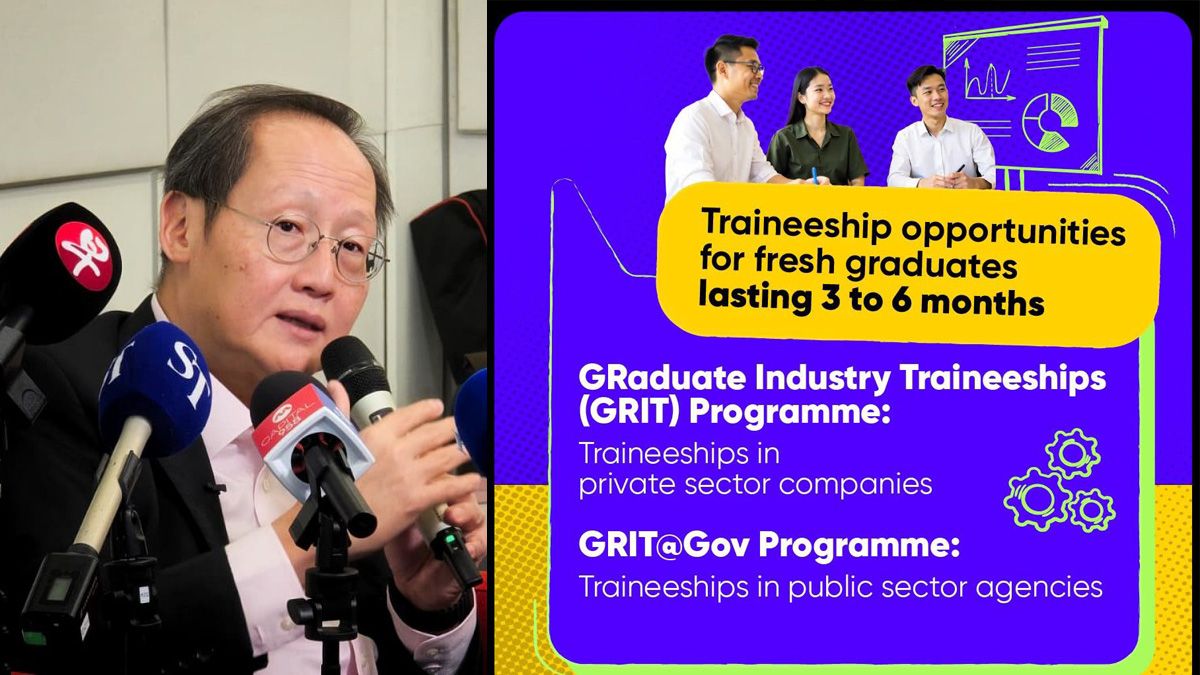
- Only 350 trainees were initially placed out of 800 provisioned spots, a figure that has since grown to nearly 400 as graduates pivot to full-time roles.
- The Ministry justified the sub-50 per cent uptake as a sign of labour market resilience, with a 90 per cent decline in applications from the initial peak.
- The Minister did not provide the requested data on traineeship-to-job conversion rates because the first cohort only commenced their placements in December 2025.

A total of 350 graduates were initially placed in traineeships under the Graduate Industry Traineeships (GRIT) and GRIT@Gov programmes, representing less than half of the 800 places provisioned at launch.
This figure was disclosed in a written reply issued on 25 February 2026 by Minister for Manpower Dr Tan See Leng. The Minister was responding to queries from Workers’ Party MP He Ting Ru, Sengkang GRC, regarding the factors behind the scheme's low uptake and its eventual job placement outcomes.
While the number of filled traineeships has since edged closer to 400, Dr Tan maintained that the primary factor for the low participation rate is the successful transition of graduates into permanent roles.
Applications for the scheme have fallen by approximately 90 per cent since its rollout in October 2025. Feedback from host organisations indicated that many applicants declined traineeship offers specifically because they had already secured full-time employment or other career opportunities in a resilient labour market.
The 350 trainees were distributed roughly equally between the private sector GRIT stream and the public sector GRIT@Gov initiative.
To ensure the quality of these placements, the Ministry of Manpower (MOM) sourced vacancies from growth sectors, including roles in data science, business analytics, and engineering.
About one-third of these vacancies were offered by small and medium enterprises (SMEs), with a corresponding one-third of total trainees placed within these smaller firms.
Addressing the design of the scheme, the Minister clarified that GRIT was intentionally structured to avoid "cannibalising" full-time job openings.
The programme encourages host organisations to convert trainees into permanent employees even before the stint ends.
Specifically, companies that hire a trainee after at least three months of the programme will continue to receive government subsidies for the remainder of the original traineeship duration, ensuring they are not financially disadvantaged by offering early permanent employment.
The Minister did not provide the requested data on the number of trainees who have secured full-time employment with their sponsor companies upon completion.
Dr Tan noted that because the first batch of trainees only commenced their stints in December 2025, there have not been any completed conversions to report as of the current Parliamentary record. The Ministry will continue to track these outcomes as the six-month traineeship cycles conclude later in 2026.
The GRIT and GRIT@Gov initiatives were first announced by Prime Minister Lawrence Wong during his National Day Rally on 17 August 2025.
Developed in consultation with tripartite partners under the Singapore Economic Resilience Taskforce (SERT), the programmes were designed as a pre-emptive "safety net" for graduates from universities, polytechnics, and the Institute of Technical Education (ITE).
Minister Tan formally launched the initiatives on 22 August 2025, during a visit to the OCBC Campus, where he underscored the Government's intent to bolster graduate employability.
The two-pronged strategy comprises the GRIT programme for private sector exposure and GRIT@Gov for placements in 60 public sector agencies.
Trainees receive a monthly allowance between $1,800 and $2,400, with the Government funding 70 per cent of the cost and host organisations—including major players like Grab, Micron, and ST Engineering—covering the remaining 30 per cent.
Despite the provision for 800 places, the Government has consistently emphasised that the scheme is a temporary bridge rather than a long-term employment subsidy.