Singapore will avoid jobless growth amid AI push, says Lawrence Wong
Prime Minister Lawrence Wong says Singapore will harness artificial intelligence to grow the economy without triggering “jobless growth”, pledging coordinated reforms to protect workers, support SMEs and ease cost pressures.
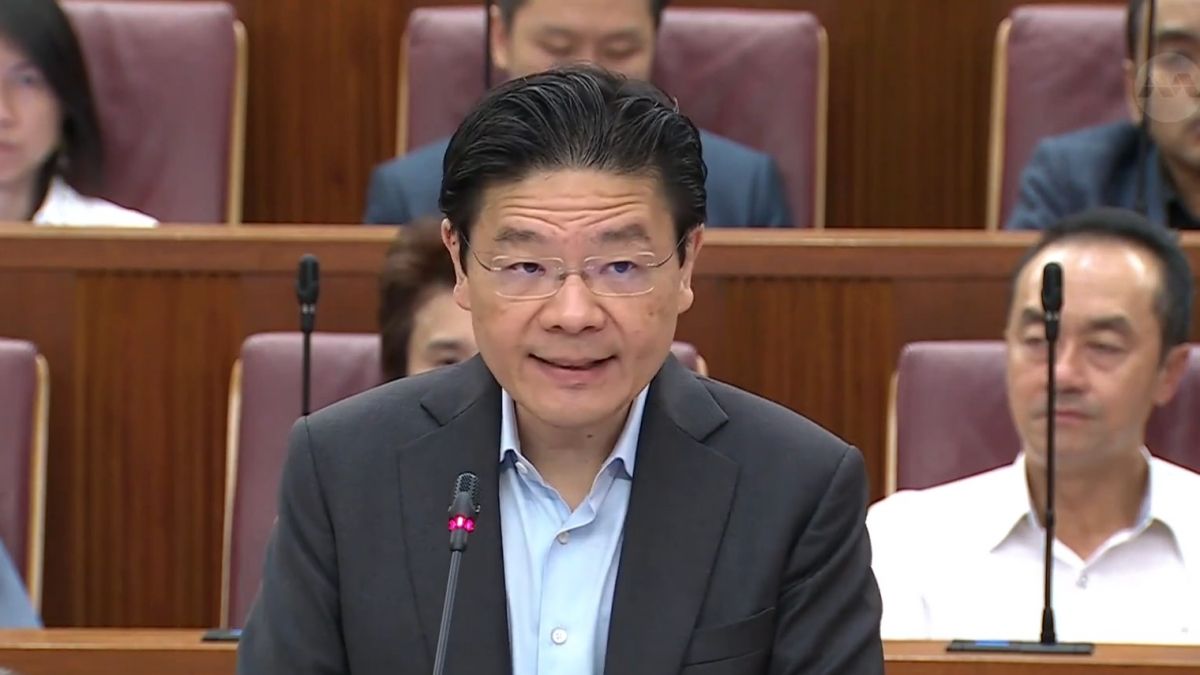
- Singapore will harness AI to grow the economy without causing “jobless growth”.
- A new National AI Council will coordinate sectoral AI adoption and workforce upgrading.
- The government will address cost-of-living pressures, SME challenges and healthcare inflation.

SINGAPORE: Singapore will not experience “jobless growth” as artificial intelligence reshapes the global economy, Prime Minister Lawrence Wong said in parliament on 26 February 2026.
In his round-up speech concluding a three-day debate on Budget 2026, he said the government will harness AI to expand the economy while ensuring that growth produces good jobs and higher wages.
“That’s how we give every Singaporean confidence to progress in the future,” he said.
National AI Council to steer transformation
Earlier this month, in his Budget speech, he announced that he will chair a new National AI Council to drive the country’s artificial intelligence agenda.
The council will oversee the development and execution of national “AI missions”, focusing on advanced manufacturing, connectivity, finance and healthcare.
“Every sector is different and how they use AI and the impact on workers in each sector will vary,” he said, explaining that coordination is needed to align industry transformation with workforce upgrading.
He added that the council would ensure AI “uplifts our workers”, describing this as a central assurance underpinning the government’s strategy.
Labour market resilience and emerging risks
Mr Wong acknowledged concerns raised by Members of Parliament about anxieties among workers and fresh graduates amid the AI revolution.
“These concerns are real and we must and we will take them seriously,” he said.
He noted that historically, major technological waves have displaced some jobs while creating new ones. In Singapore’s experience, AI can augment roles and enable workers to achieve more, even as certain tasks are automated.
The labour market remains resilient for now, he said. The proportion of permanent employees has reached a record high of nearly 91 per cent, with gains across most sectors.
Job vacancies continue to outnumber job seekers, and more than 40 per cent of openings are entry-level professionals, managers, executives and technicians roles.
“So far, the evidence does not point to widespread displacement,” he said, while cautioning that emerging pressures require forward planning.
“We cannot rely only on today’s data, we must prepare for tomorrow,” he added, noting there is no guarantee that future technological shifts will replicate past patterns of net job creation.
AI’s speed and breadth of impact may make this wave different, he said. Risks include companies over-relying on automation while neglecting worker training, and the hollowing out of entry-level roles.
“We are alert to these risks, and we will act early to prevent such outcomes from taking hold in Singapore,” he said, pledging more deliberate and systematic investment in people.
He expressed agreement with labour chief Ng Chee Meng on empowering workers to be AI-ready and strengthening protections for professionals, managers and executives.
The government will work closely with tripartite partners, especially the National Trades Union Congress, to achieve these goals, he added.
SMEs and structural competitiveness
Beyond AI, Mr Wong addressed concerns facing small- and medium-sized enterprises, which play a key role in employing Singaporeans and anchoring economic activity.
Retail and food and beverage segments are under greater pressure, he noted. While corporate income tax rebates have been provided in the short term, long-term support must remain sustainable and avoid distorting market incentives.
He said the government cannot relax the dependency ratio ceiling, as doing so would encourage excessive reliance on foreign manpower and weaken the Singaporean core. Calibrated flexibility may be considered.
“Ultimately, the sustainable path forward is productivity improvement and business transformation,” he said.
Cost of living and household resilience
Turning to cost-of-living concerns, Mr Wong noted that although the economy grew by 5 per cent in 2025, many Singaporeans continue to feel financial pressures.
“The data may show improvement, but lived experience and realities do matter,” he said.
He highlighted that incomes have risen faster than inflation over the past decades across the income distribution. Household spending has increased in dollar terms, but expenditure as a share of income has remained stable or declined.
In particular, the share of income spent on essentials such as food, public transport and education has fallen across all income quintiles, he said.
One exception is healthcare, where households are spending a larger share of income. This reflects an ageing population, as healthcare needs rise with age.
The government has acted to rein in private insurance riders and practices that drive up medical inflation, especially in the private sector, he said.
“No Singaporean will be denied the healthcare they need because of an inability to pay. That is our assurance,” he added.
Mr Wong also acknowledged the psychological impact of rising prices for frequently consumed services such as food and beverages, even if they account for a smaller share of income.
Wealth inequality under watch
PM Wong further assured authorities are closely monitoring wealth inequality and have begun publishing data more systematically.
Through housing grants, home ownership schemes and Central Provident Fund top-ups, lower-income households have accumulated assets, he said, with those in the lowest quintile holding average net wealth of nearly S$300,000.
“That’s a meaningful foundation,” he said.